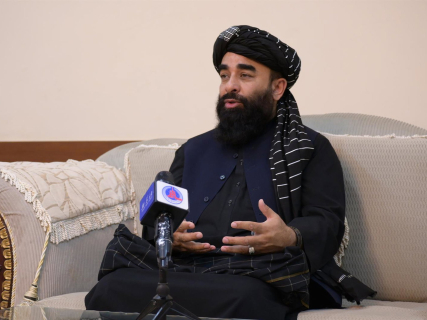

The authorities established by the Taliban in Afghanistan have come out this Wednesday in defense of the recent prohibition of demonstrations, a decision harshly criticized by Human Rights NGOs, arguing that the new regulation conforms to the Islamic law in force in the country.
The spokesman for the Taliban, Zabihulá Muyahid, stated at a press conference in the capital, Kabul, that protests "do not exist within Islamic laws," considering them to be characteristic of societies where different legal frameworks or political systems such as democratic orders or republics operate.
"We are talking about the situation in Afghanistan and we have a responsibility in this regard. This law includes what is important for the security and stability of Afghanistan, as well as what is necessary to prevent crime," he emphasized, defending that the decree responds to internal security priorities.
In this line, Muyahid has called on the population to convey their complaints and demands through institutional channels, with the aim of avoiding disturbances of public order, possible damage to private or collective property, and any type of disorder in Afghan society, according to the television network Amu TV.
For its part, Amnesty International (AI) has described the new norms approved in Afghanistan as "another widespread attack against Human Rights," labeling the prohibition as "a blatant violation of the right to peaceful assembly."
"Through such a widespread prohibition, the decree further consolidates the already suffocating climate of repression and severe restrictions on fundamental freedoms in Afghanistan. This occurs amid the ongoing harassment by the Taliban against protesters and dissenters through arbitrary arrests and detentions, torture and other ill-treatment, and enforced disappearances," stated the organization, which warns of an even greater deterioration of basic freedoms in the country.