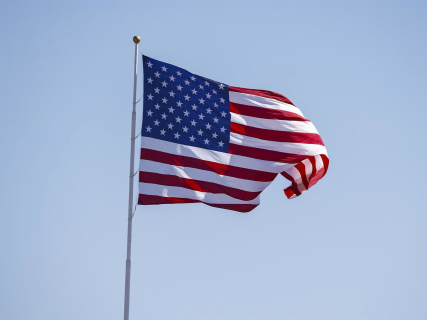
United States offers support to Colombia after the earthquake of magnitude 7.4

Washington is among the governments that have expressed their willingness to collaborate with Colombian authorities. Bogotá will coordinate any international assistance with the National Unit for Risk Management while the damage assessment continues.

2 minutes

fotonoticia 20260720191817 1920

fotonoticia 20260720191817 1920

Add DEMÓCRATA to Google

Ask FREN

Published

Last updated

2 minutes

Most read

The United States has expressed its willingness to support Colombia after the 7.4 magnitude earthquake that shook a good part of the country this Monday and caused severe damage in several cities in western Colombia. For the moment, it has not been specified what type of assistance Washington could provide nor if there will be a deployment of U.S. resources.

The U.S. Embassy in Bogotá has reported that it is monitoring the evolution of the emergency and has recommended that U.S. citizens in Colombia remain alert to information from local authorities and communicate their situation to family and friends.

Colombia will coordinate the arrival of international aid

The Colombian Foreign Ministry has confirmed that the Minister of Foreign Affairs, Omar Bula, is in contact with representatives from various countries that have offered support to the government and the affected population.

"The Ministry of Foreign Affairs will coordinate with the National Unit for Disaster Risk Management (UNGRD) the reception of humanitarian assistance," the Colombian government stated in a communiqué released this Monday.

The decision on which resources to accept will depend on the needs identified by the authorities in the coming hours. Bogotá continues to gather information from the affected departments and municipalities before determining whether it needs international search and rescue teams, medical assistance, emergency supplies, or other resources.

Washington is monitoring the situation from Bogotá

The United States has not yet announced the sending of teams, funds, or emergency supplies. The first public reaction from its diplomatic representation has been limited to confirming that it is monitoring the situation on the ground.

The offer comes after Washington deployed a broad humanitarian response following the earthquakes that affected Venezuela at the end of June. In that case, the United States managed to mobilize a Disaster Assistance Response Team and specialized search and rescue teams, although there is currently no equivalent announcement for Colombia.

Mexico, Peru, and Israel also offer assistance

The United States is not the only country that has expressed its willingness to help. Mexico and Peru are also among the governments that have offered assistance while Colombia completes its initial needs assessment.

The Mexican president, Claudia Sheinbaum, has stated that her Government will provide "all the support required" to Colombia if the authorities consider it necessary.

Israel has also made an explicit offer. Its Foreign Minister, Gideon Sa'ar, has communicated to his Colombian counterpart that his country is prepared to provide "all the assistance that Israel can offer."

The aid will depend on the final balance of damages

The earthquake occurred this Monday morning and was felt in numerous Colombian cities. Authorities are keeping search, rescue, and building inspection operations open, while continuing to receive information about damages to infrastructure and housing.

The Foreign Ministry has thanked the international solidarity and has indicated that the UNGRD will be responsible for coordinating the eventual entry of humanitarian assistance. The U.S. offer is, therefore, pending Colombia determining what external aid is needed and where it should be deployed.

More key points, information and questions with FREN

AI-GENERATED CONTENT

What are the competencies and functions of the Colombian Minister of Foreign Affairs according to the law?

Based on the available information, it can be stated that the Minister of Foreign Affairs of Colombia is the political head of the Ministry of Foreign Affairs and exercises, on behalf of the Government, the daily direction of foreign policy, the network of embassies and consulates, and the protection of Colombians abroad. Their actions are carried out through official communications, decisions regarding diplomatic personnel, crisis management, defense of sovereignty, and participation in defining international alliances. However, the consulted sources do not reproduce the specific articles of the Constitution or Colombian laws and decrees that legally organize the Ministry, so it is not possible to detail an exhaustive list of competencies with precise normative citation. Below is a summary of the functions as derived from the practice described in accessible news and statements.

General framework and information limitations

The news collected by the newspaper Demócrata show the exercise of very clear material competencies of the Colombian Ministry of Foreign Affairs, but do not include exact references to the articles of the 1991 Political Constitution nor to the organic laws and decrees of the Ministry. Therefore, it can be described what the minister does in practice, but the functions “according to the law” cannot be rigorously enumerated with number and article citation. No further information is available in the consulted sources about the specific normative text.

Political direction of foreign relations

The Ministry appears as the spokesperson and executor of the official position of the State towards other countries and international organizations. Thus, it issues statements condemning actions of other governments, such as the accusation against Daniel Noboa of “interference” in the Colombian electoral process, where the principle of non-intervention is invoked and commercial decisions consistent with the normalization of relations are announced, as reported in this report. Likewise, the Ministry directs the response to diplomatic crises, such as the decision to reciprocally withdraw the chargé d'affaires of the Bolivian embassy after the expulsion of the Colombian ambassador in La Paz, citing the Vienna Convention on Diplomatic Relations, according to this information.

Management of embassies and the foreign network

The diplomatic network (embassies, consulates, and missions) falls under the Ministry's scope. In the most recent period, decisions to open, optimize, or close embassies are politically articulated by the president-elect Abelardo de la Espriella but executed through the Ministry, which is the competent structure regarding “representations abroad,” as inferred from the plan to close 14 embassies and halt the opening of the mission in Palestine described in this piece. The Ministry also manages Colombia's representation before international organizations and coordination with partners such as Spain, as reflected in the association agreement for sustainable development signed by the Spanish and Colombian foreign ministers, reported in this news.

Restoration and rupture of diplomatic relations

The sources show that the Ministry plays a central role in the processes of rupture and restoration of diplomatic relations. After the break with Israel during Gustavo Petro's government, the next administration agrees with Israeli authorities on a “roadmap” for the full restoration of diplomatic and economic ties, including the opening of an embassy in Jerusalem and changes in Colombia's position before the International Court of Justice, according to this information and its extension in this extension. Likewise, the Ministry formalized the previous rupture, denouncing possible violations of International Humanitarian Law, as narrated in this piece.

Defense of sovereignty and international positioning

The Minister of Foreign Affairs also appears as a guarantor of sovereignty and “national dignity” abroad. An example is the resignation of then-Minister Rosa Villavicencio of her U.S. visa in protest against the veto of President Petro, a decision accompanied by a strong Ministry statement against foreign interference and in defense of diplomatic immunity, as reported in this news and its extended version in this article. In the same vein, the Ministry leads political proposals in multilateral forums, such as the suggestion to move the UN headquarters to a “neutral” country after a visa conflict with the United States, described in this report.

Disciplinary and internal control functions

Another dimension shown by the sources is internal disciplinary competence. The Ministry clarifies, regarding a chargé d'affaires in Nicaragua, that responsibility for sanctions (suspension, dismissal, disassociation) lies with the Ministry, through the Internal Disciplinary Control Office, which carries out evidence collection and other actions, as explained in this information. This reveals that the minister directs a department with disciplinary powers over foreign service officials.

Scope and cautions

In summary, from the news of Demócrata it is observed that the Colombian Minister of Foreign Affairs directs foreign policy, manages the diplomatic and consular network, intervenes in international crises and controversies, protects sovereignty, and coordinates internal discipline of the foreign service. However, the sources do not allow identifying by number the Colombian laws and decrees that formally establish these functions nor transcribing the details of the applicable constitutional articles. Any attempt to reconstruct that legislation from memory, without documentary support in the sources, would be speculative and should be discarded.

What specific norms (law and decree numbers) currently organize the Colombian Ministry of Foreign Affairs and the position of minister? How does the Colombian Minister of Foreign Affairs coordinate in practice with the Presidency and Congress when defining foreign policy? What changes in the orientation of Colombia's foreign policy are expected with the mandate of Abelardo de la Espriella and his new minister?

What legal requirements must Colombia meet to accept international humanitarian assistance after a natural disaster?

The available information in the consulted sources does not detail the content of Colombian Law 1523 of 2012 nor its regulatory decrees, so it is not possible to precisely describe the specific legal requirements Colombia must meet to accept international humanitarian assistance after a natural disaster. Some general elements can be identified: the existence of a risk management authority (the National Unit for Disaster Risk Management, UNGRD), activation of emergency plans, and coordination with international organizations and NGOs, all under the principles of humanity, neutrality, impartiality, and humanitarian independence. In the absence of legal text, it is most prudent to discuss how this aid is normally articulated in Colombia according to the practice described in the press and international humanitarian law, and to point out the need to refer directly to Law 1523/2012 and Colombian customs and tax regulations for any practical application.

Limitations of available information

The texts of Law 1523 of 2012 and its articles on “international assistance,” nor the specific regulatory decrees on the entry of donations, tax exemptions, or procedures before the DIAN, are not available in the journalistic and official sources used. Detailed resolutions on tariff exemptions for humanitarian aid in Colombia also do not appear. Therefore, I cannot state, for example, what documents customs require, what taxes are exactly exempted, or which body formally signs the acceptance of a foreign mission: these are matters that can only be clarified by directly consulting the current Colombian regulations.

Humanitarian principles and general obligations

At the international level, various texts remind that assistance must respect the principles of humanity, neutrality, impartiality, and independence. In Colombia, these principles are expressly invoked when the UN, OAS, and the Ombudsman's Office reject restrictions by armed groups on humanitarian work, emphasizing that limiting access of national and international organizations violates International Humanitarian Law and aggravates the vulnerability of the civilian population, as reported by the newspaper Demócrata in this information. This gives an idea that any internal Colombian legal framework must be compatible with these obligations to allow and facilitate rapid and unimpeded aid.

Internal coordination in Colombia

The news shows that Colombia already operates with a consolidated institutional architecture for emergencies, although without detailing its legal bases:

  • The UNGRD appears as the central authority: for example, in recent floods, the sending of 223 tons of humanitarian aid (food, water, hygiene products, hammocks, sheets) coordinated by this body is reported, according to Demócrata in this report on the floods.
  • In crises with possible cross-border impact, the Government activates Unified Command Posts (PMU) and a “border plan” to organize humanitarian and migratory attention, as occurred in Cúcuta during the crisis with Venezuela, according to this information.
  • Colombia not only receives but also sends humanitarian aid abroad (almost 100 tons to Cuba after Hurricane Melissa, transported on the ARC Caribe ship), in the words of the director of the Presidential Agency for International Cooperation cited in this news. This presupposes that there is regulation on international cooperation and on how aid is channeled to and from Colombia.

Legal elements likely involved

Without being able to cite specific articles of Law 1523/2012 or Colombian decrees, comparative practice and Colombia's own functioning seen in the press allow pointing out which normative pieces are usually involved when a State accepts international humanitarian aid after a natural disaster:

  • Declaration of disaster or emergency: normally the Executive declares an economic, social, or ecological emergency or a “disaster” in the sense of risk management law, which legally enables the formal request for aid and adoption of extraordinary measures. Recent news about climate emergencies in Colombia mention precisely economic emergency decrees subject to Constitutional Court control.
  • Risk management framework: in Colombia this function corresponds to the Disaster Risk Management Law (Law 1523/2012), which defines the National Risk Management System, the roles of the UNGRD and coordination committees. It is reasonable to think that the acceptance of “international assistance” and the designation of the authority responsible for coordinating it are framed there.
  • International cooperation regulations: the existence of a Presidential Agency for International Cooperation and Colombia's role as recipient and sender of aid (for example, European funds assigned to Colombia for humanitarian action and disaster preparedness, described by the European Commission in this piece) indicate that there is a specific cooperation regime regulating agreements, memoranda of understanding, and channels with the UN, EU, or other donors.
  • Customs and tax regime: although the sources do not detail specific exemptions in Colombia, the international standard is that humanitarian aid donations are exempt from tariffs and VAT and have simplified customs clearance; to know how this is applied in Colombia, one would have to consult DIAN legislation and specific resolutions on emergency donations.
  • International humanitarian law: as several notes on Colombia and other conflicts remind, States have the obligation to allow and facilitate humanitarian aid access to the civilian population. Criticisms of illegal restrictions in other contexts (for example, in Gaza, in this note) serve as a reference for what is considered contrary to IHL.

Recommendation for rigorous legal analysis

To know exactly the “legal requirements” (who requests the aid, which body accepts it, what forms customs requires, what taxes are exempted, the status of foreign teams, length of stay, etc.) it is essential to directly consult: the Law 1523 of 2012 of Colombia, its regulatory decrees, DIAN regulations on importation of donations and tax exemptions, and the Colombian State's international cooperation rules. As an assistant specialized in Spanish and European policy and regulations, and given that the available sources do not provide those Colombian texts, I cannot go further without speculating.

Cited and contextual links

Although focused on European and Spanish humanitarian aid frameworks, they can serve as comparative references on how other States regulate the request, coordination, and tax exemption of international aid: Council of Ministers and Spanish humanitarian action, AECID–CESAL agreement for emergencies, Galician humanitarian action call, second Galician call, Foreign Ministry note on humanitarian budget, Málaga City Council humanitarian action, EU humanitarian aid to Latin America 2025, Valencian Government call, Spanish aid to Venezuela after earthquake and its version in Moncloa at this link.

What exactly does Colombia's Law 1523 of 2012 say about “international assistance” and which authority does it designate to manage it? How does the Colombian DIAN regulate the import and tax exemption of humanitarian donations in disaster situations? What control and transparency mechanisms exist in Colombia to prevent corruption in the management of international humanitarian aid?

Which other countries have sent humanitarian aid to Colombia in previous earthquakes or disasters?

Colombia has received humanitarian aid from numerous countries in various earthquakes, eruptions, and natural disasters over the past decades. Among the most active are the United States, several European countries (including Spain), neighboring Latin American nations, and some Asian countries with rapid response capabilities. Below is a synthetic overview by major country groups and the main disasters in which such aid has been articulated.

Aid from Latin America

In almost all major disasters in Colombia, regional solidarity is first activated. Neighboring and allied countries have sent rescue teams, medical supplies, and logistical support:

  • Mexico: traditionally has sent urban search and rescue brigades (the well-known “Topos”), especially after the Armenia earthquake (1999) and in subsequent landslides and floods such as the Mocoa tragedy (2017).
  • Chile: with extensive seismic experience, has contributed experts in structural assessment, tents, emergency material, and in some cases, specialized firefighters.
  • Ecuador, Peru, and Venezuela: have provided both material aid (food, medicines, fuel) and civil protection personnel and military support in search and rescue operations in border or Amazonian disaster zones.
  • Brazil: especially in emergencies affecting the Amazon or major floods, Brazil has supported with air transport, helicopters, and logistical coordination through its armed forces.
  • Argentina and Cuba: Argentina has sent technical personnel and food aid in various flood and earthquake episodes; Cuba has supported with medical brigades and sanitary material in high-impact emergencies.

United States and Canada

The United States is one of the main donors in Colombian emergencies. Through its agency USAID/OFDA (now BHA), it has sent:

  • Rapid disaster assessment teams and risk management experts.
  • Funds for temporary shelters, hygiene kits, water, and sanitation.
  • Air and logistical support in major emergencies (for example, after the Armenia earthquake in 1999, the Mocoa landslide in 2017, and Hurricane Iota in the San Andrés archipelago in 2020).

Canada has also participated through cooperation funds for reconstruction, sending humanitarian supplies, and financial support to organizations such as the Red Cross and international NGOs operating on the ground.

Europe: Spain and other countries

From Europe, several countries have been recurrent in their support, both bilaterally and through community mechanisms:

  • Spain: has sent teams from the Military Emergency Unit (UME), specialized firefighters, and AECID technicians in large-scale disasters (such as the Armenia earthquake and subsequent disasters). It has also channeled funds for housing reconstruction, basic infrastructure, and psychosocial support to victims.
  • European Union as a whole: through the EU Civil Protection Mechanism and ECHO humanitarian aid, shelter kits, water purifiers, sanitation systems, and funding for early rehabilitation projects have been sent.
  • Germany, United Kingdom, France, Italy, and the Netherlands: have contributed financial donations, emergency material (tents, blankets, water purification plants), and technical support through their cooperation agencies and associated NGOs.

Aid from Asia and other countries

Although with less media visibility, several Asian countries have also provided aid to Colombia after major disasters:

  • Japan: one of the most active countries, donating seismic measurement equipment, alert systems, field hospitals, and supplies, especially after earthquakes and landslides.
  • China: has sent shipments of tents, electric generators, blankets, and medicines after floods and large-scale disasters.
  • South Korea and other Asian countries: have offered financial contributions and technical material, especially in infrastructure reconstruction and technological cooperation.

International organizations and coordination

Besides States, Colombia has received support from multilateral organizations such as the United Nations (through OCHA, UNHCR, UNICEF, WFP, among others) and the inter-American system (OAS and ECLAC in damage assessment). Part of the aid from donor countries arrives precisely channeled through these agencies, which coordinate the response to avoid duplication and ensure aid reaches the most affected areas.

Overall, it can be said that Colombia has a fairly broad network of partner countries that, in the face of earthquakes and other disasters, have responded with humanitarian aid. Notably, by volume and recurrence, the United States, Spain, and other EU members, as well as Mexico and neighboring Latin American countries, complemented by significant contributions from Japan and China in certain critical episodes.

Could you detail what specific aid Spain sent to Colombia after the 1999 Armenia earthquake? What role have UN agencies played in coordinating international aid to Colombia after major disasters? In which specific Colombian disasters did Mexico's aid participate and what brigades did they send?

Play

Test your knowledge with FREN!

How much do you know about this topic? Answer the following 3 questions.

What was the magnitude of the earthquake that recently shook Colombia?

Question 1 of 3

Which Colombian organization is responsible for coordinating the potential entry of humanitarian assistance?

Question 2 of 3

Which countries, besides the United States, have offered aid to Colombia after the earthquake?

Question 3 of 3

Hola, soy Fren. ¿Cómo te ayudo?