The PP will disapprove in the Senate five ministers for the Ceuta crisis

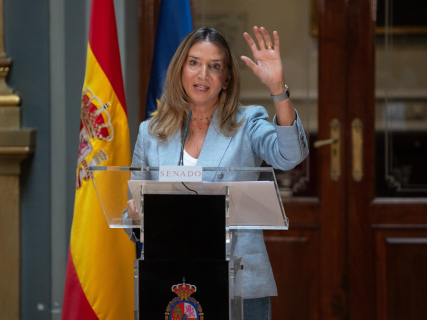
The Popular Group will take advantage of its absolute majority in the Senate to censure the management of Marlaska, Albares, Robles, Mónica García, and Ana Redondo, according to its spokesperson, Alicia García. Among other things, the PP criticizes that the ministers have not given explanations in the Upper House, despite having been summoned.

3 minutes

fotonoticia 20260819121539 1920

fotonoticia 20260819121539 1920

Add DEMÓCRATA to Google

Ask FREN

Published

Last updated

3 minutes

Most read

The Popular Party will promote in the Senate the reproach of five ministers for their actions during the migration crisis in Ceuta. The spokesperson for the PP in the Upper House, Alicia García, has announced that her group will direct the initiatives against the heads of Interior, Fernando Grande-Marlaska; Foreign Affairs, José Manuel Albares; Defense, Margarita Robles; Health, Mónica García; and Equality, Ana Redondo.

The parliamentary offensive occurs after the confrontation between the Government and the popular majority in the Senate over the extraordinary appearances called during August. Marlaska, Albares, and Robles did not attend on the dates set by the Upper House to explain their respective actions in response to the massive entry of migrants recorded in Ceuta at the end of July.

The Executive has opted to account in the Congress of Deputies starting from August 25. The Government defends that its ministers will appear in the Cortes, but rejects submitting to the calendar imposed by the PP in the Senate.

The five ministers that the PP wants to reproach for Ceuta

The initiative announced by Alicia García distributes political responsibilities among five departments involved in the response to the crisis:

  • Fernando Grande-Marlaska: as Minister of the Interior, for the surveillance of the border, the actions of the National Police and the Civil Guard, the identification of individuals who entered irregularly, and the processing of returns.
  • José Manuel Albares: for the diplomatic management of the crisis and relations with Morocco, especially regarding the doubts raised by the PP about Rabat's cooperation to contain the entries.
  • Margarita Robles: for the actions of the Ministry of Defense and the role played by the Armed Forces in the operation deployed in Ceuta.
  • Mónica García: for the health response to the significant increase in the population served. The minister acknowledged that the health system in Ceuta was “stressed,” although she denied that it was overwhelmed.
  • Ana Redondo: for the response of the Ministry of Equality to the vulnerability situation of migrant women and girls arriving in the autonomous city.

The PP must now specify the content and justification of each parliamentary initiative. Some responsibilities, especially those attributed to Health and Equality, will be known in detail when the motions are registered and incorporated into the agenda of the Plenary.

The PP has a sufficient majority to approve the reproaches

The Popular Party has an absolute majority in the Senate, so it can push through the reprobations without needing the votes of other parliamentary groups. A reprobation expresses the political censure of a Chamber regarding the actions of a member of the Government, but it does not legally oblige the minister to resign nor does it allow the Senate to dismiss him.

The political responsibility of the Government is mainly substantiated before the Congress of Deputies, which is the Chamber that can invest the president or withdraw its confidence through a motion of censure. However, the Senate also exercises control functions and can approve critical motions against specific ministers.

Clash over appearances in the Senate

The initiative is framed in the ongoing struggle between the Government and the Senate over the explanations regarding the crisis in Ceuta. The Upper Chamber, controlled by the PP, enabled August and summoned various committees to call the heads of Interior, Foreign Affairs, and Defense.

The ministers refused to attend on the specified dates and transferred their explanations to Congress. The Executive argues that it needs to prepare the appearances and considers it unnecessary to immediately duplicate the debates in both chambers.

The PP argues, on the contrary, that the refusal amounts to evading parliamentary control and marginalizing the Senate. The popular party is also considering possible institutional and legal actions against the absences.

The Constitution establishes that the Government is subject to the control of the Cortes Generales. However, it does not contemplate an automatic sanction for a minister who does not attend on a specific date nor does it expressly resolve who should set the definitive calendar for an appearance.

The Government will appear in Congress at the end of August

The Government, for its part, has organized a round of appearances in Congress to explain its response to the migration crisis. It is expected that among others, Marlaska, Albares, Robles, Félix Bolaños, Mónica García, Elma Saiz, and Sira Rego will attend.

Mónica García is scheduled to appear before the Health Commission on the 27th of August, while Elma Saiz will do so before the corresponding commission on the 28th. The explanations of Youth and Childhood regarding the care and transfer of migrant minors from Ceuta are also being prepared.

In the list of ministers mentioned by Alicia García, neither Elma Saiz nor Sira Rego appear, despite the fact that their departments are directly involved in the reception of adults and minors. The PP focuses its initiative on the three ministers who starred in the clash over the Senate appearances and on the heads of Health and Equality.

More key points, information and questions with FREN

AI-GENERATED CONTENT

What is the status of the processing of the motions of censure promoted by the PP in the Senate and what are the next parliamentary steps?

As of August 2026, the motions of censure promoted by the Popular Group in the Senate during the XV Legislature are, formally, all concluded: five were debated and approved by the Plenary and one was withdrawn before its vote. There are no motions of censure from the PP against members of the Government currently still in the internal processing phase in the Upper House.

Current status of the PP's motions of censure in the Senate

According to the institutional information collected, the PP has promoted at least six motions of censure directed at specific members of the central Government in the Senate during this legislature:

  • Minister of Housing and Urban Agenda, Isabel Rodríguez (02/11/2026). Motion of censure for housing policy and the application of Law 12/2023. Status: approved by the Plenary and concluded. See the official Senate record and the debate recorded in the Session Diary, session of February 18, 2026.
  • Minister of Health, Mónica García (12/10/2025). Motion of censure linked to the reform of the Framework Statute of health personnel and the management of the Ministry. Status: approved and concluded, with publication of the approved text in the Bulletin of the General Courts.
  • Minister of Equality (10/01/2025). Censure for the management of telematic devices for victims of gender violence and the consequences of Organic Law 10/2022. Status: approved and concluded; the final text was published once the plenary vote was held.
  • Minister of the Interior, Fernando Grande-Marlaska (02/26/2024). Censure for the lack of resources against drug trafficking in the Campo de Gibraltar and the Strait. Status: approved and concluded. The agreement is recorded in the Senate Bulletin and in the corresponding Plenary Session Diary.
  • Third Vice President and Minister for the Ecological Transition (Sara Aagesen), motion registered on 04/28/2025, focused on the management of the power outage on April 28. Status: approved and concluded, with record of the censure agreement in the official initiative file.
  • Third Vice President and Minister for the Ecological Transition, motion of 01/19/2024 about alleged interference in the independence of the Judiciary. Status: concluded by withdrawal; upon withdrawal, no vote on the censure took place.

All these initiatives appear in the Senate registry as concluded files (either by approval of the text or by withdrawal). Consequently, there are no pending processing phases within the Senate regarding those specific motions; their effects unfold on the political level, not in new parliamentary phases.

Typical course of a motion of censure in the Senate

The PP's motions of censure in the Senate are processed like other non-legislative motions (often motions following interpellation). The standard scheme is as follows:

  • Presentation and registration by the proposing group, with a text stating the reasons for the censure and, sometimes, additional requests (dismissal of the minister, policy change, etc.).
  • Qualification by the Senate Board, which admits the motion if it complies with the Rules and refers it to the Plenary (or, if applicable, to a committee).
  • Inclusion in the Plenary agenda, decided by the Board and the Spokespersons' Board. From that moment, the motion has a date for debate.
  • Debate: initial defense by the proposing group, turns of groups in favor and against, possible debate of amendments and position setting by each formation.
  • Vote, usually resolved by simple majority of the senators present (more votes in favor than against).

Once voted, the result is reflected in the Session Diary and the finally approved text is published in the Bulletin of the General Courts or in the Senate Bulletin. With that publication, the initiative is formally concluded: there is no additional parliamentary “execution.”

Next steps and practical effects

From a legal-formal point of view, censure is a political and non-binding pronouncement:

  • It does not legally oblige the Prime Minister to dismiss the censured minister, nor the minister to resign.
  • Its main effect is symbolic and political: it sets the Senate's position, generates pressure on the Executive, and fuels public debate.
  • Sometimes, as seen with PP motions that also urge the president to resign or to dissolve the Courts, they are used as a preliminary step or “trial” of more significant scenarios (vote of confidence or motion of no confidence in the Congress), but without automatic effects on them.

Therefore, in the current situation: the PP's motions of censure in the Senate have already exhausted their internal course and the only “next steps” are political (Government reaction, possible dismissals or voluntary resignations, use of those precedents in future debates or initiatives in the Congress). If the PP wants to censure a minister or the Government again, it must register new motions, which would start again the cycle of qualification, inclusion in the agenda, debate, and vote.

What are the powers and functions attributed to the ministers of the Interior, Foreign Affairs, Defense, Health, and Equality according to Spanish legislation?

The powers of ministers in Spain are generally defined by Law 50/1997, of November 27, on the Government, and by Law 40/2015, on the Legal Regime of the Public Sector, and are sectorally specified in the royal decrees of the basic organic structure of each department. Based on this framework, the functions corresponding, in material terms and powers, to the ministers of the Interior, Foreign Affairs, Defense, Health, and Equality can be summarized.

General framework common to all ministers

According to the Government Law and the legal regime legislation of the General State Administration, any minister:

  • Politically directs their department, sets priorities and guidelines, and is jointly responsible before the Government and the Courts.
  • Exercises the headship of the ministry's Administration, issuing instructions and service orders and supervising secretariats of State, general directorates, and attached bodies.
  • Promotes and proposes regulatory initiatives (laws, royal decrees, ministerial orders) within their material scope.
  • Resolves administrative appeals and exercises sanctioning, inspection, and regulatory powers in matters of their competence, under the terms provided by sectoral regulations.
  • Represents the ministry in its relations with other administrations, international organizations, companies, and civil society.
  • Coordinates with autonomous communities and local entities when policies require inter-administrative cooperation (sectoral conferences, mixed commissions, agreements).

Minister of the Interior

Based on that general framework, the Interior minister is entrusted with directing the policy of:

  • Citizen security and public order, including supreme command over the State Security Forces and Corps (except what is reserved for the Government as a whole).
  • Civil protection and emergency management at the state level, protection plans, and coordination with regional and local services.
  • Traffic and road safety within the scope of the Directorate-General for Traffic and state competences.
  • Immigration and foreign affairs policy in its aspect of border control, visas, authorizations, and returns, together with other competent departments.
  • Electoral processes and party regime, regarding the material organization of general, European elections, and state-level referendums and party registration.

Minister of Foreign Affairs

The Minister of Foreign Affairs directs:

  • The State's foreign policy, formulating and executing the diplomatic action lines approved by the Government.
  • Relations with other States and international organizations, negotiating and signing, by delegation, treaties and international agreements.
  • Representation of Spain abroad through the network of embassies, consulates, and permanent missions.
  • European policy in coordination with the Presidency of the Government and other departments, participating in Spain's position before the European Union.
  • International cooperation for development and humanitarian action in the part attributed to the ministry by its organic regulations.

Minister of Defense

The legislation assigns the Minister of Defense the responsibility to:

  • Develop and execute the defense policy set by the Government and the president's directives.
  • Direct the military Administration and the Armed Forces organizationally, establishing their basic organization and resources, without prejudice to the King's supreme command.
  • Planning military capabilities, defense industry, acquisitions, and logistics.
  • Participation in international missions and peacekeeping operations, in coordination with the Government and the General Courts.
  • Protection of infrastructures and strategic resources related to national defense.

Minister of Health

Although ordinary healthcare is decentralized, the Minister of Health retains key state functions:

  • General coordination of the National Health System, setting common bases and strategic frameworks with the autonomous communities.
  • Public health and epidemiological surveillance, including state prevention plans, vaccination, and response to health emergencies.
  • Regulation of medicines, health products, and pharmacy at the state level.
  • Guarantee of equity and cohesion in access to basic system benefits.
  • International health relations and with organizations such as WHO or the EU in health matters.

Minister of Equality

Finally, the Ministry of Equality concentrates the Government's action on:

  • Promotion of effective equality between women and men in all areas (labor, educational, political, social).
  • Prevention and fight against gender-based violence, directing state strategies, comprehensive plans, and victim protection systems.
  • Policies against discrimination based on sex, sexual orientation, gender identity, or other circumstances, in coordination with other departments.
  • Cross-cutting promotion of the gender perspective in regulations and public policies.
  • Relations with the associative movement and consultative bodies on equality matters.

In all cases, these specific functions are exercised under the political responsibility of the minister and within the common framework that the Government Law and Law 40/2015 establish for the actions of Executive members and the General State Administration.

What legal requirements must be met for a motion of censure to be debated and voted on in the Senate?

In the Senate, motions of censure are not regulated as an autonomous category but are framed within the general regime of non-legislative motions of the Rules (arts. 173 to 179, 177 and related). Based on that regulation and parliamentary practice, the requirements for a motion of censure to be admitted, debated, and voted on can be systematized as follows.

1. Legal nature of the motion of censure

Censure is conveyed as a motion whose purpose fits within art. 174.d of the Senate Rules: that the Chamber “deliberates and pronounces on a non-legislative text.” It may have as its object:

  • The censure of the Government as a whole.
  • The censure of a specific minister or other Government member.
  • The censure of senior officials who have appeared before the Senate or are subject to its control.

It does not replace the motion of no confidence (a political responsibility instrument proper to the Congress of Deputies): censure is a political pronouncement, without automatic legal effects of dismissal.

2. Who can present the motion and minimum form

For a motion of censure to be debated in the Plenary, it must meet the requirements of art. 175.1:

  • Be presented in writing addressed to the Senate Board, requesting its inclusion in the agenda.
  • Be presented by:
    • A Committee, or
    • A Parliamentary Group, or
    • A minimum of ten senators.

When censure is articulated as a motion following interpellation, art. 173.2 allows the interpellant to announce the presentation of a motion after the debate with the Government; its development is completed with the supplementary rules of the Presidency on motions following interpellation.

Within a Committee, art. 177.1 allows approving motions (also of censure) within its competencies, provided they are presented by a Committee Group or five senators members of it.

3. Content, motivation, and material limits

The Rules do not detail a standard content, but arts. 174 and 175 imply some requirements:

  • The motion must contain a clear and concrete text on which the Chamber can pronounce (for example, “the Senate censures the conduct of…”).
  • It must have a direct relation with political control over the Government or the affected senior official.
  • If the motion includes calls implying increased expenditure or reduced income, it is subject to art. 151 and, if applicable, must be accompanied by a cost evaluation (art. 175.2 for those of art. 174.d).

Materially, the Board may reject or redirect motions that:

  • Are identical to others already voted on in the same session period (art. 175.1).
  • Violate the Constitution or exceed the Senate's competences, for example, effectively turning censure into a vote of confidence or no confidence, which corresponds to the Congress.

4. Role of the Board and processing until debate

The Senate Board, upon reviewing the written motion, must:

  • Qualify the motion (check legitimacy, form, purpose fitting art. 174).
  • Decide, after hearing the Spokespersons' Board, its inclusion in the agenda of the Plenary or the competent Committee.

Art. 175.3 establishes a minimum period: the session in which these motions are discussed “cannot be held before forty-eight hours have passed since their presentation.” Additionally, there is a supplementary rule from the Presidency (December 4, 2024) that specifies aspects of the agenda, grouping of motions, times, etc.

When a motion of censure is approved in committee, art. 177.2 allows the President, in agreement with the Board, to order its ratification by the Plenary when its importance requires it.

5. Debate, vote, and effects

The debate of motions under art. 174.a) and d) (where censure fits) follows the scheme of art. 176: a turn in favor and another against of up to twenty minutes, plus interventions by spokespeople who request it (ten minutes).

Voting is governed by the general Rules: as a rule, simple majority of votes cast, unless specific provision exists (which does not for censure). Voting is usually public, although the Senate also provides secret votes with white (approval) and black (censure) balls, a mechanism designed to qualify personal conduct.

If the motion of censure is approved:

  • The President of the Senate must communicate it to the Government or the corresponding body (art. 178.1).
  • Within up to six months, the Government or affected body must report on the compliance given to the motion, and the report is published (art. 178.2).

Its legal effects are limited: it does not by itself cause the dismissal of the censured, which depends on the Prime Minister and the King. However, its political effect is very intense: it represents a formal disavowal by the Senate, which can generate pressure for resignation or replacement, condition future relations between Government and Chamber, and project a clear message to public opinion.

Play

Test your knowledge with FREN!

How much do you know about this topic? Answer the following 3 questions.

What majority does the Popular Party have in the Senate that allows it to approve censures without the support of other groups?

Question 1 of 3

What legal consequences does a censure approved by the Senate against a minister have?

Question 2 of 3

What was the main reason given by the Government for not attending extraordinary hearings in the Senate during August?

Question 3 of 3

Hola, soy Fren. ¿Cómo te ayudo?