
The general strike convened for Wednesday 11 November reaches its final stretch with two elements that have altered the context of the mobilization: the Urda railway accident, which has opened a debate about safety and investment in public services, and the atypical nature of a strike whose main yardstick, according to its own conveners, will be in the afternoon demonstrations and not solely in the working activity of the day.
CCOO and UGT maintain the 24-hour schedule, which extends to workers in the public and private sectors throughout the country. The Urda incident has caused a political clash about the appropriateness of holding the strike, but the unions reject suspending it and argue that the defense of public services and infrastructures is also part of their demands.
The mobilization was born linked to the crisis of access to housing, wages and the cost of living. Its leaders acknowledge that it does not fit the usual pattern of a general strike and have warned that its scope will have to be assessed once the gatherings convened in Spanish cities are over.
The Urda accident introduces a new element into the call
The Urda railway accident has placed the security of infrastructures and the financing of public services at the center of the debate about the strike. On 3 November, the PP president, Alberto Núñez Feijóo, asked trade union organizations to reconsider the call and described it as a "grave error" after the incident, which left 69 dead victims.
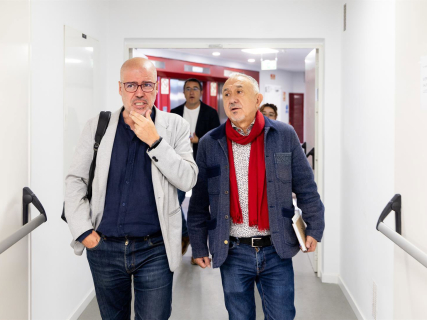
The general secretaries of CCOO and UGT rejected the request. Unai Sordo defended that one of the reasons for the mobilization is to demand investment in public services and the maintenance of major infrastructures. Pepe Álvarez, for his part, considered that there were no reasons to call it off and criticized that the pain of the victims be used to question the right to strike.
The other particularity of the call lies in the way its follow-through is assessed. On 22 October, almost two weeks before the Urda accident, Unai Sordo and Pepe Álvarez had already explained that the 11-N would be a general strike different from the usual ones. The main demand is access to housing, an issue that does not necessarily translate into a shutdown of economic activity as visible as that of other general stoppages.
In a joint interview on the program Los Desayunos of RTVE y EFE, both leaders placed the success of the general strike in the ability to bring together mass demonstrations in the afternoon. Sordo explained that in a conventional strike, the follow-through can be seen from the first hour, for example, through the activity of transport or of the central markets. On this occasion, he said, it will be necessary to wait until the end of the day to assess the result of the mobilizations.