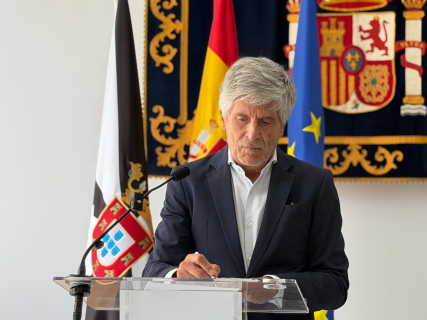
Resignations in sight in the Interior due to the Ceuta crisis: police unions and partners demand accountability

CEP and Jupol demand the resignation of Marlaska and other officials while Interior tries to clarify the content of the CENIF report on the massive entry

4 minutes

fotonoticia 20260813153236 1920

fotonoticia 20260813153236 1920

Add DEMÓCRATA to Google

Ask FREN

Published

Last updated

4 minutes

Most read

Hovering over the Ministry of the Interior of Fernando Grande-Marlaska is the opacity of a department that continues to unsuccessfully try to clarify the content of a police report that supposedly points to Morocco as the architect of the illegal mass entry of migrants in Ceuta. And amidst the noise of sabers, Grande-Marlaska's response to this new open front is being considered among possible resignations that have already been demanded by the Government's partners and police unions.

The Spanish Confederation of Police (CEP) has demanded the departure of Grande-Marlaska, while Jupol extends its requests to the director general of the Police, Francisco Pardo, and to the Government delegate in Ceuta, Miguel Ángel Pérez Triano.

At the same time, Marlaska has asked Pardo for explanations regarding the police report sent to the judge of the National Court María Tardón, after information emerged pointing to a possible action by Moroccan agents in the organization of the mass entry.

The controversy also affects the way information was managed prior to the crisis. The National Center for Immigration and Borders (CENIF), author of the aforementioned report, had issued an alert on July 29 warning of an "extreme risk" regarding possible coordinated entries by sea and through jumps over the fence.

The alert of July 29, at the center of the debate

The existence of a police alert prior to the mass entry has become one of the main points of controversy. According to the disseminated content of the report, CENIF prepared an informative note on July 29 warning of a possible scenario of illegal entries by swimming and jumps over the fence. Everything, under the coordination of the Moroccan authorities.

The alert placed the risk at an extreme level and warned of the possibility that the accesses would occur in a coordinated manner. For the CEP, this circumstance demonstrates that the agents had previously conveyed the available information and that the responsibility for subsequent decisions lies with the political leaders.

"The national police did our job, we were up to the circumstances, we alerted in time and form prior to the assault of what was going to happen, but the national police are not the Government," stated their spokesperson, David Gutiérrez.

The union claims that, if the content of the report is confirmed, Marlaska should not continue at the head of the Ministry. It also questions the device deployed at Tarajal during the mass entry and maintains that there were around a dozen agents defending that border point.

Jupol demands accountability throughout the chain of command

Jupol has also focused on the police chain of command. The union argues that the General Directorate of the Police and the Ministry of the Interior were aware of prior information about the risk of a mass entry and demands explanations on how that information was managed.

Therefore, it calls for the resignation of Marlaska, Francisco Pardo, and Miguel Ángel Pérez Triano. Jupol also recalls that it had publicly warned on July 28, two days before the mass entry, that the situation in Ceuta was unsustainable.

The union assures that on August 28 it conveyed to the president of Ceuta, Juan Jesús Vivas, the existence of the CENIF report and the existence of prior police information about the extreme risk.

Jupol frames the situation in a scenario of "hybrid war" and demands clarification on what role the Moroccan authorities played in the events.

Sumar and IU also demand accountability

The controversy has also provoked a reaction within the political space that supports the Government.

The federal coordinator of Izquierda Unida, Antonio Maíllo, has conditioned accountability on what the investigation determines, but has proposed two scenarios.

If it is confirmed that the Police acted disloyally towards the Interior and concealed information from the Ministry, he believes that Francisco Pardo should resign. If, on the contrary, it is proven that the Interior was aware of the conclusions of the report and did not convey them, he points directly to the minister.

"If it is confirmed that the Police have been disloyal to the Ministry of the Interior, the director general of the Police will have to resign. And, if it is confirmed that the Ministry of the Interior had this information and did not transmit it, then the minister of the Interior will have to assume responsibility," he stated.

The spokesperson for Sumar in Congress, Verónica Martínez, has demanded "clarity and transparency" and has defended that responsibilities must be clarified if it is confirmed that there was information that did not reach the political leaders.

The deputy of Compromís Alberto Ibáñez has also raised the two possibilities: that the Police concealed information from the Ministry or that Marlaska offered an incorrect version about the role of Morocco.

From Podemos, its co-spokesperson Pablo Fernández has directly demanded the resignation or dismissal of Marlaska for his management of the crisis.

The unknown about possible dismissals

The political and union pressure comes as Interior internally analyzes what happened with the report and with the information available before the massive entry.

According to El Periódico published this Wednesday citing sources from Interior, the department led by Grande-Marlaska does not rule out making decisions about the chain of command once it is determined whether the content of the document was hypotheses of the investigators based on open sources or conclusions that they considered sufficiently accredited.

But, for the moment, Interior has not confirmed any dismissal.

More key points, information and questions with FREN

AI-GENERATED CONTENT

What phase is the internal investigation opened in the Ministry of the Interior regarding the management of the CENIF report currently in?

With the information available from official sources and the press as of September 2, 2026, it is not publicly known what phase — or even if there formally exists — a specific “internal investigation” by the Ministry of the Interior regarding the management of the CENIF report. There are no resolutions, official notes, or executive or parliamentary documents describing this internal file or its status (opening, instruction, conclusions, or filing).

What parliamentary and official sources say

In the institutional documentation consulted (Congress, Senate, and executive base of consultations, agreements, and BOE) several political initiatives have been found that request or mention internal investigations in the Interior Ministry, but none specifically refer by name to a “CENIF report” nor to an internal investigation about its management:

  • In the Congress, for example, there is a motion following an urgent interpellation (173/000056), promoted by the Popular and Vox groups, which urges to “initiate an investigation in the Ministry of the Interior to clarify irregularities or crimes committed in relation to possible leaks to members of the Government and members of the corrupt network about ongoing judicial investigations”. The text was approved and published in the Bulletin of the Cortes (Congress bulletin), but does not specify or create a file identified with the CENIF report.
  • There is also a Non-Legislative Proposal (161/000278, Republican Group) that demands an “internal investigation to clarify the existence of more illegal and/or irregular networks linked to the use of existing structures of the Ministry of the Interior” and a subsequent report to the Interior Commission (text of the PNL). Again, it is a generic political request and does not identify a specific investigation called “internal investigation on the management of the CENIF report”.
  • In the Senate, written questions and debates have been registered about internal police reports and about the Ministry of the Interior’s actions — for example, a question about the omission of forwarding a report from Immigration and Borders with warnings about an immigrant regularization (initiative 684/026576) — but none of these initiatives identify or describe the status of a specific internal investigation linked to a CENIF report.

In the executive base (public consultations, hearings, government agreements, published resolutions) a broad search was conducted for “CENIF,” “CENIF report,” “internal investigation,” and “Ministry of the Interior.” The result was zero documents mentioning a CENIF report or an internal investigation about its management. There are also no Council of Ministers agreements, orders, resolutions, or other published acts that account for the opening, development, or closure of a file with that purpose.

What the press says about the CENIF report and Ceuta

The press, including the newspaper Demócrata, has indeed disseminated information about:

  • An alleged about 120-page report from the CNI on the Ceuta migration crisis and prior alerts, whose characteristics are analyzed in this article. The text emphasizes that its authorship and institutional circuit have not been publicly accredited.
  • Other pieces about the Ceuta crisis and the work of the CENIF/CNI that indicate that “the investigation must determine” what warnings were issued and who received them, but without detailing a specific internal file in the Interior Ministry or its procedural phase.

That is, the press points to an open debate about whether intelligence warnings existed and how they were managed, and anticipates that this issue will be analyzed in various forums (judicial, parliamentary, possibly internal), but does not document an internal investigation by the Interior Ministry on the “CENIF report” with a file number or an official sequence of phases.

Conclusion on the phase of the internal investigation

In view of:

  • The absence of mentions to “CENIF” or a specific CENIF report in the executive records consulted.
  • The lack of explicit references to that file in parliamentary initiatives, beyond generic calls for “internal investigations” in the Interior Ministry.
  • And the fact that the press also does not specify the existence, number, or development of a formal internal investigation in the Ministry of the Interior about the management of that report.

It is not possible, with the publicly available information, to determine what phase the “internal investigation” you refer to is in. In fact, it cannot even be confirmed that such a file exists as such in the terms you suggest; if it did exist, all indications are that it would be processed without publicity (due to its connection with intelligence and security) and there are no open data about its schedule, milestones, or provisional or definitive conclusions.

Consequently, the honest answer today is that there is no public record of the status or phase of a specific internal investigation by the Interior Ministry on the management of the CENIF report. The only documented fact is a political and parliamentary pressure environment for the Interior Ministry to clarify various actions (including those linked to reports from police units and networks such as the ‘Koldo case’ or the ‘Leire case’), and a media debate about what intelligence information did or did not reach the Ministry during the Ceuta crisis.

What are the powers and functions of the Minister of the Interior according to Spanish legislation?

The Minister of the Interior is, legally, the highest authority directing the Ministry of the Interior within the General State Administration. Their powers are generally defined in Law 50/1997, of the Government and in Law 40/2015, on the Legal Regime of the Public Sector, and are specified for this department in the royal decree of the basic organic structure of the Ministry of the Interior (currently developed, among others, by Royal Decree 734/2020 and subsequent amending regulations).

1. General functions as a member of the Government

Like any other minister, the holder of the Interior portfolio has, according to Law 50/1997 and Law 40/2015, a dual status: member of the Government and senior head of a ministerial department. In that general capacity, they have, among others, the following functions:

  • Participate with a vote in the Council of Ministers, assuming collective responsibility for Government decisions and contributing to the direction of the State's internal policy.
  • Exercise regulatory power in matters pertaining to their department, through ministerial orders and other general provisions, within the framework of the Constitution, laws, and Government royal decrees.
  • Propose to the Council of Ministers normative projects and decisions affecting the Ministry of the Interior’s matters (security, civil protection, immigration, etc.).
  • Assume the regime of political responsibility and incompatibilities proper to Government members, as well as the status of senior official.
2. Powers as head of the Ministry of the Interior

According to Law 40/2015, ministers are “the senior heads of the department and direct hierarchical superiors of the Secretaries of State and Undersecretaries,” and “direct the administrative activity sectors integrated into their ministry.” Applied to the Interior Ministry, this translates into a set of typical functions:

  • Strategic direction and internal organization: set the Ministry’s objectives, approve its action plans, and determine or propose to the Government the internal structure of the department and the senior and management bodies that comprise it (Secretariats of State, General Directorates, etc.).
  • Hierarchical direction: issue instructions to Secretariats of State and other management bodies (for example, the general directorates of the Police, Civil Guard, Traffic, or Civil Protection) and evaluate their compliance, exercising control over their effectiveness.
  • Appointments and dismissals of the heads of the Ministry’s management bodies and dependent agencies, when the competence does not correspond to the Council of Ministers, and submission of appointment proposals reserved for the latter.
  • Budget management: approve the department’s and its public agencies’ budget proposal, administer the Ministry’s credits, authorize and commit expenses not under the Council of Ministers’ competence, and propose necessary budget modifications.
  • Contracts and agreements: enter into contracts and agreements within their competencies, with the requirements and limits provided by public sector contract legislation, including, for example, contracts for police equipment, security infrastructures, or information systems.
  • Power of review and appeals: review ex officio administrative acts of the department, resolve administrative appeals, and declare the harmfulness of acts when appropriate.
  • Inter-administrative relations: maintain relations with autonomous communities and local entities in matters of their competence and convene sectoral conferences and other cooperation bodies related to security, civil protection, traffic, or other Interior areas.
  • Accountability: submit the necessary information for the State General Account to the Court of Auditors and exercise the internal control functions attributed by the legal system.
3. Main material areas of responsibility

The royal decrees of the basic organic structure of the Ministry of the Interior specify which policies and public services depend on the department. In summary, the Minister of the Interior assumes political and administrative direction, among others, of the following areas:

  • Public security and public order: high direction of the State Security Forces and Corps (National Police and Civil Guard) and policies on citizen security, crime fighting, and order maintenance.
  • Protection of rights and freedoms in the security field, ensuring the balance between security and respect for fundamental rights in police actions, control of meetings and demonstrations, security at public events, etc.
  • Traffic and road safety: direction of traffic policy at the state level and of the Central Traffic Headquarters, except in territories where these functions have been assumed by autonomous communities.
  • Civil protection and emergency management: planning and coordination of response to major emergencies and disasters, and leadership of the national civil protection system in coordination with autonomous communities and local entities.
  • Immigration, migration, and asylum: execution of border control policy within the Interior Ministry’s scope, processing expulsion and detention procedures, and, in coordination with other ministries, managing asylum and refuge applications.
  • Private security and weapons: authorization, control, and inspection of private security companies and personnel, as well as regulation and supervision of weapons and explosives within the applicable legislation.
  • Electoral process: responsibility for the material organization of electoral processes and the necessary means for their holding, in coordination with the Electoral Administration and other departments.
  • Territorial coordination of security: through Government Delegations and Subdelegations, coordinate State security policies with regional and local police, local security boards, and other territorial bodies.

All these powers are exercised always within the framework set by the Constitution, sectoral laws (for example, on immigration, traffic, civil protection, or electoral regime), and royal decrees regulating the structure and functions of the Ministry of the Interior.

What legal requirements must be met for a senior official of the Ministry of the Interior to be dismissed or resign for political responsibility?

Under Spanish law, the dismissal or resignation of a senior official of the Ministry of the Interior (secretaries of state, undersecretaries, general directors, etc.) for political responsibility is primarily a political decision, supported by a relatively flexible legal framework. There is no closed list of specific causes nor is a prior criminal or administrative conviction generally required for dismissal or resignation to occur.

1. Basic constitutional and legal framework

The Spanish Constitution establishes that the King appoints and removes Government members at the proposal of its President (art. 62.e CE), and assigns the Cortes Generales the function of controlling Government action (art. 66.2 CE). From this derives the idea of political responsibility: the Government and its senior officials must maintain the confidence of the parliamentary majority and public opinion.

Law 50/1997, of the Government, regulates the position of the President and Ministers and, indirectly, that of Secretaries of State, who are senior bodies of the General State Administration under the direction of the competent minister. Their appointment and dismissal are agreed by Royal Decree, at the proposal of the President of the Government or the corresponding minister, and published in the BOE.

For the rest of the senior officials of the Interior Ministry (undersecretaries, general directors, etc.), the framework is completed with:

  • Law 40/2015, on the Legal Regime of the Public Sector, which defines the organization and functioning of the General State Administration.
  • Law 3/2015, regulating the exercise of senior positions in the General State Administration, which sets requirements of suitability, honorability, incompatibilities, and conflicts of interest, as well as their status before and after dismissal.
  • Law 19/2013, on Transparency and Good Governance, which develops principles of good governance and the sanctioning regime for its infringement.

2. Political responsibility vs. legal responsibility

Political responsibility refers to the requirement to be accountable for management, decisions, or omissions in the field of public policies. Its key features are:

  • It is based on loss of confidence (from the President, the minister, the parliamentary majority, or the public).
  • It materializes through dismissal decided by the Government or the voluntary resignation of the senior official.
  • It does not require that a crime or prior administrative infraction exists; it suffices that the management is considered politically unacceptable or harmful.

Legal responsibility (criminal, contentious-administrative, disciplinary) does require violation of rules:

  • A crime (for example, prevarication, embezzlement) would lead to a criminal process and possible disqualification penalties.
  • An administrative or good governance infraction may entail sanctions under Law 19/2013 or Law 3/2015 (fines, loss of severance pay after dismissal, etc.).

These legal responsibilities may justify, reinforce, or precipitate dismissal, but are not an essential legal requirement for it to occur for political reasons.

3. Requirements and form of dismissal or resignation

From a strictly legal point of view, the requirements are formal:

  • Dismissal is decided at the Government’s discretion (usually at the proposal of the Minister of the Interior and agreement of the Council of Ministers) and is formalized in a Royal Decree of dismissal published in the BOE. No specific motivation or concurrence of a specific cause is required.
  • Resignation is submitted by the senior official themselves, must be accepted by the Government, and also formalized by the corresponding Royal Decree of dismissal and its publication.
  • For certain senior officials, Law 3/2015 provides that loss of honorability or breach of conflict of interest rules is cause for dismissal, but the judgment on that loss remains largely political.

In summary, the legal key is the form (Government act and official publication), while the cause is essentially political and discretionary.

4. Parliamentary mechanisms that pressure dismissal

Although Parliament does not directly “remove” a general director or secretary of state, it can create a political responsibility context that makes their departure inevitable. Among the parliamentary control instruments are:

  • Oral and written questions in plenary or committee to the Minister of the Interior or the senior official appearing.
  • Interpellations about the Ministry’s policy in an area (for example, citizen security management, migration, prisons), which may end in a motion where the Chamber urges the Government to dismiss certain officials.
  • Investigation commissions, which may approve very critical conclusions regarding a senior official’s actions.
  • Ultimately, a motion of no confidence against the Government as a whole, when responsibilities are considered structural and affect overall political leadership.

The combination of these instruments can translate into intense political and media pressure leading the President or minister to dismiss the Interior senior official, or for them to present their resignation “for political responsibility,” even before any judicial or sanctioning resolution exists.

Play

Test your knowledge with FREN!

How much do you know about this topic? Answer the following 3 questions.

What did the alert issued by CENIF on July 29 warn about?

Question 1 of 3

Which officials have the police unions demanded to resign after the Ceuta crisis?

Question 2 of 3

What is one of the main controversies following the massive entry of migrants into Ceuta?

Question 3 of 3

Hola, soy Fren. ¿Cómo te ayudo?