Draws for today Monday, October 5: schedules of Bonoloto, Primitiva, EuroDreams, and Daily Coupon

This Monday, four of the main lottery and coupon draws are held, with 31.5 million euros at stake in La Primitiva and 20,000 euros a month for 30 years in EuroDreams.

1 minute

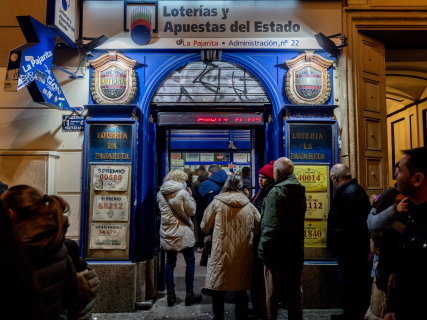
EuropaPress 7190192 gente comprando loteria sorteo extraordinario nino 29 diciembre 2029 madrid

EuropaPress 7190192 gente comprando loteria sorteo extraordinario nino 29 diciembre 2029 madrid

Add DEMÓCRATA to Google

Ask FREN

Published

Last updated

1 minute

Most read

This Monday, October 5, 2026, the Bonoloto, La Primitiva, EuroDreams, and the Daily Coupon of the ONCE are celebrated. The four draws are concentrated during the afternoon and evening.

La Primitiva puts a jackpot of 31.5 million euros at stake, while EuroDreams maintains its main prize of 20,000 euros per month for 30 years. The Bonoloto celebrates a draw again after the first category winner on Sunday, and the Daily Coupon offers up to 500,000 euros.

These are the schedules for each draw and the keys to check the results once the extractions are finished.

What draws are there today, Monday, October 5

  • EuroDreams: 20:30 hours.
  • Bonoloto: 21:00 hours.
  • La Primitiva and Joker: 21:15 hours.
  • Daily Coupon of the ONCE: 21:25 hours.

Bonoloto

The Bonoloto celebrates a new draw this Monday after there was a first category winner on Sunday, who obtained 1,576,467.52 euros.

The extraction will determine the six numbers of the winning combination, in addition to the complementary and the refund.

La Primitiva

The Primitiva reaches a jackpot of 31.5 million euros this Monday. The draw also includes the Joker and will determine the winning combination, the complementary, and the refund.

The draw is scheduled for 21:15 hours.

EuroDreams

EuroDreams celebrates one of its weekly draws this Monday. The main prize consists of 20,000 euros per month for 30 years.

The combination consists of six numbers and a Dream number.

Daily Coupon of the ONCE

The Daily Coupon of the ONCE is celebrated this Monday at 21:25 hours and offers a first prize of 500,000 euros for the five digits and the corresponding series.

The draw also includes different prize categories based on matches with the winning number.

Results of today's draws

The results of the Bonoloto, La Primitiva, EuroDreams, and Daily Coupon will be incorporated into their respective pieces once the extractions of this Monday are finished.

More key points, information and questions with FREN

AI-GENERATED CONTENT

What legal requirements must operators meet to organize lotteries like Bonoloto or La Primitiva in Spain?

In Spain, lotteries such as Bonoloto or La Primitiva are part of state-level lotteries and are subject to a very specific legal regime. The basic regulation is Law 13/2011, of May 27, on the regulation of gambling (text in BOE), complemented by specific regulations of State Lotteries and Bets (SELAE) and ONCE. From this, the key requirements can be summarized.

1. Activity reservation and who can operate
  • Reservation of state-level lotteries: Law 13/2011 maintains the exclusive reservation of the state-level lottery gambling activity in favor of the State Society of Lotteries and Bets (SELAE) and ONCE for their own products. That is, lotteries like Bonoloto or La Primitiva can only be organized by SELAE, not by ordinary private operators.
  • The justification for this reservation is linked to the large economic volume of these lotteries, the risk of fraud and money laundering, and the need for intense public control over the sector.
2. Enabling titles and licenses

Although SELAE and ONCE have a singular status, Law 13/2011 establishes a general market access system through enabling titles:

  • For other state-level gambling activities (especially those marketed through electronic channels), it is generally necessary to have:
    • A general license by type of game, with an ordinary duration of ten years, renewable.
    • One or more specific licenses for each particular modality (for example, each specific type of game associated with that general license), lasting between one and five years.
  • The granting of licenses must respect the principles of transparency, objectivity, and non-discrimination and is conditioned on compliance with technical, financial, and solvency requirements.
  • In the case of reserved lotteries, the Law provides that the competent Ministry (currently Economy/Finance) authorizes their commercialization by setting, among other aspects:
    • The minimum and maximum percentage allocated to prizes.
    • The conditions and requirements of the draws and their number.
    • The rights of participants and complaint procedures.
    • The conditions of advertising and sponsorship.
    • Measures for protection of minors and vulnerable persons and for prevention of fraud and money laundering.
3. Obligations of operators

Law 13/2011 establishes a broad set of material and conduct obligations for operators, which also apply to SELAE and other authorized entities:

  • Objective prohibitions: games that violate fundamental rights, are based on crimes or infractions, or involve prohibited events cannot be organized.
  • Subjective prohibitions: participation of minors and incapacitated persons, those who have self-excluded or are prohibited from gambling by judicial resolution, as well as certain groups with conflicts of interest (directors and employees of the operator, certain participants in sports betting, senior officials of the regulator, etc.) is prohibited.
  • Access control: operators must implement technical measures to enforce these prohibitions (age verification, identification systems, and, in telematic channels, blocking mechanisms).
  • Transparency obligations:
    • Guarantee the integrity and security of the draws, prize calculation, and payment.
    • Clearly inform about the game rules, probabilities, prizes, and complaint channels.
    • Use channels and brands that do not cause confusion with illegal operators.
  • Responsible gambling management:
    • Prevent addiction and harmful effects of gambling, especially in minors and vulnerable persons.
    • Implement measures to monitor player behavior (consumption patterns, spending levels, payment methods) to detect risks and fraud.
  • Money laundering prevention: strict compliance with Law 10/2010 on money laundering prevention; preparation of anti-fraud manuals, reporting suspicious operations, and cooperation with competent authorities.
4. Competent authorities and administrative control

The institutional framework is articulated at several levels:

  • Ministry of Economy and Finance (or the body assuming its powers): defines sector planning, authorizes state-level lotteries, and approves the basic regulation of each game.
  • A state gambling regulatory body (whose configuration has evolved), responsible for:
    • Supervising the integrity, security, reliability, and transparency of operations.
    • Granting and controlling licenses and authorizations.
    • Monitoring compliance with player protection and fraud prevention obligations.
  • Autonomous Communities: retain powers over in-person gambling in their territory. For opening physical premises or terminals, in addition to the state title, autonomous authorization is required according to their own gambling dimensioning policy.
  • Money laundering prevention bodies: the Executive Service of the Commission for the Prevention of Money Laundering supervises specific obligations in this area.

In summary, state lotteries like Bonoloto or La Primitiva can only be organized by SELAE under a legal activity reservation, under a strictly regulated regime of licenses and authorizations, subject to intense public control, and with strong obligations of transparency, responsible gambling, and player protection.

Could you detail which specific articles of Law 13/2011 regulate the reservation of state lotteries and gambling licenses? What legal differences exist between SELAE draws and games offered by private online operators in Spain? What role do the autonomous communities play in authorizing physical points of sale for state lotteries?

What are ONCE's competencies in organizing lotteries and what regulations govern its activities?

ONCE is a singular state-level gambling operator: it can organize and exploit certain lotteries (the traditional coupon, instant lottery, and active game), but always within a specific legal reservation and under a very strict regime of authorizations and public control. Its profits must be allocated to social purposes related to visual disability and, through Fundación ONCE, to other disability groups.

1. ONCE's competencies in organizing lotteries

According to Royal Decree 358/1991, of March 15, reorganizing ONCE, and its amendment by Royal Decree 1127/2021:

  • ONCE is a public law corporation of social character, with full self-organization capacity, financed “mainly through resources obtained from the exploitation of the gambling modalities” reserved by law (coupon and other authorized lotteries).
  • It holds the state concession for the sale of the blind coupon and commercialization of other authorized games. The profits from this exploitation constitute one of its essential financing means (art. 5 RD 358/1991).
  • The Council of Ministers is responsible for granting authorizations to ONCE “related to the regime of draws of the blind coupon, as well as any other gambling modality,” precisely defining terms, scope, duration, maximum volume of issuance and sales, prize percentage, maximum coupon prices, and extraordinary draws (art. 7 RD 358/1991).
  • Within those maximum limits, ONCE can design products (modalities like Daily Coupon, Weekend, Cuponazo, Triplex, Super Once, etc.), set draw characteristics, prize structure, marketing conditions, and campaigns, always respecting the authorization framework.
  • It must submit to the Protectorate Council and, if applicable, the Council of Ministers projects to modify the coupon regime and other games requiring prior authorization (arts. 7 and 11 RD 358/1991).
  • It is subject to strict public control: the ONCE Protectorate Council supervises its activity, informs on gambling authorizations, and, after the 2021 reform, has a Disciplinary Commission (only Administration representatives) with sanctioning power for gambling infractions (arts. 8 RD 358/1991 and RD 1127/2021).
  • There is also a General Government–ONCE Agreement 2022–2031, approved by the Council of Ministers, which specifies commercial conditions, limits, and rules of stability and cooperation, referenced by both RD 358/1991 and gambling authorizations.
2. Legal reservation and basic gambling regulation

Law 13/2011, of May 27, on the regulation of gambling, is the sector's framework law. In its preamble and additional provisions:

  • It maintains the exclusive reservation of state-level lotteries in favor of two operators: the State Society of Lotteries and Bets (SELAE) and ONCE (First Additional Provision).
  • It recognizes the legal singularity of ONCE as a public law corporation of social character, “a gambling operator of recognized prestige subject to strict public control,” and refers its specific regime to:
    • The Twentieth Additional Provision of Law 46/1985, the Budget Law for 1986.
    • The General Government–ONCE Agreement in force at each time.
    • The Royal Decree 358/1991 itself and its amendments.
  • It establishes, generally, the rules on licenses, planning, control, fraud and money laundering prevention, advertising, and sanctioning regime that also apply to ONCE in its gambling activities.
3. Specific regulations of ONCE's gambling products

Beyond the basic framework, the specific modalities managed by ONCE are regulated by regulations approved by its internal bodies and verified and published by the Administration:

  • ONCE Coupon Regulation, newly approved by the Resolution of April 4, 2023 (State Secretariat for Social Rights), which systematizes the different coupon types (daily, weekend, Cuponazo, extraordinary…), participation mechanics, prize structure, expiration, etc.
  • Regulation of the “ONCE Active Game” modality, approved by Resolution of April 4, 2023, regulating products like Super Once, Triplex, and other numeric games.
  • Regulation of the “ONCE Instant Ticket Lottery”, also approved in 2023 and subject to successive modifications in 2023–2026 (for example, Resolution of January 29, 2026), detailing the characteristics of “scratch cards,” their issuance, series, winning combinations, etc.
  • Royal Decree 1336/2005, of November 11, specifically authorizes ONCE to exploit instant or pre-drawn lottery; its validity has been extended until December 31, 2031, by Royal Decree 1127/2021.
  • The ONCE Statutes (consolidated text published by Order SCB/1240/2019) and Law 5/2011, on Social Economy, which recognize it as a “singular social economy organization,” complete its legal status.

Overall, ONCE does not have general freedom to organize draws like a private operator but a limited and concessional competence: it can create and manage lottery products within the legal reservation recognized by Law 13/2011, according to Council of Ministers authorizations and under the permanent control of the Protectorate Council. The obtained resources must be primarily channeled to the care, inclusion, and employment of blind or disabled persons, which explains its reinforced public control regime compared to other gambling operators.

What differences exist between national lottery draws in Spain and those in other European countries?

In Europe, national lotteries share a basic logic —raising funds through gambling to distribute prizes and finance the public sector— but the Spanish model presents relevant nuances compared to France, Italy, the United Kingdom, and Germany, especially in management, taxation, and destination of profits.

1. Public management model

Spain

  • Games like National Lottery, Primitiva, Bonoloto, and Euromillions are managed by a state company: State Lotteries and Bets (SELAE).
  • It is a 100% public company: profits are transferred almost entirely to the Treasury, via dividends, as general State income.
  • It coexists with other public or social-purpose operators, such as ONCE, also subject to specific state regulation.

United Kingdom

  • The National Lottery is operated through a license or concession system granted to a regulated private operator, under legislation approved by Parliament.
  • The State does not directly manage the game but supervises the concessionaire and sets the percentages that must go to prizes, costs, and causes of general interest.

France, Italy, and Germany

  • France: Française des Jeux (FDJ) is the major gambling and lottery operator, with public participation and exclusive rights reinforced by law. The European Commission has validated this model as long as State remuneration is adequate.
  • Italy: the State organizes the market through concessions to operators (such as Lottomatica for certain modalities), under strong regulatory control.
  • Germany: a decentralized structure, with regional public monopolies (Lotto of each Land) coordinated at the federal level.

2. Types of games and draw design

Spain combines two major families:

  • Preprinted ticket draws: National Lottery, with closed issues and prizes by fractions (tenths).
  • Number lotteries: Primitiva, Bonoloto, El Gordo de la Primitiva, where the player chooses combinations.
  • Transnational games: Euromillions, coordinated with other European countries.

In France, Italy, and Germany, the catalog is similar (weekly number lotteries, instant games like scratch cards, extraordinary raffles), but with their own brands (French Loto, Italian SuperEnalotto, German regional lotteries) and jackpot structures and frequency adapted to each market.

In the United Kingdom, the National Lottery focuses on number games and draw games, with specific products to finance concrete projects (“good causes”).

3. Prize structure and probability

  • In Spain, regulations set percentages of revenue allocated to prizes; in many products, the prize return ranges from 55–70% of sales, varying by game.
  • Prizes are organized in categories (top hits, second prizes, refunds, etc.). The same draw can distribute large unique prizes and thousands of smaller prizes.
  • The French, Italian, and German models are similar in technical structure (categories, accumulated jackpots, refunds), but differ in specific probabilities and the weight of large prizes versus medium and small ones.
  • In Euromillions, shared by several countries, combination rules and categories are common, but tax treatment and prize collection are managed according to the country where the ticket is validated.

4. Taxation of player prizes

This is one of the points where Spain differs most:

Spain

  • Prizes from SELAE, ONCE, and other public operators have a minimum exemption (currently €40,000 per winning ticket or bet).
  • Only the amount exceeding that threshold is taxed, with a special 20% levy, withheld at the time of collection.
  • For the winner, the prize arrives already “net” of that specific tax; then only any income generated by the money (interest, investments, etc.) is taxable.

United Kingdom

  • National Lottery prizes are effectively exempt for the winner: they are not included in income tax.
  • Taxation applies upstream, via levies on the operator and income distribution structure.

France, Italy, and Germany

  • In France, generally, regulated lottery prizes are not treated as ordinary income for the winner; the tax burden is concentrated on the operating company and specific gambling taxes.
  • In Germany, legal lottery prizes are usually exempt for the player, although operators and bets bear their own taxation.
  • In Italy, it is more common to find withholdings on prizes or special regimes, but with configurations different from Spain.

5. Destination of profits

  • In Spain, SELAE's profit is transferred almost entirely to the State and is generally not linked to specific projects visible to the player, but to the general public budget. In ONCE, the surplus is linked to maintaining sheltered employment and social programs of the organization itself.
  • In the United Kingdom, a very significant part of revenue is earmarked from the start for “good causes” (sports, culture, heritage, community projects), which is very present in public communication.
  • In France, Italy, and Germany, profits are distributed among general taxes, returns to the public shareholder or concessionaire, and financing of social or cultural programs, with a variable degree of earmarking depending on the country or Land.

In summary, Spain is characterized by direct state management, visible taxation on prizes above a certain threshold, and channeling profits to the general budget, while other European countries tend to exempt the winner more and emphasize the link between the lottery and specific social projects.

Could you explain in more detail exactly how lottery prize taxation works in Spain, with different numerical examples? What role do European institutions, such as the European Commission, play in monitoring lottery monopolies and concessions in countries like France or Spain? How do addiction risks and responsible gambling policies compare between the Spanish lottery and those of the United Kingdom, France, Italy, and Germany?

Play

Test your knowledge with FREN!

How much do you know about this topic? Answer the following 3 questions.

What is the jackpot amount for La Primitiva on Monday, October 5, 2026?

Question 1 of 3

What is the main prize of EuroDreams?

Question 2 of 3

At what time is the ONCE Daily Coupon draw held this Monday?

Question 3 of 3