Draws for today Friday, August 14: schedules of Bonoloto, Euromillones, Eurojackpot and Cuponazo ONCE

This Friday, August 14, 2026, the draws of Bonoloto, Euromillions, Eurojackpot, and the Cuponazo of the ONCE are held. Check what time each draw is, the jackpots and prizes at stake, and when the results will be available.

4 minutes

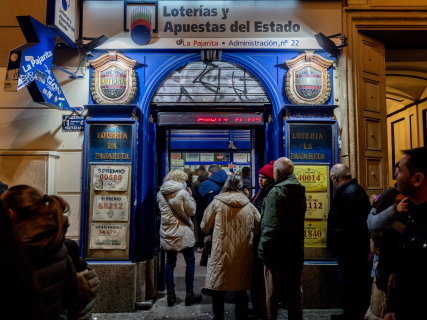
EuropaPress 7190192 gente comprando loteria sorteo extraordinario nino 29 diciembre 2029 madrid

EuropaPress 7190192 gente comprando loteria sorteo extraordinario nino 29 diciembre 2029 madrid

Add DEMÓCRATA to Google

Ask FREN

Published

Last updated

4 minutes

Most read

This Friday, August 14, comes with a new day of draws in Spain. During the day, Bonoloto, Euromillions, Eurojackpot, and the ONCE Cuponazo are celebrated, four of the main events for those who want to check if their ticket or coupon has been awarded.

Euromillions has a jackpot of 28 million euros, while Eurojackpot starts with 17 million euros. Bonoloto celebrates a new daily draw and the ONCE Cuponazo offers a main prize of 6 million euros if the five digits and the series match.

The key this Friday is knowing what time each draw is held, what prize is at stake, and when the winning numbers can be checked.

What draws are there today, Friday, August 14

This Friday, four main draws are held for players:

Bonoloto.
Euromillions.
Eurojackpot.
ONCE Cuponazo.

Additionally, during the morning, the already published results of the draws from Thursday, August 13, can be checked, although those correspond to the previous day and not to today's draws.

What time is Eurojackpot today

Eurojackpot celebrates one of its two weekly draws this Friday, August 14. The game consists of guessing five numbers and two stars to opt for the first category prize.

The Eurojackpot for this Friday is 17 million euros. The draw is held at 20:00 hours and the results can be checked later on JuegosONCE.

What time is Euromillions today

Euromillions also celebrates one of its two weekly draws this Friday, August 14. To opt for the first category prize, you must guess five numbers and two stars.

The Euromillions jackpot for this Friday is 28 million euros. Additionally, bets validated in Spain automatically participate in the associated draw of El Millón.

The draw is scheduled for 20:30 hours. The results will be available shortly after on the official channels of Loterías y Apuestas del Estado.

What time is Bonoloto today

Bonoloto celebrates a new daily draw this Friday, August 14. The game is held every day of the week and offers prizes in different categories according to the hits obtained.

To participate, you must select six numbers between 1 and 49. The winning combination is completed with a complementary number and a refund.

The Bonoloto draw is scheduled for 21:00 hours. The results can be checked later on the official channels of Loterías y Apuestas del Estado.

What time is the Cuponazo ONCE today

The Cuponazo of the ONCE is celebrated this Friday, August 14 at 21:25 hours. It is the big draw of the ONCE on Fridays and allows you to win up to 6 million euros with the five digits and the series.

In addition to the main prize, the Cuponazo distributes prizes for matching the five digits, the first or last four digits, the first or last three, and other matches.

When will the results be available

The results will be known shortly after the celebration of each draw. Eurojackpot is scheduled for 20:00 hours, Euromillions for 20:30 hours, Bonoloto for 21:00 hours, and the Cuponazo of the ONCE for 21:25 hours.

In the case of Eurojackpot, JuegosONCE allows you to check the results after the draw, while the results of Euromillions and Bonoloto are published on the official channels of Loterías y Apuestas del Estado.

The winning numbers and the final counts may take a few minutes to become available, so it is advisable to check the tickets when the official bodies have published the results.

Is there National Lottery today Friday?

No. This Friday, August 14, there is no National Lottery draw. The National Lottery holds its usual draws on Thursdays and Saturdays. The next appointment will be on Saturday, August 15.

Is there La Primitiva today Friday?

No. This Friday there is no La Primitiva draw. La Primitiva is held on Mondays, Thursdays, and Saturdays. The next appointment will be on Saturday, August 15.

Is there EuroDreams today Friday?

No. This Friday EuroDreams is not held. EuroDreams has its draws on Mondays and Thursdays. The next appointment will be on Monday, August 17.

Is there El Gordo de la Primitiva today Friday?

No. This Friday El Gordo de la Primitiva is not held. El Gordo de la Primitiva is the Sunday draw of Loterías y Apuestas del Estado. The next appointment will take place on Sunday, August 16.

Is there Sueldazo de la ONCE today Friday?

No. This Friday there is no Sueldazo de la ONCE. The Sueldazo Fin de Semana is held on Saturdays and Sundays. The draw of the ONCE that corresponds to this Friday is the Cuponazo.

How to check if you have won

To check if a ticket, tenth, or coupon has been awarded, you must review the complete number and, when applicable, the series, the refund, the complementary, the stars, the suns, or the endings.

In the draws of the ONCE, the official results can be consulted on JuegosONCE and at authorized points of sale.

In the draws of State Lotteries and Betting, such as Bonoloto and Euromillions, the official results must be verified at SELAE or at authorized administrations.

Where to claim a prize

Smaller prizes can usually be claimed at authorized points of sale or lottery administrations.

Higher amount prizes require following the procedure established by each organization. In the case of State Lotteries and Betting, high prizes must be processed according to the official channels enabled for that purpose.

To claim any prize, it is essential to keep the ticket, tenth, or original coupon in good condition.

When do prizes expire

Prizes from State Lotteries and Betting generally expire three months from the day after the draw.

In the case of ONCE, the coupons have a specific collection period, so it is advisable to always check the official conditions and not let the days pass.

The recommendation for players is to check the results as soon as possible and to do so only from official sources before claiming any prize.

A day with Bonoloto, Euromillions, Eurojackpot, and Cuponazo

This Friday, August 14, concentrates four main draws: Bonoloto, Euromillions, Eurojackpot, and ONCE's Cuponazo.

Euromillions offers 28 million euros, Eurojackpot starts from 17 million, and Cuponazo offers up to 6 million euros. The day will be marked by the afternoon and evening draws and by the verification of tickets and coupons once the official organizations publish the results.

More key points, information and questions with FREN

AI-GENERATED CONTENT

What are the legal requirements for claiming prizes over 2,500 euros in State Lotteries and Betting?

Under current regulations, there is no specific threshold of 2,500 euros: prizes from State Lotteries and Betting (LAE) are subject to a special tax when they exceed 40,000 euros per ticket or bet, according to the thirty-third additional provision of Law 35/2006 (IRPF) as amended by Law 16/2012 and modified by the 2018 Budget Law. Below that amount, the prize is exempt and paid in full; above it, a 20% withholding applies on the amount exceeding 40,000 euros. For claiming, regardless of the amount (2,500, 10,000 or 300,000 euros), the paying entity must identify the winner, apply withholding if applicable, and report the information to the Tax Agency using the legally approved forms.

1. Legal framework of the tax on lottery prizes

The tax regime for LAE prizes is mainly structured in:

  • Law 35/2006 on IRPF, whose thirty-third additional provision regulates the special tax on prizes from certain lotteries and bets (consolidated text accessible at Law 35/2006).
  • Law 16/2012, which introduces this special tax and develops it for both residents and non-residents, including a specific provision for the Non-Resident Income Tax (Law 16/2012).
  • Law 6/2018 on the General State Budgets, which raises the exempt amount and sets the transitional regime for 2018 and 2019, included in its thirty-fifth transitional provision (Law 6/2018).
  • Order HAP/70/2013, which approves form 230 (withholdings and payments on account of the special tax) and form 136 (self-assessment of the tax) for IRPF and IRNR (Order HAP/70/2013).
  • Order HAP/2368/2013, which approves form 270, the annual summary of withholdings and payments on account of the special tax, to be submitted by paying entities (Order HAP/2368/2013).

2. Exempt threshold and withholding at source

According to the thirty-third additional provision of Law 35/2006, in its consolidated wording (extract reproduced in the trace):

  • Objective scope: the special tax applies to prizes from:
    • Lotteries and bets of the State Society of Lotteries and Betting,
    • organs or entities of the Autonomous Communities,
    • draws of the Spanish Red Cross and games authorized to ONCE,
    • and equivalent prizes from public bodies or non-profit entities of other EU/EEA States.
  • Exemption: prizes whose full amount is equal to or less than 40,000 euros per ticket, fraction, or bet are exempt. If there are multiple co-owners, this exempt amount is prorated among them.
  • Tax base: for prizes exceeding 40,000 euros, the tax base is the portion of the prize exceeding those 40,000 euros.
  • Rate: a 20% rate applies on that base. The same 20% is set as the percentage of withholding or payment on account, so the paying entity deducts the tax directly when paying the prize.
  • Accrual: the tax accrues when the prize is paid or delivered.

Consequently, today, a prize of more than 2,500 euros but equal to or less than 40,000 is paid in full (no special tax withholding applies), although it must follow the same formal identification requirements as any other prize.

3. Practical requirements for claiming

Although the analyzed regulation focuses on the tax and the obligations of entities, it implies basic requirements affecting the winner:

  • Identification of the recipient: Law 35/2006 provides information obligations for entities paying prizes (articles on information supply obligations, cited in the trace). In practice, the LAE collaborating entity must personally identify the winner (natural or legal person) to:
    • correctly attribute the prize for the special tax,
    • and comply with the obligation of informative declaration and payment on account (forms 230 and 270).
  • Shared prizes: when the prize is jointly owned, DA 33.2 and 3 of Law 35/2006 establish that both the exempt part and the tax base are prorated among co-owners according to their share. Practically, each must be identified so that the 40,000 euro exemption and any withholding are properly allocated.
  • Final withholding: according to DA 33.7 and 8 of Law 35/2006, if the corresponding withholding or payment on account has been applied, taxpayers:
    • are not required to file the specific self-assessment of the tax, unless no withholding was applied,
    • and the prize is not integrated into the general IRPF tax base, nor do withholdings reduce the total tax due.
  • Non-residents: Law 16/2012 adds a fifth additional provision to the IRNR with an analogous special tax for non-residents without permanent establishment, also with 20% withholding and similar exemption and information rules.

4. What this implies if the prize exceeds 2,500 euros

Summarizing operationally:

  • If the prize is greater than 2,500 euros but does not exceed 40,000, the payment is full (the special tax does not apply), but the paying entity must identify the winner and declare the prize to the Tax Agency using the corresponding forms.
  • If the prize exceeds 40,000 euros, LAE or the collaborating entity:
    • calculates the part of the prize exceeding 40,000 euros,
    • applies a 20% withholding on that excess,
    • and pays the remainder to the winner. For IRPF purposes, the taxpayer does not pay tax again on that prize.
How has the exempt limit in the special tax on lottery and betting prizes historically changed? If a winning ticket is shared among several people, what specific steps must we follow to properly distribute the 40,000 euro exemption among all? What differences exist in the tax treatment of a State Lottery and Betting prize for a resident in Spain versus a non-resident?

What is the parliamentary process for approving regulations on new gambling games in Spain?

In Spain, the approval of new regulations on gambling at the state level is generally carried out through an ordinary law processed in the Cortes Generales, either at the initiative of the Government (bill) or parliamentary groups or other legitimized subjects (private member's bill). These laws are approved by simple majority in the Congress of Deputies. The process includes several stages: drafting the initiative, amendments, debates in Congress and Senate, and culminates with the King's sanction and publication in the BOE. Regarding the specific procedure in autonomous communities competent in on-site gambling and the use of royal decree-laws, no further information is available in the consulted sources.

1. Type of initiative and nature of the norm

To regulate new gambling games at the state level, an ordinary law is used, which can take two main forms:

  • Bill: legislative initiative of the Government, first approved in the Council of Ministers and then sent to the Congress of Deputies for parliamentary processing.
  • Private member's bill: initiative of parliamentary groups, deputies, Senate, autonomous assemblies, or popular legislative initiative. It is presented directly in Congress or Senate and follows a procedure very similar to that of a bill.

In both cases, the objective is the same: to create, modify, or repeal laws that regulate the gambling sector (for example, introducing new game categories, authorization requirements, or consumer protection measures).

2. Main stages in the Congress of Deputies

The parliamentary process of an ordinary law on gambling follows the general stages foreseen for any bill or private member's bill:

  • 1) Drafting and presentation: if it is a bill, the text is drafted within the Government and approved in the Council of Ministers before being sent to Congress. If it is a private member's bill, it is drafted and presented by the proposing subject (e.g., a parliamentary group).
  • 2) Qualification and admission for processing: the Congress Board examines the text and decides on its admission for processing.
  • 3) Amendment period: once admitted, a period opens for parliamentary groups to submit amendments, either to modify specific articles or, if applicable, to propose alternative texts.
  • 4) Totality debate: in the Plenary of Congress, a totality debate may be held, where amendments to reject the text globally or return it to the Government are proposed. If these totality amendments do not succeed, the initiative continues its processing.
  • 5) Committee work: the competent committee (in this case, the one assigned gambling or consumer matters, as determined) discusses and votes on partial amendments and drafts a report.
  • 6) Final debate and vote in Plenary: the committee's report is debated and voted on in the Congress Plenary. Amendments still alive because they were not incorporated in committee may also be debated.

In all decisive votes in Congress for an ordinary law, a simple majority is required: more votes in favor than against, disregarding abstentions.

3. Processing in the Senate and final approval

Once the gambling law is approved in Congress, the text is sent to the Senate:

  • The Senate may approve the text without changes.
  • It may introduce amendments, which must then be accepted or rejected by Congress.
  • It may issue a veto on the text, which Congress can override by an absolute majority or, after two months, by a simple majority.

Once this phase is overcome, the final text of the law is sent for sanction and promulgation by the King, and subsequently published in the Official State Gazette, at which point it becomes binding law and can establish the legal regime for new gambling games.

4. On autonomous communities and royal decree-laws

Although in practice autonomous communities play a relevant role in regulating on-site gambling, and the Government could resort to figures such as the royal decree-law in certain circumstances, no further information is available in the consulted sources to detail precisely the specific parliamentary procedure in those areas. Therefore, the above description is limited to the general process of state ordinary law, which constitutes the main channel for approving regulations on new gambling games in Spain.

What practical differences exist between a state gambling regulation processed as a Government bill or as a parliamentary group private member's bill? How is the relationship articulated between a future state law on new gambling games and the normative competences of the autonomous communities? What types of amendments do parliamentary groups usually propose in the processing of gambling laws (e.g., regarding advertising or protection of minors)?

What specific functions does ONCE have in the management and supervision of draws in Spain?

ONCE is one of the two operators designated by the State to operate lotteries at the state level and, within that framework, has very broad functions in the management, organization, and operation of its draws (daily coupon, Cuponazo, Sueldazo, instant lottery, etc.). It designs and internally regulates its products, sets their commercial and prize conditions, organizes the draws, and manages prize payments through its network of over 21,000 sellers and the JuegosONCE platform. However, all this is carried out under a state concession and under the control of the ONCE Protectorate, which verifies that its regulations and products comply with the Gambling Law and other regulations. Additionally, the organization assumes internal control and responsible gaming functions, prohibiting sales to minors and credit gambling and applying evaluation systems endorsed by the World and European Lotteries associations.

Legal framework and state concession

Resolutions from the State Secretariat for Social Rights publishing changes in the “ONCE Instant Lottery” recall the basic legal framework:

In summary, ONCE does not act as a free private operator but as the holder of a specific state concession for certain lottery modalities.

Management, organization, and operation functions

Within that concession, BOE resolutions show that ONCE assumes, among others, these specific functions:

  • Product design and modification: the ONCE General Council agrees to implement new groups of instant lottery products or repeal appendices of its regulations (“implementation of a product group… and repeal of appendices” in the resolution of October 6, 2025 and of 8 appendices in the resolution of June 17, 2025).
  • Internal regulation: it drafts and updates the Regulatory Rules of each modality (coupon, instant lottery, etc.), whose appendices detail mechanics, prices, and prizes, published and periodically consolidated in the BOE (resolution of June 14, 2024).
  • Commercial planning: decides the start date for marketing new products, later announced through periodic Protectorate resolutions, as indicated in the October 2025 resolution and the June 2025 resolution.
  • Material organization of draws: organizes the Daily Coupon, Cuponazo, Weekend Sueldazo, extraordinary coupon draws, and various instant lottery series. Democrata describes this daily operation in its pieces on daily draws and schedules (June 11, June 8, June 12, August 12, June 6, June 17, June 21, July 26, August 1, [link]).
  • Marketing and prize payment: manages coupon sales through its physical and online network and prize payments. Democrata details that smaller prizes are claimed at sales points and larger ones through centers or collaborating entities, and that coupons expire after 30 calendar days (June 30, July 1, July 2, July 6, July 9, July 14, July 29, August 3).

Supervision and control functions

ONCE's lottery supervision is dual: internal and state-level.

  • At the state level, the Protectorate Council (State Protectorate body over ONCE) approves the “Control Procedures and Criteria” common to its three lottery modalities and verifies, before their publication in the BOE, that regulations and changes comply with the state concession and general regulations. This function is described in the 2025 resolutions ([link], [link]).
  • ONCE is obliged to communicate sufficiently in advance to the Protectorate the conditions of all its lottery modalities and regulatory modifications, for their knowledge, verification, and subsequent publication in the BOE “as consumer guarantees,” according to these same resolutions.
  • Internally, the model of “social, safe, responsible, and solidarity lottery” implies specific controls: sales to minors and credit gambling are prohibited, measures to neutralize uncontrolled consumption are introduced, and evaluation and monitoring systems recognized by the World and European Lottery Associations are applied, as highlighted in the Sueldazo announcement published in Demócrata.

Social and economic dimension of its function

The newspaper Democrata emphasizes that ONCE does not operate as a conventional state lottery but as a model of social lotteries aimed at financing employment, salaries, and social investment of the ONCE Social Group. In 2024, these lotteries generated 2.829 billion euros, of which 1.5914 billion (56.2%) were distributed as prizes, with the remainder allocated to the organization's social structure, according to the analysis on Sueldazo ([link]) and the report on the weight of lotteries in gambling in Spain ([link]).

All this makes ONCE a unique actor: it commercially operates state lotteries under strict public regulation and control, while using this activity to support a broad social and employment program for people with disabilities.

What legal and practical differences exist between ONCE and SELAE in managing state lotteries? How does the State control that ONCE's draws are transparent and that their regulations are complied with? What economic and social impact do ONCE's lotteries have compared to other public and autonomous lotteries?

Play

Test your knowledge with FREN!

How much do you know about this topic? Answer the following 3 questions.

What is the jackpot offered by Euromillions in the draw on Friday, August 14?

Question 1 of 3

At what time is the ONCE Cuponazo draw held on Friday, August 14?

Question 2 of 3

Which draws are NOT held on Friday, August 14?

Question 3 of 3

Hola, soy Fren. ¿Cómo te ayudo?