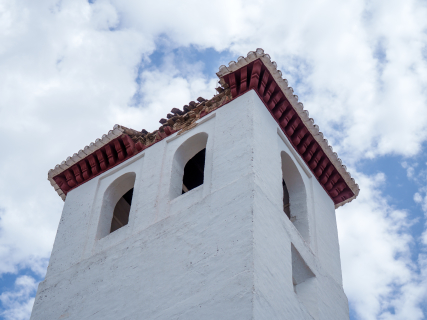

Granada arrived on Tuesday night with the municipal emergency phase activated, seven streets closed, and public services deployed to inspect buildings and assist residents, after a morning in which a new earthquake of magnitude 4.8 and a succession of seismic movements have returned fear to a province that had still not recovered from the tremor of last Saturday.
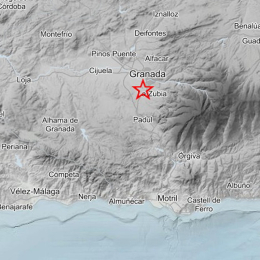
To address the emergency, Andalusian political leaders were providing responses as the day progressed on a day that had its main earthquake at 10:37 hours and reached a magnitude of 4.8, according to the National Geographic Institute (IGN), with an epicenter northwest of Gójar and practically at the surface. Afterward, new movements occurred, including earthquakes of magnitude 4 or higher in municipalities of the metropolitan area such as Ogíjares, Churriana de la Vega, and Alhendín.
The balance of human damage was three people injured with minor injuries, in addition to medical assistance for anxiety, dizziness, and trauma, damage to homes and public buildings, and new inspections in a city where the consequences of the weekend's earthquake were still being evaluated.
Sources from the Junta conveyed to DEMÓCRATA in the hours following the emergency that the priority was to assess the damage to the affected homes, as well as to assist the Granada population in light of the fear of new tremors.
Emergency level and reinforcement of police presence
The most visible political action in Granada corresponded to its City Council. After the new movements, Marifrán Carazo signed the decree to elevate the municipal plan to emergency phase 1, a decision with which the City Council was able to reinforce resources, attention, and information to citizens.
"We cannot predict any new recurrence," said the mayor, who requested "calm and tranquility" in a press conference applauded even from outside her party, according to what DEMÓCRATA has learned.
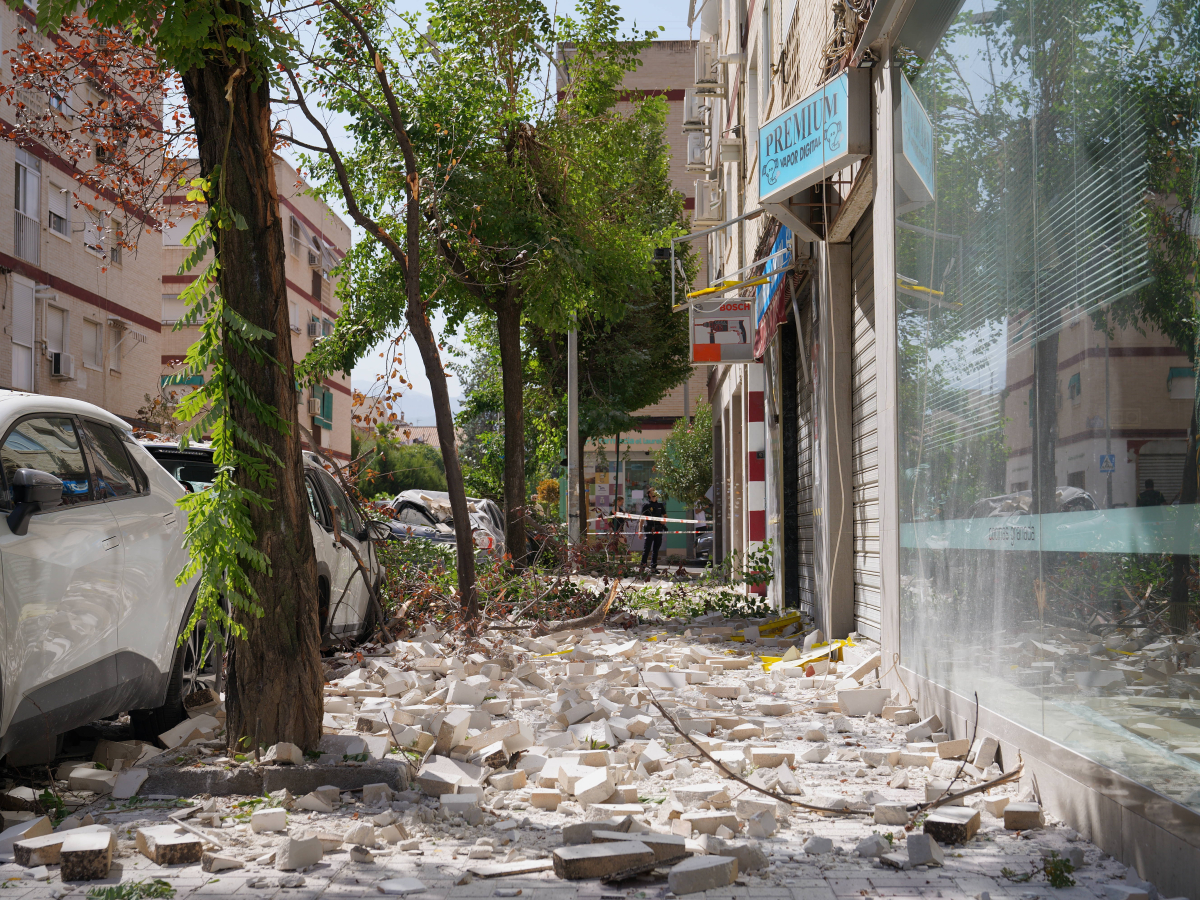
At the end of the day, seven streets remained closed due to damage and landslides: Baden Powell, Navas, Moral de la Magdalena, San Matías, San Rafael, Alóndiga, and Puentezuelas. The City Council had also recorded nine significant incidents, while inspections of facades, homes, and other properties continued.

Carazo also ordered to reinforce the Local Police. During the afternoon, 16 patrols were deployed and during the night up to ten were planned, with the aim of securing affected areas, informing the neighbors, and responding to incidents. Only Local Police and Firefighters received hundreds of alerts after the tremors.
These actions corresponded precisely to the municipal level. In the event of an earthquake, the City Council was the Administration responsible for mobilizing Local Police, Firefighters, and Civil Protection, cordoning off streets, acting against dangerous facades or cornices, inspecting buildings, and ordering evacuations when there was an immediate risk. When the autonomous plan was activated, those local resources were integrated into the coordination structure of the Junta.
The Junta maintained the autonomous direction of the emergency
Above the municipal response, the Junta de Andalucía continued directing the autonomous emergency. The Emergency Plan of Andalucía in the face of Seismic Risk remained in emergency phase, operational situation 1, a level that had already been activated after the earthquake of the weekend.
This situation meant that the emergency could still be managed with the resources available in Andalucía without the State having to assume direction. It was up to the Junta to coordinate resources, 112, and health services, distribute means among the municipalities, supervise essential infrastructures, and request state support if necessary. The first vice president and counselor of Presidency, Health, and Emergencies, Antonio Sanz, confirmed during the day that three people had sustained minor injuries, one of them a minor who was transferred to a hospital.
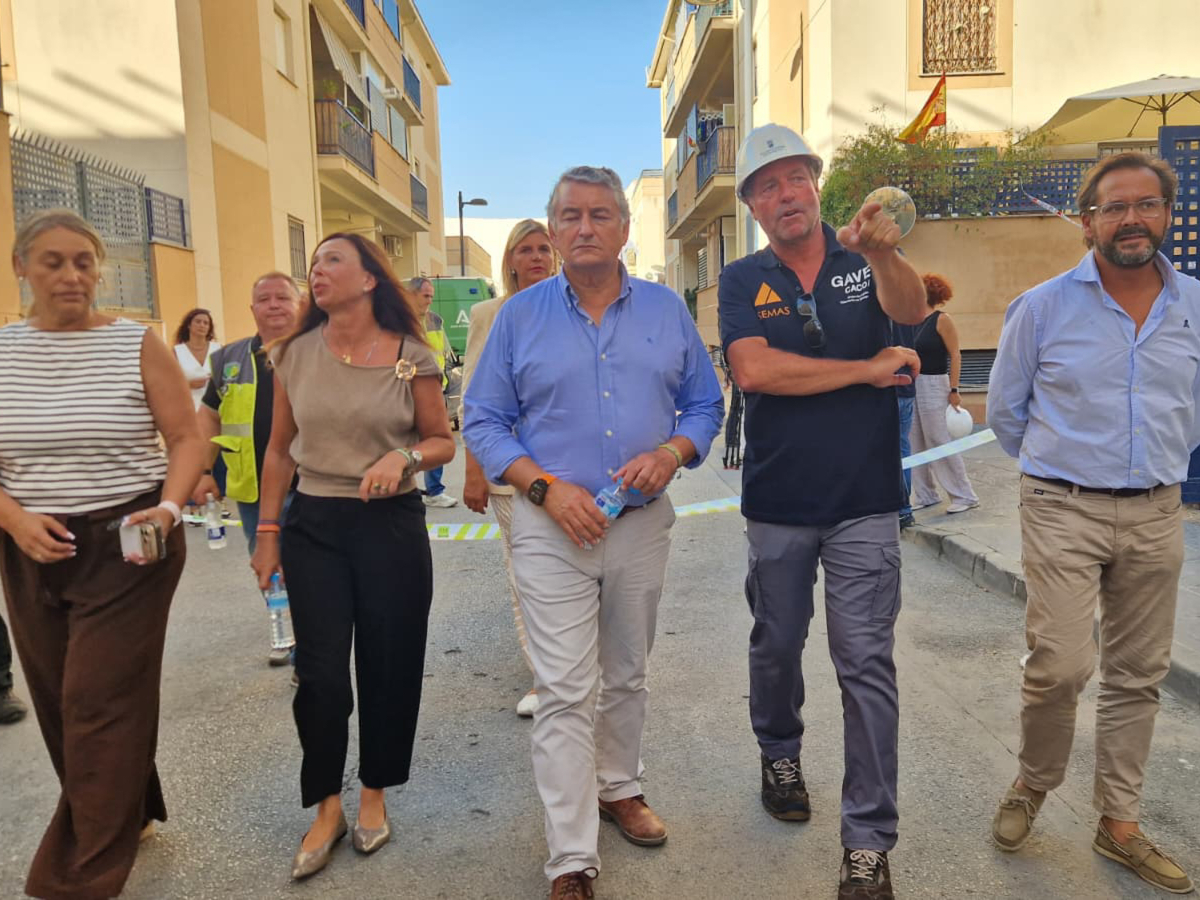
On the other hand, the Andalusian Health Service suspended scheduled healthcare activities in Granada, maintaining urgent, oncological, and essential care, while the health facilities were reviewed. The measure was part of the autonomous competencies for coordinating essential services during an emergency.
Moreno calls for "maximum caution"
The president of the Board, Juanma Moreno, focused his message on calling for caution in light of the possibility that seismic activity could continue. "Experts indicate that it is possible that seismic movements and aftershocks will continue in the area," he warned, before asking citizens to follow the recommendations of emergency services and maintain calm.
Moreno demanded "maximum caution" while technicians continued to analyze a seismic sequence that could not yet be considered finished.
Sanz conveyed a similar message, but he did so emphasizing how the population should behave during a new tremor. The counselor warned that "running out into the street is not the safest option" and reminded people of the recommendations to crouch down, cover themselves, and hold on, stay away from windows, lamps, and furniture, and not to use elevators.
And it is that in Gójar, the epicenter of the earthquake, fear marked a good part of the day. Many neighbors remained in the street for hours and some even decided to temporarily leave the town. Aftershocks occurred throughout the morning, although in the afternoon no new movements were recorded, according to the report from the municipality. Local authorities also indicated that there had been no personal injuries and that the material damage detected was of a minor nature.
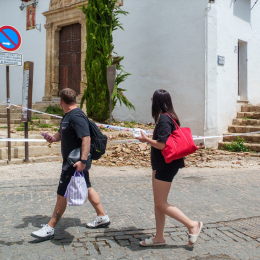
The pressure on emergency services was also reflected in the volume of calls. The municipal services received around 500 calls after the first earthquake. In the health sector, 14 assistances were provided: six for anxiety episodes, five for dizziness, and three for minor injuries related to the fall or detachment of architectural elements.
Montero calls for calm
From the Andalusian PSOE, María Jesús Montero appealed for "calm" and expressed her solidarity with those affected and asked citizens to remain attentive to the indications of the security forces while technicians continued to monitor seismic activity.
Her message coincided at that point with that of the Board by stating that no Administration could anticipate when another earthquake would occur, so the response should rely on technical monitoring, inspections, and official recommendations.
The emergency, which extends the earthquakes experienced these days, has also left this week space for the demands of the municipal opposition. On Monday, the PSOE in the Granada City Council had asked the Carazo government for a specific plan to assist the most vulnerable people, a claim that acquired a new dimension after the succession of tremors on Tuesday.
The socialist spokesperson, Eduardo Castillo, had requested to reinforce the municipal phone 010 and the information channels, increase building inspections, and pay particular attention to elderly people living alone and homeless people.
The socialists had also demanded that the Government of Spain, the Junta de Andalucía, and the City Council "join hands" and work in a coordinated manner.
The request directly affected some of the municipal responsibilities: the attention to those affected, the provision of resources for displaced persons, the inspection of buildings, and the protection of especially vulnerable groups were part of the functions that the local Administration should develop, coordinated with the Junta when the autonomous plan was active.
The Alhambra closes and inspections multiply
The institutional impact of the earthquake also extended to some of the main services and facilities in Granada. The Alhambra interrupted visits and closed preventively while its technicians inspected the monumental complex.
The reviews did not detect significant structural damage, although some localized incidents were found in non-structural elements. Municipal facilities and buildings of the Diputación also closed preventively, while the Metro temporarily reduced its speed of circulation.

Featured story
Earthquakes in Granada, in graphs: epicenters, magnitude, depth, and reach of the seismic series
5 minutes
Building inspections became one of the main tasks of the day again. Even before the earthquakes on Tuesday, the City Council had received around 800 requests to check for possible damage in homes and blocks resulting from the movement over the weekend.
What role does the central Government play?
As in any emergency, responsibility is shared among the different levels of the Administration. The Spanish Civil Protection system thus establishes a tiered response. As long as an emergency can be managed from the autonomous level, the community must take command. The State can provide extraordinary resources, Security Forces and Corps, or even the Military Emergency Unit if requested, without this necessarily meaning taking over the direction.
Only a national interest emergency declaration by the Ministry of the Interior would have transferred the direction to the State. A scenario that did not occur during the day on Tuesday.
The central Government did play an essential role through the National Geographic Institute, responsible for recording movements, locating their epicenters, and calculating magnitude and depth. Those data were what informed the subsequent decisions of the Civil Protection officials, although the IGN did not have the authority to order closures, evacuations, or street closures.