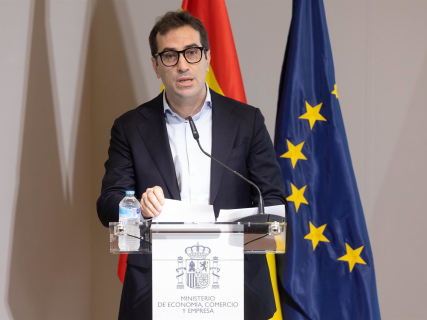

Spain enters the final stretch of execution of the Recovery, Transformation and Resilience Plan with the goal of completing all agreed reforms and investments on time and maximizing their effect on growth, modernization, and resilience of the economy.
According to the schedule set in the EU, the milestones and objectives must be executed before tomorrow Monday, August 31, while September 30 remains the deadline for officially submitting the last disbursement requests.
So far, Spain has received 78 billion in six payments, 76.5% of the 102 billion allocated, after the validation of 338 milestones and objectives.
The seventh and final disbursement of the European 'Next Generation EU' funds remains to be requested, which the Government must request before the end of September and will include the evaluation of 148 milestones and objectives to access 21.462 billion in transfers and 4.4 billion in loans.
The green light for this last payment will allow Spain to have received more than 100 billion euros from the Recovery and Resilience Mechanism before the end of 2026. In this final stage, three milestones linked to the sixth disbursement will be modified through a technical addendum to give them greater precision before integrating them into the request for the seventh payment.
The sixth disbursement, received this August, amounted to 6.234 billion euros (4.962 billion in transfers, of which 265 million corresponded to pending amounts from the fifth payment, and 1.008 billion in loans), after the fulfillment of 73 new milestones and objectives.
Two out of every three euros for the green and digital transition
According to the Government, two out of every three euros of the Plan have been directed towards the green and digital transition and the beneficiaries of the Next Generation funds reach 1.5 million, of which 68% are SMEs and microenterprises.
Specifically, 921,962 SMEs and self-employed have received aid from the Digital Kit in 90% of Spanish municipalities, while 23,429 SMEs and self-employed have accessed the Consulting Kit for specialized advice services in digitalization and 54,676 SMEs and self-employed have had the financial guarantees of CERSA.
In addition, the Government emphasizes that, thanks to the Plan, 400,000 new Vocational Training places have been created, more than 25% in digital fields, "which have enabled the improvement of employability and that Spain now has the lowest youth unemployment rate since 2008."
At the same time, the Law Creates and Grows, approved within the framework of the Plan, has driven a 50% increase in the gross creation rate of companies, up to 13,000 per month, while the Startup Law has multiplied the dynamism of the innovative ecosystem by 2.3.
An unprecedented reaction after the Covid blow
The expansion of Covid-19 since March 2020 caused a strong impact on the global economy and, particularly, on the Spanish economy, due to the high weight of activities heavily affected by the drop in mobility and demand, such as tourism.
The intense contraction of the Spanish Gross Domestic Product (GDP), exceeding 10% in 2020, represented an unprecedented challenge in recent history and led to an economic policy response different from that of previous crises, both nationally and in the European and international spheres.
In July 2020, the European Council approved an extraordinary instrument to address the economic and social consequences of the pandemic. Initially endowed with 750 billion under the name 'Next Generation EU', the EU launched the Recovery and Resilience Mechanism, with transfers and loans, for member states to boost recovery after Covid and take advantage of resources to modernize their economies in the face of the challenges of digitalization and the green transition.
In the case of Spain, the initial allocation amounted to 160 billion euros for the period 2021-2026, divided into about 80 billion in direct transfers and another 80 billion in loans.
However, the final volume of credits requested by the Government has been reduced to about 21.5 billion euros, around 25% of the loans initially planned, given that Spain is currently financing itself in the markets at lower rates than those of borrowing from the EU.
The first forecasts pointed to an impact of the Recovery Plan exceeding a 2% increase in GDP over the 4 or 5 years of validity, although by 2030 that boost could rise to an additional three accumulated GDP points.
According to the latest data published by the Government on the public platform 'Elisa', by June 30, more than 95 billion would have been called, almost 80 billion allocated, and more than 70 billion resolved.
"Spain was for the second consecutive year the developed economy with the highest growth in 2025 and again the economic engine of the EU. It doubles the growth of the eurozone and contributes 40% of the growth and almost half of the job creation in the eurozone. Thanks to the Recovery Plan, Spain is today the European economy that has grown the most since pre-COVID levels, with an advance of 8.5%, which represents 40% more than the eurozone average and 22 times more than Germany," highlights the Government.
Labor and pension reforms, the most controversial
The Recovery Plan integrated a broad agenda of investments and structural reforms, designed to mutually reinforce each other and meet four cross-cutting goals: to move towards a greener, more digital, more socially and territorially cohesive, and more equitable Spain.
Among the reforms, the most discussed and difficult to push forward have been the labor and pension reforms. In the case of the labor reform, a mistake in the voting of a PP deputy allowed the Government to approve it by a single vote.
In parallel, an investment effort has been deployed through instruments such as the Strategic Projects for Economic Recovery and Transformation (Perte), based on public-private collaboration to modernize key sectors and bolster growth.
From the Recovery Plan to the sovereign fund Spain Grows
With the horizon of the end of the European 'Next Generation EU' funds, the sovereign fund 'Spain Grows' will take over, with the ambition of mobilizing 120 billion euros in areas such as housing, energy, digitalization, artificial intelligence, reindustrialization, circular economy, infrastructure, water and sanitation, and security.
This vehicle will have an initial allocation of 10.5 billion euros from the Recovery Plan, but the goal is to reach 120 billion through the raising of private debt and resources from national and international investors.
The management will fall to the Official Credit Institute (ICO), which will co-invest with the private sector through loans, guarantees, and capital instruments, prioritizing key activities to raise the productivity of the economy.
It is estimated that this base of 10.5 billion euros from the European recovery plan will increase the capacity of the ICO, which could mobilize around 60 billion directly.
Adding the contribution of financial entities and the banking system, it is estimated that the total injection of the new sovereign fund will reach 120 billion, directed to housing, energy, digitalization, artificial intelligence, reindustrialization, circular economy, infrastructure, water and sanitation, and security.