Spain stagnates in economic freedom: it remains in 53rd place and public investment continues far from 2009.

Spain maintains the 53rd position in the Heritage Foundation index, while the IEE warns of public investment in infrastructure well below the levels of 2007.

5 minutes

EuropaPress 7025112 vista obras soterramiento carretera a 5 13 octubre 2025 madrid espana obras

EuropaPress 7025112 vista obras soterramiento carretera a 5 13 octubre 2025 madrid espana obras

Add DEMÓCRATA to Google

Ask FREN

Published

5 minutes

Most read


Spain continues to lose ground in economic freedom and also does not recover the lost public investment muscle after the crisis. The country ranks 53rd out of 184 economies in the Heritage index prepared for the Institute of Economic Studies and maintains the public investment in infrastructure far from the levels of 2009, despite the extraordinary volume of European funds mobilized in recent years. The picture changes in the private sector, whose investment exceeds the European average.

Spain scores 66.8 points in the Economic Freedom Index 2026 from the Heritage Foundation, compared to 66.3 from the previous year. The improvement, of just half a point, does not change its position in the international ranking. The country remains in 53rd place out of 184 economies.

The Spanish score is 6.9 points above the world average, which stands at 59.9 points. But the comparison is less favorable when taking developed economies as a reference. With the OECD average set at 100, Spain reaches 93.1 points and ranks 31st out of the 38 countries in the organization.

The IEE, which analyzes the results of the index in the Spanish context, also warns of an uneven evolution among its different components. Fiscal health improves by 16.5 points compared to the previous year, while investment ease declines by ten points, the largest drop recorded among the analyzed indicators.

Public investment continues to be far from pre-crisis levels

The other major picture of the report appears in public investment. Spain maintains a level of investment in infrastructure that is much lower than in the years prior to the financial crisis.

The IEE estimates that public investment in infrastructure was around 13 billion euros in 2024, approximately 1% of GDP. In 2007 it reached nearly 28 billion, equivalent to 2.4% of GDP. The current investment effort is thus around 54% below what was recorded then.

The gap also appears when comparing Spain with its European partners. Between 2019 and 2024, the average investment deficit compared to the EU was around 19 billion euros annually, equivalent to 1.4% of GDP. Approximately half of that difference corresponded to the public sector, with about 10.5 billion euros per year.

The evolution is particularly significant after the deployment of European funds. According to official data from the Recovery Plan, by April 30, 2026, obligations amounting to 101,619.839 million euros had been recognized against an accumulated credit of 123,163.302 million.

The IEE points out that investment in infrastructure began to recover starting in 2023 with the support of European funds, although it remains clearly below the levels recorded during the first decade of the century.

The problem is not limited to the construction of new infrastructure. It also affects the maintenance of existing ones. Between 2018 and 2024, the average annual investment allocated to maintenance was 10.500 million euros, compared to the 12.000 million that the institute estimates necessary to compensate for the depreciation of the stock. For the period 2013-2022, its calculations indicate that more than 17.000 million additional would have been necessary to prevent its deterioration.

Screenshot 2026 10 01 143541
Graph of the total investment of EU countries. Source: Eurostat.

The private sector invests above the European average

The picture changes when separating business investment from public investment. The total investment of the Spanish economy stood at 20.3% of GDP, below the 21.6% of the European Union and the 21.4% of the eurozone.

But this figure adds public and private investment. When only the investment effort of companies is observed, Spain presents a different position: business investment reached 13.1% of GDP, compared to 12.5% of the EU and 12.2% of the eurozone.

The contrast allows for a better understanding of the total investment figure. The Spanish business sector is investing above the community average, while the lower weight of public investment contributes to the overall Spanish investment being below European levels.

The private sector also concentrates 88% of the net capital stock and 89% of investment in information and communication technologies, according to data analyzed by the IEE.

The difference between both sectors also appears in productivity and efficiency indicators. The productivity of the Spanish private sector is 39% higher than that of the public sector. In terms of efficiency, the difference reaches 33.1%, the third highest in the OECD, according to the institute.

Spain surpasses the OECD in business freedom

The behavior of Spain also changes when specifically analyzing business freedom. In this component, the country reaches 102.2 points, taking 100 as a reference for the OECD average. It also surpasses the average of the European Union, which is at 99.8 points.

The data introduces a contrast within the index itself: Spain is above the reference averages in business freedom, although it presents a weaker position in other components of economic freedom.

Among the main obstacles to business activity are energy costs, uncertainty about economic policy, and labor shortages. These three factors are among the main business concerns between 2024 and 2026.

The difficulties in filling vacancies also present a marked sectoral component. The biggest problems are concentrated in construction, hospitality, agriculture, and industry.
The ease of investing loses ten points

The evolution of the different components of the index shows two particularly notable movements. Fiscal health improves by 16.5 points in a year, although it still maintains a gap of 15.4 points compared to advanced economies.

Conversely, the investment ease loses ten points and is 13.4 points below that same reference group. Government integrity completes the areas in which the IEE identifies the greatest differences compared to advanced economies.

In the overall index, therefore, Spain's improvement is limited: it gains half a point, but does not change its position in the international ranking.

Government, corruption, and housing gain weight among concerns

The report also includes the evolution of business concerns based on CIS data. Confidence has maintained a positive trajectory since 2013, although it experienced setbacks during the pandemic and with the geopolitical changes of recent years.

Between 2022 and 2026, concerns related to the Government and political parties, corruption and fraud, and housing gain weight. At the same time, unemployment, the economic crisis, and general political problems lose relevance.

The result is a photograph with two speeds. Spain does not improve its relative position in economic freedom and maintains a public investment in infrastructure that is much lower than that of the years prior to the crisis. At the same time, business investment is above the European average.

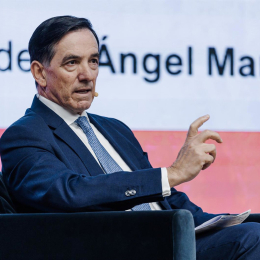
The report presented by the president of the IEE, Íñigo Fernández de Mesa, and the general director of the institute, Gregorio Izquierdo, thus places the main contrast of the Spanish economy: while the private sector maintains an investment effort superior to the community average, the public sector continues far from the level of investment in infrastructure reached before the crisis.


More key points, information and questions with FREN

AI-GENERATED CONTENT

What parliamentary or administrative procedures would be necessary to increase public investment in infrastructure in Spain to reach pre-crisis levels?

To sustainably raise public investment in infrastructure to pre-crisis levels, it is not enough to simply “decide to spend more”: in Spain, it requires chaining a series of parliamentary and administrative procedures within the framework of the Constitution, the Organic Law on Budgetary Stability, and the General Budgetary Law. The main channel is the General State Budget Law (PGE), complemented by budget modifications and Council of Ministers agreements on multi-year spending limits.

1. Political decision and alignment with fiscal rules

The starting point is a political decision by the Government and the parliamentary majority to prioritize investment in infrastructure over other spending uses. This decision must respect:

  • The Constitution (art. 135), which incorporates the principle of budgetary stability.
  • Organic Law 2/2012, on Budgetary Stability and Financial Sustainability, which sets deficit and debt targets for the State, autonomous communities, and local entities.
  • Law 47/2003, General Budgetary Law, which regulates how the state budget is prepared, approved, modified, and executed.

Even before discussing specific works, there is therefore a first block of procedures: defining the macroeconomic framework, proposing stability and debt targets, and negotiating with autonomous communities and local entities in the Fiscal and Financial Policy Council and the National Local Administration Commission. These targets are submitted to the Congress and Senate for voting.

2. General State Budgets: the main route

The ordinary instrument to increase investment is the General State Budget Law:

  • Project preparation: the Ministry of Finance coordinates the sectoral ministries (Transport, Ecological Transition, Housing, etc.), which formulate their spending programs and investment proposals (roads, railways, ports, water, digitalization…). All this fits within the spending ceiling and previously approved stability targets.
  • Approval in the Council of Ministers: the Government approves the draft PGE Law and submits it to the Congress within the constitutional deadline.
  • Parliamentary processing: the Congress debates the entirety, processes amendments (including those that may increase or redirect investment), approves a text, and sends it to the Senate, which may present vetoes or amendments. The Congress has the final say.

Without new accounts, investment remains trapped in the extension of previous budgets, making it difficult to recover investment effort levels like those of 2007–2010. Hence, various actors (such as Funcas or the Institute of Economic Studies) emphasize the importance of having updated and sufficiently expansive PGEs in investment.

3. Budget modifications and Council of Ministers agreements

If, even with new accounts, further strengthening of infrastructure investment is desired, the General Budgetary Law allows:

  • Extraordinary credits and credit supplements, which require approval by law when there is insufficient allocation in the current budget.
  • Credit modifications within the budget (transfers between items, generations, and credit increases), authorized by Finance or the Government itself, depending on amounts and affected chapters.
  • Authorization of multi-year spending commitments through Council of Ministers agreements that modify the limits of article 47 of the General Budgetary Law. Finance press releases show that this technique is systematically used for large works: railway, hydraulic, port, housing, or administrative headquarters.

These agreements do not replace Parliament but allow ministries to tender multi-year projects assuming future spending commitments consistent with investment programming.

4. Administrative and execution procedures

Once credits and spending limits are authorized:

  • Ministries prepare informative studies, construction projects, and economic reports.
  • Investments are programmed in their operating and capital budgets and coordinated with executing entities (ADIF, State Ports, hydrographic confederations, public infrastructure companies, etc.).
  • Contracting files are processed according to the Public Sector Contracts Law, with tenders, award, and formalization of work, concession, or public-private collaboration contracts.

Without this “second administrative layer,” the nominal increase in credits does not translate into tenders or executed work on the ground.

5. Possible regulatory reform to provide stability

Part of the current debate points to substantive measures: for example, legally setting a minimum or replacement investment rule to prevent infrastructure from again being the “scapegoats” of adjustment in future crises. This type of reform would require processing an ordinary law (or even organic if it affected the budgetary stability architecture), initiated by the Government or parliamentary groups, and the usual legislative procedure in Congress and Senate.

In summary, recovering pre-crisis investment levels requires combining a parliamentary majority to approve more capital-intensive PGEs, intelligent use of budget modifications, and fast, well-planned administrative execution, all within the current stability rules.

What are the main competencies and functions of the president of the Institute of Economic Studies according to Spanish regulations, and what has been Íñigo Fernández de Mesa's professional trajectory?

The Institute of Economic Studies (IEE) is a think tank created in 1979 and linked to CEOE, aimed at promoting ideas about business freedom, private property, and the market's role as an efficient resource allocation mechanism. Within its associative structure, the figure of the president holds a central weight, both in external representation and internal governance of the Institute. Since 2020, the position has been held by economist Íñigo Fernández de Mesa, whose career combines high positions in the Spanish economic administration and the private financial sector.

Competencies and functions of the IEE president

According to the statutes of the Institute of Economic Studies, the president is the highest authority of the association and assumes, in particular, the following main functions:

  • Legal representation: he holds the representation of the IEE before all kinds of public and private organizations and entities. This includes institutional interlocution with administrations, other study centers, international organizations, and business organizations.
  • Convocation and presidency of governing bodies: it corresponds to the president to convene, preside over, and adjourn the sessions of the General Assembly and the Board of Directors of the Institute, which are the basic internal decision-making bodies of the entity.
  • Direction of deliberations: within these bodies, the president directs debates and orders the deliberations, channeling agenda points, granting and withdrawing the floor, and ensuring the proper development of sessions.
  • Authorization of documents and minutes: the statutes grant him the power to authorize with his signature those documents, minutes, agreements, and correspondence of the Institute that require it. In this way, he gives formal validity to the decisions adopted and the institutional communications of the IEE.

Besides these express functions, the combination of external legal representation, leadership in the General Assembly and Board of Directors, and signing authority configures the president as a key figure in defining the IEE's position in major economic debates (tax reform, competitiveness, infrastructure, budgetary policy, etc.) and in coordination with CEOE, to which the Institute is linked as a study center.

Professional trajectory of Íñigo Fernández de Mesa

Íñigo Fernández de Mesa was born in Madrid on June 2, 1967, is an economist, and belongs to the Body of State Commercial Technicians and Economists. His career has developed in three main areas: high economic positions in the Government of Spain, responsibilities in public financial organizations, and activity in investment banking and business representation.

In the General State Administration, he held, among others, two especially relevant positions:

  • Secretary of State for Economy and Business Support, within Mariano Rajoy's Government, with direct responsibility over economic and financial policy.
  • Secretary General of the Treasury and Financial Policy, since December 2011, during the financial crisis management and banking restructuring period.

Alongside these roles, he held various responsibilities in the national and international financial architecture: he was alternate executive director of the World Bank, performed functions at the European Investment Bank, and held positions in the Treasury General Directorate. He was also a board member of the Bank of Spain and the National Securities Market Commission (CNMV), vice president of the Fund for Orderly Bank Restructuring (FROB), president of Sareb, and president of Sepblac, the Spanish financial intelligence unit. All this places him as one of the technical profiles with the greatest exposure to regulation and supervision of the Spanish financial system in the last decade.

In the private sector, before and after his government tenure, Fernández de Mesa developed a broad career in investment banking and financial advisory. Among other positions, he worked as head of public sector and infrastructure financing at Lehman Brothers and as managing director at Barclays Capital. Later, he joined Rothschild & Co Spain, where he has become chairman of the Board of Directors.

In parallel, he has strengthened his profile as a business representative. Sources consulted agree that he is vice president of CEOE and president of the Economy and Taxation Commission of the employers' association, as well as president of the Institute of Economic Studies. He is also listed as a board member of Scottish Power since 2018, chairing its audit committee since 2021, and as a member of the Altamar International Advisory Board since 2017.

Overall, his profile is that of a senior economic official who has passed through key positions in Spanish economic policy, managed top public financial institutions, and subsequently assumed leadership roles in investment banking and business organizations, from which he today projects the position of the IEE and CEOE in economic and fiscal debate.

What legal requirements must Spanish companies meet to access European funds intended for infrastructure investments?

For a Spanish company to access European funds intended for infrastructure investments (NextGenerationEU/PRTR, ERDF, CEF, etc.), it must simultaneously comply with the general requirements of Spanish subsidy regulations and the specific requirements of each program and call. Based on Law 38/2003, General Subsidies Law, its regulation (Royal Decree 887/2006), and various base orders of the Recovery Plan, several common blocks of requirements can be identified.

1. Beneficiary status and absence of prohibitions
  • According to the General Subsidies Law, only persons or entities that are in the situation that justifies the aid and meet the circumstances set out in the bases and the call can obtain beneficiary status.
  • Entities involved in typical prohibitions cannot be beneficiaries: convictions for certain crimes against the Administration (malfeasance, bribery, embezzlement, fraud, etc.), sanctions entailing loss of subsidy rights, being subject to prohibition from contracting with the public sector, having tax residence in non-cooperative jurisdictions, or being a continuation of sanctioned companies.
  • For subsidies of significant amount, it is usually also required to prove that the company complies with payment deadlines to suppliers established in late payment regulations.
2. Tax, Social Security compliance, and reimbursements
  • Spanish regulations require being up to date with tax and Social Security obligations both to obtain beneficiary status and to receive the aid. The General Subsidies Law itself provides that the subsidy cannot be paid if the beneficiary is a debtor due to a reimbursement resolution or is not up to date with the Tax Agency or Social Security.
  • The Subsidies Law regulation details how this situation is accredited (certificates, responsible declarations, authorizations for telematic consultation, etc.), and many recent PRTR base orders expressly refer to these provisions.
  • It is also prohibited to have debts from unpaid subsidy reimbursements; the situation must be regularized before payment.
3. Solvency, non-crisis company, and State aid
  • Typical infrastructure calls financed with NextGenerationEU or other EU funds require proving economic and financial solvency and sufficient technical capacity to execute the project (business volume, ratios, previous experience, etc.).
  • The requirement of not being a company in crisis according to the European State aid regulation definition is frequent; for example, companies with certain accumulated losses or insolvency situations are excluded.
  • Many bases require not being subject to a pending recovery order issued by the European Commission for illegal or incompatible aid: if there is an unfulfilled recovery order, the company cannot receive new co-financed aid.
4. Environmental compliance (DNSH) and sectoral regulations
  • In actions financed by the Recovery and Resilience Mechanism (NextGenerationEU), respecting the principle of “do no significant harm” (DNSH) to the environment is required. PRTR base orders in energy and infrastructure areas oblige both beneficiaries and subcontractors to prove this compliance and provide the necessary documentation.
  • The company must comply with applicable national and European regulations on environment, competition, public procurement, and, where appropriate, State aid. Some orders expressly highlight the obligation to hold all necessary licenses and authorizations for the infrastructure project.
  • Avoiding double financing is usually required: the same cost cannot be covered simultaneously by several EU instruments, and the bases require declaring other aid received for the same actions.
5. Principles of sound financial management, control, and traceability
  • The management of European funds is governed by the principles of equality, publicity, transparency, objectivity, effectiveness, and efficiency set out in the General Subsidies Law.
  • PRTR orders and infrastructure programs reinforce requirements for separate accounting, retention of supporting documents, collaboration with audits, and provision of indicators for EU reporting.
  • It is common to impose obligations for fraud prevention, conflict of interest, and corruption, with specific responsible declarations and the obligation to maintain expense traceability.
6. Practical documentation usually required

In practice, the basic “checklist” repeated in calls is:

  • Current deeds and powers of representation.
  • Tax ID and tax registration, along with certificates of being up to date with Tax Agency and Social Security.
  • Responsible declarations of not incurring legal prohibitions or pending recovery orders, and of not being a company in crisis when applicable.
  • Technical and economic report of the infrastructure project, with planning, milestones, budget, and schedule.
  • Documentation on environmental impact and compliance with the DNSH principle.
  • Financial information to prove solvency and, in some schemes, credit rating reports or specific ratios.
  • Commitments to maintain separate accounting, provide justification, and allow national and European audits and controls.

Each aid line, ERDF program, or CEF call specifies these requirements and may add others specific to the sector (transport, energy, ports, digital, etc.), so it is essential always to review the regulatory bases and the corresponding call in addition to the general regulations.

Can you summarize, with concrete examples from recent calls, how compliance with the DNSH principle is required and accredited in infrastructure projects? What practical differences exist between the requirements for companies applying for direct PRTR aid and those participating as contractors in public works financed with those funds? Could you prepare an operational checklist, ready to use, for an engineering SME to review if it meets the legal requirements before applying for a NextGenerationEU infrastructure aid?

Play

Test your knowledge with FREN!

How much do you know about this topic? Answer the following 3 questions.

What percentage of GDP did public investment in infrastructure represent in Spain in 2024?

Question 1 of 3

What score did Spain achieve in the 2026 Economic Freedom Index by the Heritage Foundation?

Question 2 of 3

What is one of the main obstacles identified for business activity in Spain between 2024 and 2026?

Question 3 of 3