Feijóo rehearses in Brussels the instruction manual of his foreign policy

The leader of the PP promises to restore European consensus and recover a "serious and predictable" diplomacy, despite agreeing with Sánchez on the rejection of cuts to the community budget and supporting Hernández de Cos's candidacy for the ECB.

ILUSTRACIONES (1200 x 675 px) (1200 x 675 px)

ILUSTRACIONES (1200 x 675 px) (1200 x 675 px)

Add DEMÓCRATA to Google

Ask FREN

Published

Last updated

4 minutes

Most read

In his last visit to Brussels before the general elections on November 29, the president of the Popular Party, Alberto Núñez Feijóo, wanted to convey to his European counterparts what will be his manual of foreign policy if he reaches La Moncloa. "Serious diplomacy, building alliances, and being respected." These are the main guidelines that the popular bench proposes for a possible new stage in relations between Spain and the European Union. "We will agree on the basic issues," he has anticipated from the community capital.

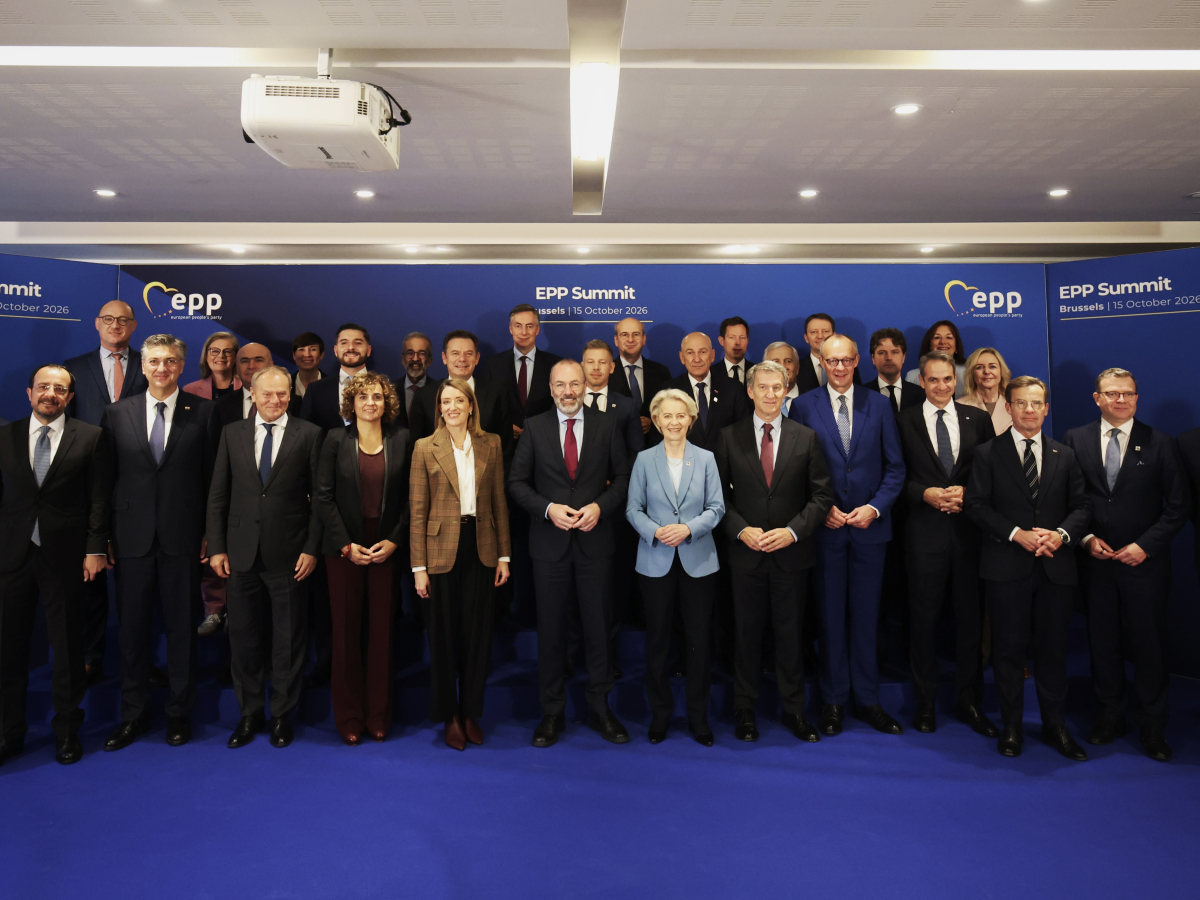
During a meeting of the leaders of the European People's Party (EPP), prior to the European Council summit, the Spanish leader has committed to designing a roadmap "predictable and one to trust." Feijóo believes that Spain has become a problem for the European Union, a situation he aspires to reverse if he manages to govern after the election date.

In fact, the popular leader has conveyed during the closed-door meeting that one of his main objectives will be to restore the European consensuses "that have now been broken." "It matters how we are seen and with whom we are seen," he has pointed out to the press upon leaving the meeting.

European budget: same music, different steps

The truth is that, when it comes to evaluating the negotiations currently open in the Schuman roundabout, Feijóo agrees with the president of the Government, Pedro Sánchez, on some of the main community files.

This is the case of the Multiannual Financial Framework (MFF), the budget of the European Union for the next seven years. In the budget discussions, Madrid is currently positioned against community cuts. The opposition leader, in this same line, has explained during his appearance after the meeting that a possible PP government would also oppose these adjustments. "I do not agree with cuts like those seen in the Common Agricultural Policy. What needs to be cut are the constant obstacles," he added.
EPP
EPP -

What obstacles is he referring to? For the popular leader, the answer lies in the "regulations that no one understands," about which he has called for an audit to assess their impact on the sector. In the face of this regulatory complexity, Feijóo has promised to speak a "clear language" in foreign policy, capable of defending "the same in Brussels as in Madrid."

Hernández de Cos, a shared bet for the ECB

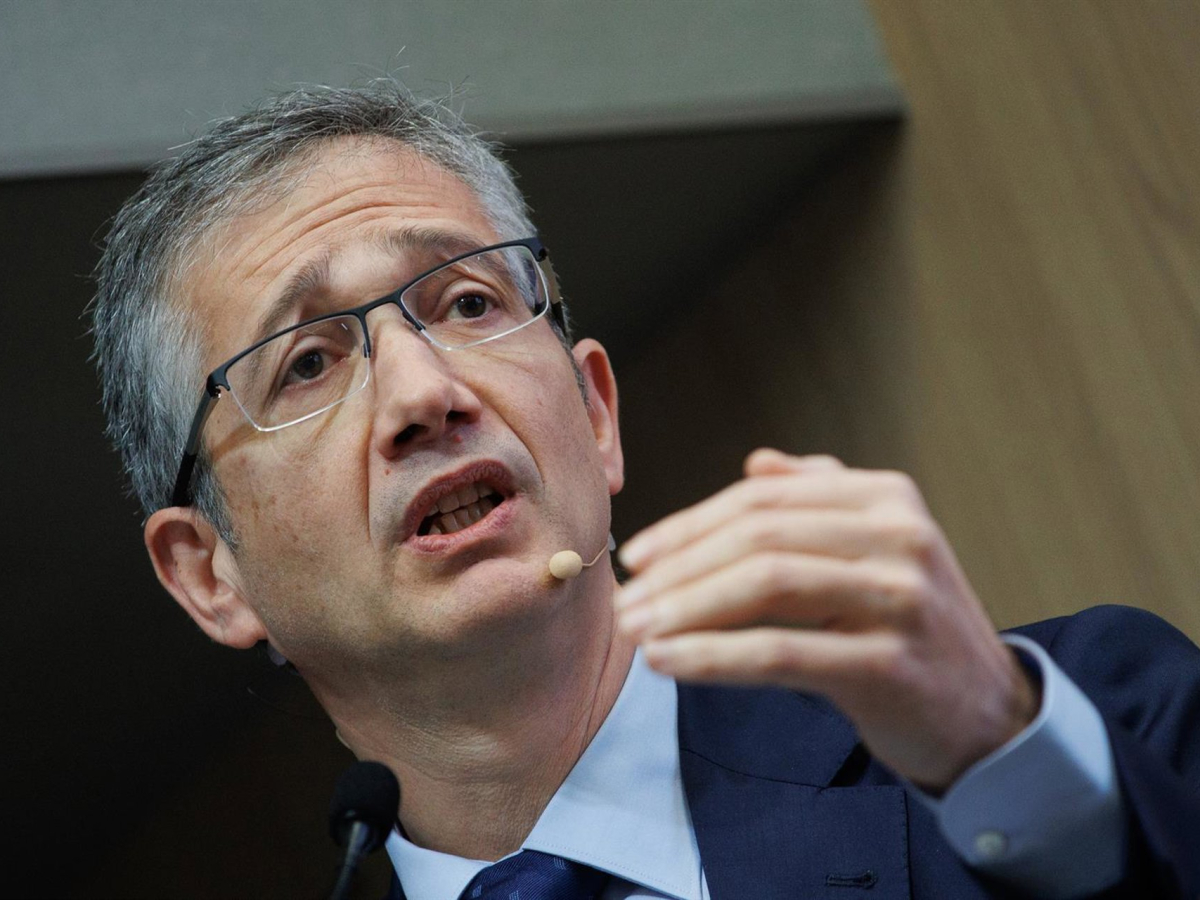
The coincidences with the Spanish Executive do not end in the budget negotiations. Feijóo has also confirmed his support for the former governor of the Bank of Spain, Pablo Hernández de Cos, as a candidate for the presidency of the European Central Bank (ECB). After the term of the French Christine Lagarde, the leader of the PP is convinced that the time has come for a "solid and solvent" Spaniard to take the lead of the monetary institution.

Génova thus shares Moncloa's bet on Hernández de Cos, whom the popular define as a "solvent reputable economist, with experience in public banks and with composure".

A good part of Feijóo's intervention before his European partners has been marked by the migratory crisis in Ceuta. The Spanish delegation has thanked its European counterparts "for the defense they have made of the territorial integrity of our country." "Especially the president of the European Commission, Ursula von der Leyen, in her State of the Union address," a popular source points out. According to the leader of the opposition, the group of prime ministers present in the room has understood that "the crisis is not resolved."
Pablo Hernández de Cos, general director of the BPI Alejandro Martínez Vélez - Europa Press
Pablo Hernández de Cos, general director of the BPI Alejandro Martínez Vélez - Europa Press -

In relation to the situation in the autonomous city, Feijóo has come to justify the controls imposed by Italy on entries from Spain in the Schengen area. In his view, these restrictions are explained by the regularization carried out by the national Executive or by its opposing vote to the European Returns Regulation. "Italy simply raised the issue of having a guarantee that no one would step on the continent. Spain did not provide it, and Italy acts," explained the popular leader, who promised that if he were in charge of the situation, "he would talk to Mrs. Meloni and this would not happen."

In this sense, the popular see positively the European emergency framework promised by Brussels for the coming months. They celebrate that the "EU is going to effectively defend its borders," in a context where Madrid demands that the presence of community institutions at the border be permanent.

Ukraine and the recovery of predictable diplomacy

Beyond the budget negotiations and the migratory front, the international agenda of the popular president has also been marked by the war in Ukraine, in light of the escalation of the conflict on the front.

"I will be with peace and with democracy," promised the Galician leader, who places the recovery of a predictable foreign policy as one of the main commitments of his eventual arrival at La Moncloa.

Feijóo rehearses in Brussels his possible landing in the European Council with a combination of continuity in certain strategic files and a break with the diplomatic management of the current Executive. A roadmap with which he aims to recover dialogue with his community partners without necessarily altering all the positions that Spain defends today at the European negotiation tables.

More key points, information and questions with FREN

AI-GENERATED CONTENT

What is the current parliamentary status of the appointment of the President of the European Central Bank and what are the next steps for their election?

As of October 15, 2026, the formal procedure for appointing the future President of the European Central Bank (ECB) has not yet been officially opened. Therefore, there is no "parliamentary status" in the strict sense: neither the European Parliament has received a candidate for a hearing nor has the European Council initiated the decision-making phase on the succession of Christine Lagarde, whose term ends on October 31, 2027.

The information available in the media and from the Parliament and Council themselves indicates that the only formal process underway is a different procedure: the replacement of Isabel Schnabel as a member of the ECB Executive Board, activated following the letter sent on October 1, 2026, by Lagarde to the President of the European Council, António Costa, to initiate her replacement. This file refers to an "ordinary" position on the Executive Board, not the presidency of the central bank, although it is part of the same wave of renewals at the ECB's top level.

Current political situation of Lagarde's succession

The European economic and political press already describes an unofficial race for the ECB presidency, with several names circulating:

  • The Spaniard Pablo Hernández de Cos, former Governor of the Bank of Spain and current General Manager of the Bank for International Settlements, explicitly supported by the Spanish Government and well regarded in surveys of specialized forums.
  • The Dutch Klaas Knot, former Governor of the Dutch central bank, frequently cited as a favorite in polls among economists and analysts.
  • The German Joachim Nagel, current President of the Bundesbank, whose name has been mentioned, although German sources indicate that Germany would be more interested in preserving its influence in other Executive Board seats than in contesting the presidency.

In any case, these movements are strictly political and informal. None of these candidates has yet been proposed through a legal act of the Council, nor subjected to a formal hearing in the European Parliament. The Spanish Minister of Economy and other European officials emphasize that the discussions are being approached as a "comprehensive package" of economic posts (several vacancies at the ECB and other institutions) for 2027.

Role of the European Parliament right now

As of today, the European Parliament is not yet processing the election of the ECB President:

  • There has been no hearing in the Committee on Economic and Monetary Affairs (ECON) with a candidate for the presidency.
  • No specific resolution or opinion on a particular name for the presidency has been submitted to the Plenary.

There are very recent precedents illustrating how the Parliament will act when the process is activated, especially the appointment of Boris Vujčić as Vice-President of the ECB: in 2026 the ECON committee held its hearing and the Plenary approved a supporting resolution before the European Council formalized the appointment .

Current role of the Council (Council and European Council)

Neither the Council nor the European Council have yet opened the specific file for the presidency:

  • There is no record of a formal recommendation from the EU Council proposing a candidate for the ECB presidency, as required by the Article 283.2 of the TFEU .
  • The Eurogroup —which plays a key role in prior political coordination— is currently focused on the vacancy of Schnabel and other economic governance issues, but has not launched a formal procedure for the presidency.
  • The European Council has not publicly debated nor set an official timetable for the succession, beyond assuming that the renewal must be completed before autumn 2027.
Next formal steps towards the election

When the States agree to start Lagarde's succession, the procedure will follow the steps provided in the Treaty:

  • Candidacies and political negotiation: eurozone governments will present their candidates and seek support within the Eurogroup and among national leaders, aiming for geographical and political balances.
  • Support from the Eurogroup and recommendation from the Council: the Eurogroup will agree on a name, after which the EU Council will adopt a formal recommendation to the European Council.
  • Consultation with the ECB and the European Parliament: the ECB Governing Council will issue its opinion, and the Parliament will organize a hearing of the candidate in ECON and approve an advisory resolution.
  • Appointment by the European Council: Heads of State and Government will make the final decision by reinforced qualified majority. The new president's term will be eight years, non-renewable.

Until the first step of that sequence occurs (Council recommendation and official candidate proposal), the file is in a pre-political phase: intense negotiation between capitals and surveys in Parliament, but no formal parliamentary or institutional processing is open regarding the appointment of the next ECB president.

What are the powers and functions of the President of the Popular Party in Spanish politics according to current legislation?

In the Spanish legal system, there is no law that specifically regulates the position of President of the Popular Party (PP) or any other party president. What exists is a general framework, established by the Organic Law 6/2002, on Political Parties, and specific regulation in the Statutes of the Popular Party, which detail the figure of the National President (Article 43 and related provisions).

1. General legal framework: Organic Law 6/2002

Organic Law 6/2002 does not define specific powers of the "national president" of a party, but it does set the limits and principles within which their statutory powers must be configured:

  • Democratic and legality principles (art. 6): parties must adjust their organization, functioning, and activity to the Constitution, laws, and democratic principles. Any powers attributed to the PP president must fit within this framework.
  • Organization and functioning (art. 7):
    • The internal structure and functioning must be democratic.
    • There must be a general assembly of members (in the PP, the National Congress) as the highest governing body, which approves the most important decisions.
    • The governing bodies (including the one that includes the president) are determined in the statutes and must be elected by free and secret suffrage.
    • The statutes must provide procedures for democratic control of leaders.
  • Rights of members (art. 8): the powers of direction or discipline (including those of the president) must respect the rights of participation, information, challenge of decisions, and defense of members.
  • Party activity (art. 9): political action must respect the Constitution and the law; the presidency cannot use its powers to support activities contrary to those limits.

In summary, the Party Law does not specify "what the PP president does," but it does state that any power attributed to them in the statutes must be exercised democratically, with internal control and respect for members' rights.

2. Specific regulation: Statutes of the Popular Party

The PP Statutes, in their current regulation after the XXI National Congress, identify the National President as the highest single-person body of direction and representation of the party. The PP's statutory documentation highlights as a central provision Article 43, "The National President" (see the organic document of governing bodies and party functions available on the PP website).

From that article and the rest of the internal regulations, the following main powers can be summarized:

  • Party representation:
    • Is the political and legal representative of the Popular Party before institutions, other political forces, and public opinion.
    • Acts as the highest responsible for the PP's political line at the national level.
  • Direction of collegiate bodies:
    • Presides over the National Board of Directors and the National Executive Committee, the main governing bodies between congresses.
    • Usually has a casting vote in case of a tie in these bodies, which strengthens their ability to set the final decision.
  • Configuration of the party's top leadership:
    • Proposes to the National Executive Committee the appointment of the Secretary General, Deputy Secretaries, coordinators, secretaries, and the Treasurer.
    • Proposes the president and members of the Electoral Committee and the Committee of Rights and Guarantees, a key body in ethical and disciplinary control.
  • Political and strategic direction:
    • Coordinates the party's political action and guides its general strategy.
    • Generally authorizes statements made on behalf of the PP or that politically commit the organization.
    • Can propose the distribution, modification, or restructuring of internal competence areas in the party's leadership.
  • Disciplinary power:
    • Can directly initiate disciplinary proceedings against members and, in certain cases, provisionally suspend the responsibilities they hold while the proceeding is processed, always under the control of the Committee of Rights and Guarantees and respecting the defense guarantees provided in the Party Law and the statutes.
  • Substitution and delegation:
    • In case of absence or illness, can delegate their functions to the Secretary General or other positions provided for in the statutes.

3. Powers in urgent situations and limits

Article 43 of the statutes also provides a clause for action in cases of urgent necessity. In such situations, the national president may, provisionally and with justification, adopt decisions that under normal conditions would correspond to collegiate bodies (for example, the Executive Committee), provided that:

  • There is a situation of real urgency.
  • The measures are necessary and proportionate.
  • They are subsequently submitted to ratification or control by the competent bodies.

These extraordinary powers do not eliminate the centrality of the assembly and collegiate bodies required by Article 7 of Organic Law 6/2002, nor can they be used to neutralize internal democratic functioning or the rights of members (arts. 7 and 8 LO 6/2002).

In conclusion, according to current legislation and the PP's own statutes, the President of the Popular Party is the highest single leader of the party, with functions of representation, strategic direction, appointment of the leadership, leadership of executive bodies, and disciplinary and emergency powers, but always subordinate to internal democracy, statutory control, and respect for members' rights imposed by the Organic Law on Parties.

Can you detail how the national president of the Popular Party is elected and what internal procedure they follow according to their statutes? What internal control mechanisms exist within the PP to limit or supervise the decisions of the national president? How do the powers of the President of the Popular Party compare with those of the presidents of other Spanish parties according to their statutes?

What results did the Popular Party obtain in the last general elections in Spain and what is its current representation in the Congress?

In the last general elections held in Spain on July 23, 2023 (XV Legislature), the Popular Party (PP) consolidated itself as the leading force in votes and seats, although without achieving an absolute majority. According to official electoral results and the composition of the Congress, the PP obtained 8,091,840 votes, representing 33.05% of the valid votes cast nationwide, which translated into 137 seats out of the 350 that make up the Congress of Deputies. This is also the number of deputies that the Popular Parliamentary Group currently holds in the Chamber.

Strictly numerically, the July 23 result placed the Popular Party in a very prominent position compared to other formations. With 33.05% of the votes, it surpassed the PSOE in popular vote and managed to translate that advantage into a noticeable difference in seats. However, the 137 deputies are 39 short of the absolute majority, set at 176 seats, which alone prevented forming a government without additional support. This data is key to understanding the subsequent dynamics of the legislature and the resulting parliamentary scenario.

From the perspective of institutional representation, the PP's 137 seats represent just over one-third of the Lower House. In a Congress of 350 members, any group comfortably exceeding one hundred deputies has a very high capacity to influence both the parliamentary agenda and the orientation of the most sensitive votes. The PP thus consolidated itself as the main opposition group, with a size sufficient to condition many alternative majorities.

The confirmation that the Popular Party still holds those same 137 seats today indicates that, despite the usual individual changes any legislature records (resignations, replacements due to changes in responsibilities, incorporations of substitutes, etc.), there has been no net variation in the total weight of the group in the hemicycle. That is, some specific deputies' names may have changed, but the final sum of the Popular Group remains the same as at the ballot box in July 2023.

This level of representation has several practical implications. First, it grants the PP a great capacity for political initiative: with 137 deputies, it can register bills, non-legislative motions, requests for appearances, and numerous control initiatives without needing to seek support from other groups to meet regulatory minimums. Second, it confers decisive weight in internal bodies of the Chamber, such as the Permanent Deputation or committees, where positions are distributed proportionally to each group's strength, as highlighted by the parliamentary documentation of the XV Legislature.

In terms of governability, the arithmetic derived from these results left a very fragmented Congress, with fairly defined ideological blocks and narrow margins for maneuver. The PP's 137 deputies, combined with seats from other right-wing forces, set a very high benchmark that the Government needed to surpass in each major vote. At the same time, that figure reinforced the Popular Party's role as a central actor in any debate on major state agreements, institutional reforms, or renewal of constitutional bodies.

In summary, the Popular Party obtained in the general elections of July 23, 2023, a total of 8,091,840 votes, equivalent to 33.05% of electoral support, and secured 137 seats in the Congress of Deputies. That same figure of 137 deputies defines its current parliamentary representation in the Lower House, forming a large group with considerable influence over the political and legislative life of the XV Legislature.

How did the other parties (PSOE, Vox, Sumar, and others) fare in those same general elections of July 23, 2023? How do those 137 PP seats condition the majorities needed to approve organic laws and constitutional reforms? Have there been many replacements of PP deputies since the start of the legislature and what impact have they had on the group's activity?

Play

Test your knowledge with FREN!

How much do you know about this topic? Answer the following 3 questions.

What is one of Feijóo's main objectives in foreign policy if he reaches La Moncloa?

Question 1 of 3

Who does Feijóo support as a candidate for the presidency of the European Central Bank?

Question 2 of 3

What measure has Feijóo defended regarding migration management in Ceuta?

Question 3 of 3