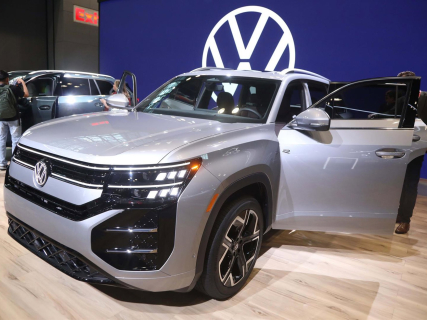
The electric car catches up to gasoline in the EU: both account for 21.7% of registrations

Pure electric vehicles slightly surpass gasoline cars in units between January and August. Hybrids maintain market leadership.

2 minutes

fotonoticia 20260501182700 1920

fotonoticia 20260501182700 1920

Add DEMÓCRATA to Google

Ask FREN

Published

Last updated

2 minutes

Most read

The electric car has caught up with gasoline in new registrations in the European Union. Between January and August 2026, both technologies account for 21.7% of the market, according to data published by the European manufacturers' association ACEA on September 24.

The tie appears when rounding the shares. In units, pure electric vehicles are slightly ahead: 1,641,333 registrations, compared to 1,634,733 gasoline cars. The difference is 6,600 vehicles.

The change compared to the same previous period is notable. Electric vehicles rise from 15.8% to 21.7%, while gasoline falls from 28%. However, the leadership belongs to non-plug-in hybrids, with 36.6%.

Share of main powertrains in the EU

Powertrain Share of new registrations
Non-plug-in hybrids 36.6%
Pure electric 21.7%
Gasoline 21.7%
Plug-in hybrids 10%
Diesel 7.3%

Source: ACEA. The table includes the main categories; it does not include other powertrains.

What it means for electric to catch up with gasoline

The comparison refers to new cars registered in the EU. It does not describe all the cars that circulate on the roads nor does it automatically include other European markets, such as the United Kingdom.

This distinction changes the reading of the data. Registrations allow us to observe where recent purchases are oriented, while the vehicle fleet retains cars acquired over many years. A rapid transformation in sales needs time to translate to the overall roads.

It is also advisable to separate the technologies. A pure electric vehicle operates with a battery that needs external charging. A plug-in hybrid combines that possibility with a combustion engine. Non-plug-in hybrids constitute another category: grouping them all as electric would obscure important differences for the buyer.

The context of subsidies in Spain

In Spain, the Auto+ program includes subsidies for electric and electrified vehicles, subject to the requirements of the call. Before incorporating a subsidy into the purchase budget, it is advisable to check the eligibility of the vehicle and the published conditions.

The European evolution provides a reference on the market, but the domestic decision still depends on specific issues: final price, possibility of recharging, usual trips, and cost of use. The advancement of a technology does not eliminate those differences among drivers.

More key points, information and questions with FREN

AI-GENERATED CONTENT

What procedures are necessary to access the aids of the Auto+ program in Spain?

The Auto+ Program is the new state system of direct aids for the purchase of electric and electrified vehicles in Spain, regulated by Royal Decree 609/2026, of July 22 (BOE of July 23, 2026). As of today, Line 1 for individuals is open, with the call published on August 4, 2026. The aids are granted under a regime of direct concession and telematic processing, strictly in order of arrival until funds are exhausted.

1. Basic requirements to apply for the aids

1.1. Who can be a beneficiary
  • Line 1 (2026 call already open): individuals of legal age, residents in Spain, who do not carry out an economic activity.
  • Line 2: companies and individuals who carry out economic activity (self-employed, SMEs, etc.). The royal decree foresees it, but its specific call will open “after the summer,” according to the Ministry of Industry and Tourism.

In all cases, the applicant must be up to date with their tax and Social Security obligations and comply with the other general conditions of the General Subsidies Law 38/2003.

1.2. Vehicle and purchase requirements
  • Vehicle with ZERO environmental label from the DGT (pure electric, plug-in hybrid, fuel cell, etc.).
  • New or nearly new vehicle with a maximum age of 12 months (first registration in Spain).
  • For private M1 passenger cars: maximum price without taxes of €45,000.
  • The invoice must show a minimum discount of €1,000 before taxes applied by the point of sale explicitly linked to the Auto+ Program.
  • Retroactive nature: in the 2026 call, new vehicles registered in the beneficiary's name from January 1, 2026 (and certain nearly new vehicles registered from January 1, 2025) are accepted, provided they meet the other requirements.

2. Procedures to apply for the aid (Line 1 – individuals)

2.1. Where and how to submit the application
  • The procedure is processed exclusively electronically through the electronic headquarters of the Ministry of Industry and Tourism.
  • A digital certificate or an accepted electronic identification system is required to complete the form.
  • Applications are registered and resolved in order of submission until the budget allocated to the call is exhausted.
2.2. Usual documentation to be attached
According to the royal decree and official information from the Ministry itself, the file usually includes at least:
  • Purchase invoice of the vehicle, with the Auto+ discount clearly identified.
  • Final technical sheet of the vehicle.
  • Circulation permit in the name of the applicant.
  • Bank payment receipts (transfers, receipts, etc.).
  • Certification of the bank account where the aid will be deposited, whose holder must be the beneficiary.
  • Identity documentation (DNI/NIE) and, if applicable, authorizations for telematic consultations.
  • Any other document required by the specific call (responsible declarations, etc.).

The managing body verifies, often automatically, the identity of the applicant, the vehicle registration in the DGT Vehicle Registry, and compliance with the technical and economic requirements set out in Royal Decree 609/2026.

2.3. Deadlines
  • The first call of Line 1 opened on August 4, 2026, at 10:00 hours.
  • The application submission period ends on December 31, 2026, at 14:00 (peninsular time), unless funds are exhausted earlier.

It is important not to wait until the end of the period: aids are granted while there is budget, so a late application may find the line already closed due to credit exhaustion.

3. Obligations and subsequent controls

Article 10 of Royal Decree 609/2026 sets out the main obligations of applicants and beneficiaries. Among others:

  • Maintain ownership and registration in Spain of the subsidized vehicle for at least two years, except in exceptional cases (theft, total loss, serious defects, death).
  • Keep the supporting documentation during the prescription period of the Administration's right to demand reimbursement.
  • Collaborate in monitoring and control actions by the Ministry of Industry, the General Intervention, the Court of Auditors, and, if applicable, European authorities.
  • Communicate other aids that may be incompatible or that exceed 80% of the subsidizable cost.
  • Inform of any event affecting the deregistration or transfer of the vehicle within two years following the grant.

Failure to comply with these obligations may lead to total or partial reimbursement of the subsidy, in accordance with the General Subsidies Law.

What are the competencies of ACEA and what role does it play in the European automotive sector?

ACEA, acronym for European Automobile Manufacturers’ Association, is the main employers' association of vehicle manufacturers with industrial presence in the European Union. It is not a public body nor an EU agency: it is a business association that represents the interests of major brands before European institutions and other international actors.

Its “competencies” are not regulatory in nature — it does not set rules — but rather of representation, influence, and sectoral coordination. From a political and institutional point of view, its role is comparable to other major European industry associations: it functions as an organized interlocutor between manufacturers and Brussels.

Main functions and competencies of ACEA

ACEA’s functions can be grouped into several blocks:

  • Representation of manufacturers before the EU: ACEA acts as the joint voice of the major European automotive groups in legislative and industrial policy debates. In key dossiers (CO₂ emission standards, transition to electric vehicles, international trade, safety or recycling standards), the European Commission and Parliament usually consider ACEA’s positions as the main industry interlocutor.
  • Lobbying and defense of interests: the association participates in public consultations, submits observations on legislative proposals, maintains regular contacts with commissioners, MEPs, and national governments, and coordinates advocacy campaigns. For example, in the context of trade tensions with the United States, the press has cited ACEA data on the weight of European vehicle exports to the US market, and the association itself has warned about the effects of possible tariffs on the sector.
  • Data collection and sectoral analysis: ACEA collects and publishes statistics on production, registrations, foreign trade, and employment in the European automotive industry. These data are used by both community institutions and national governments and media to gauge the economic impact of the sector.
  • Coordination of positions among manufacturers: the major brands competing in the market need, however, to articulate common positions regarding regulation. ACEA provides this internal forum: it helps manufacturers discuss EU proposals (for example, new CO₂ targets or “Made in Europe” content requirements) and reach compromises that are then conveyed as a sectoral position.
  • Participation in technical forums and standards: in major debates on energy transition, batteries, connectivity, autonomous vehicles, or end-of-life vehicle recycling, ACEA sits on working groups and European industrial platforms. There it provides technical information on the feasibility of deadlines, costs, and technologies.
  • Communication and public opinion: before major decisions (for example, the revision of the combustion engine phase-out schedule or European responses to Chinese competition), ACEA issues press releases, positions, and proposals that influence public debate and the narrative on the competitiveness of European automotive.
Role of ACEA in the European automotive sector

All this translates into a central role for ACEA in the political and industrial governance of the European automobile:

  • It is one of the key sectoral interlocutors when the European Commission designs specific action plans for the automotive industry, or when climate targets and regulatory frameworks that directly affect vehicle design and manufacturing are redefined.
  • Its influence is seen in debates about balancing climate ambition and industrial competitiveness. ACEA’s positions usually emphasize the need for stable frameworks, sufficient adaptation times, and fair competition conditions against competitors from China or the United States.
  • On the commercial level, ACEA functions as a technical and political reference when measures such as tariffs, free trade agreements, or origin requirements are evaluated. Its figures on exports, investments, and employment help demonstrate the sector’s sensitivity to changes in trade policy.
  • Internally, it contributes to European manufacturers presenting a coordinated position vis-à-vis other segments of the value chain (component suppliers, distributors, fuels, charging infrastructure), which strengthens their negotiating capacity and their specific weight in the EU industrial agenda.

In summary, ACEA does not have normative power, but it does have a very significant capacity to influence how the automobile’s future is regulated and directed in Europe. Its combination of business representation, data production, constant presence in Brussels, and participation in technical forums makes it an essential actor to understand European decisions on mobility, industry, and climate.

What legal requirements must vehicles meet to be considered pure electric according to EU regulations?

EU regulations do not usually literally speak of “pure electric vehicle,” but rather of battery electric vehicles (BEV) or zero-emission vehicles within the framework of CO₂ targets. In practice, “pure electric” and BEV are used as synonyms.

Based on the definition used by the EU itself and national developments applying the same legal basis (for example, Order TED/1478/2025 on the MOVES Fleets Plus program, which transposes European requirements), a passenger car or light van is considered pure electric / BEV if it cumulatively meets the following requirements:

1. Propulsion system
  • The vehicle is propelled totally and exclusively by one or more electric motors.
  • It does not have an internal combustion engine that contributes to wheel traction. Order TED/1478/2025 defines “pure electric vehicles (BEV), propelled totally and exclusively by electric motors whose energy comes [...] from the electricity of their batteries, using for their recharge energy from an external source to the vehicle.”
  • There may be other auxiliary equipment (heating, etc.), but traction is provided solely by the electric system.
2. Energy storage
  • It incorporates a rechargeable battery or another onboard electricity storage device (usually lithium-ion battery packs).
  • All useful energy for propulsion comes from that battery; there is no gasoline, diesel, or other fuel tank to move the vehicle.
3. External recharge capability
  • European regulations on charging infrastructure and batteries assume that BEVs must be able to recharge from an external energy source, for example through charging points connected to the electrical grid.
  • Aid programs and EU-linked regulations (such as MOVES Fleets Plus) explicitly require that vehicles “use for their recharge energy from a source external to the vehicle.”
4. Exhaust emissions
  • In CO₂ regulation for passenger cars and vans (Regulation (EU) 2019/631 and its 2023 reform), battery electric vehicles are treated as zero-emission vehicles in use, meaning they do not generate exhaust emissions during normal driving.
  • This condition allows BEVs to be counted as “zero-emission vehicles” in fleet targets and in the schedule toward exclusive sales of zero-emission vehicles from 2035, as recalled by the European Commission and reflected in various official notes and information.
5. Classification and type approval

Under Regulation (EU) 2018/858 on type approval and market surveillance, BEVs are type-approved within vehicle categories (M1 for passenger cars, N1 for light commercial vehicles, etc.) as vehicles with exclusively electric propulsion. Based on this, specific technical requirements apply regarding, among others, electrical safety, traction batteries, and compatibility with charging systems.

6. Is there a minimum range in EU regulations?

EU CO₂ and type approval regulations focus mainly on emissions and safety, not on imposing a minimum range for BEVs. National aid documents and incentive programs, inspired by this regulation, do define “electric-only range” as the distance the vehicle can travel using only the energy stored in the battery, but they do not set a uniform EU threshold to consider a passenger car “pure electric”: it is enough to meet the previous conditions of fully electric propulsion and zero exhaust emissions.

7. Differences from plug-in hybrids and other electrified vehicles
  • A plug-in hybrid (PHEV) combines an internal combustion engine and one or more electric motors. It can travel a certain distance in electric mode, but has a fuel tank and exhaust pipe, so it continues to generate emissions in use.
  • The European Commission has emphasized, and published analyses confirm, that in real conditions PHEVs emit substantially more CO₂ than their type-approved data indicate, reinforcing the regulatory differentiation between PHEVs and fully electric vehicles.
  • Extended range electric vehicles (EREV) incorporate a thermal engine used only as a generator to recharge the battery, but not to directly move the wheels. Even so, by burning fuel they still have exhaust emissions and are not considered “pure electric” for zero-emission targets.
  • Hydrogen fuel cell vehicles are also considered zero-emission in use, but form a distinct category: electrical energy is generated onboard from hydrogen, not from a battery recharged from the grid.

In summary, according to the EU legal framework, a vehicle is “pure electric” when it is propelled exclusively by electric motors, powered by externally rechargeable batteries, and produces no exhaust emissions in use. Any presence of a combustion engine involved in traction, or exhaust emissions, places the vehicle in other categories (PHEV, EREV, hybrid, etc.) and not in the pure electric / zero-emission vehicle category.

Play

Test your knowledge with FREN!

How much do you know about this topic? Answer the following 3 questions.

What was the market share of pure electric and gasoline cars in new registrations in the EU between January and August 2026?

Question 1 of 3

What type of engine led the registration market in the EU during the analyzed period?

Question 2 of 3

What should a buyer in Spain check before including a subsidy for an electric vehicle in their budget?

Question 3 of 3