The leader of the socialists in the Eurochamber accuses the PP of blocking a common resolution on Ceuta in Brussels.

The president of the group of Socialists and Democrats (S&D) in the European Parliament assures that the popular party has not responded to the proposal to agree on a text and denounces that the European right has used the crisis to attack the Spanish Government.

5 minutes

WhatsApp Image 2026 09 15 at 15.40.50

WhatsApp Image 2026 09 15 at 15.40.50

Add DEMÓCRATA to Google

Ask FREN

Published

Last updated

5 minutes

Most read

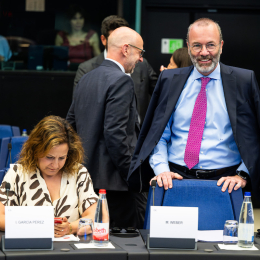
The president of the group of Socialists and Democrats (S&D) in the European Parliament, Iratxe García, has accused the Popular Party of showing no interest in reaching a common resolution on the Ceuta crisis and has warned that, if there is no agreement, the Eurochamber will have to vote separately on the texts presented by each group.

In a small group with journalists, the socialist leader has also denounced a strategy from the European right to use the crisis against the Spanish Government and has demanded that the first response from the EU be one of solidarity with Spain, regardless of who is responsible for what happened.

García explained this Tuesday that "at this moment there is no common resolution" and that the different political groups have presented their own texts. S&D, tasked in September with coordinating this parliamentary procedure, has taken the initiative to try to reach a shared document.

"We have given a deadline until noon. It is three fifteen and the Popular Party has not reacted to the proposal for a common resolution. Therefore, I understand that they are not interested in having a common resolution," she stated.

The socialist has left open the possibility that the situation may change if the PP agrees to sit down to negotiate, but has assured that, at the time of making her statements, the popular had still not responded.
Without agreement, each group will take its own resolution to a vote

The lack of consensus would lead the Eurochamber to vote on the individual resolutions registered by each political group.

"That evidently leads us, if there is no common resolution, to go to the vote of the individual resolutions," García explained.

In that scenario, the socialist leader pointed to the possibility that the PP seeks an alternative majority. "The PP will be able to negotiate with other groups, I understand that from the far right", she noted, although she avoided anticipating what the position of the other formations will be.

García has related this episode to a broader debate about the alliances of the popular in the European Parliament. "We are willing to negotiate with the PP, what we are not willing to do is for the PP to negotiate with us and negotiate policies with the far right", she warned.

"With two decks it is impossible," she summarized. García admits an "external attack," but calls for an investigation before pointing to the responsible party.

The president of S&D has also spoken out about one of the main debates surrounding the crisis: the responsibility of Morocco.

When specifically asked why the European response does not point to Rabat as the supposed aggressor, García has refused to talk about a "supposed" attack, but has avoided directly blaming the neighboring country before an investigation exists.

"We are aware that there has been an external attack", she stated. She then added that it must be investigated "what has happened, how this situation has been provoked, whether there is a single responsible party or if there are several factors that have played a role in the shaping of the crisis".

García has insisted that it is not her place to determine who provoked the attack without having the results of that investigation and has defended that this uncertainty should not condition European solidarity with Spain.

"Above who it may have been, which clearly is not for me to say, just as it is not for others to say what they are saying without having clear elements from a clear investigation, first and foremost is the support for the country", she defended.

"When Poland, Lithuania, or Romania have suffered attacks, the first thing has been to support the country"

García has used the precedents of other member states to denounce what she considers a double standard of some European partners in the Ceuta crisis.

"When Lithuania, when Romania, when Poland have suffered some kind of external attack on their borders, no one has started to ask: 'Well, how has the government done?'. No. The first thing has been: we support the country", she pointed out.

The MEP believes that this immediate solidarity did not occur in the same way with Spain and has placed part of the responsibility on the European People's Party.

Accuses PP and Vox of seeking "electoral gain" with Ceuta

García has denounced the "exploitation of Ceuta by the conservatives of the Popular Party and the far-right" and has accused both formations of using the situation of the autonomous city to achieve "electoral gain".

She has also directly pointed to the president of the European People's Party, Manfred Weber, for his reaction during the first hours of the crisis.

"Manfred Weber did not wait even half a day to publish a tweet that, evidently, had been drafted by the Spanish Popular Party, attacking the Government of Spain before showing any solidarity with the country," he stated. The attribution of the message's drafting to the Spanish PP is an accusation from García.

According to the socialist leader, that reaction opened the way for European conservatives to adopt a certain position on the crisis, although she acknowledged that subsequently the solidarity of the rest of the countries changed.

García attacks Meloni for the controls on Spain

The criticisms have extended to the Italian Prime Minister, Giorgia Meloni, whose Government has decided to extend the controls on travelers from Spain implemented after the Ceuta crisis for another 15 days.

García has questioned whether Italy can give "lessons" on border management and has contrasted its current response with the solidarity that, she argued, Spain showed to the country during the Lampedusa migration crisis.

"When Italy had the cooperation, the solidarity of countries like Spain with the Lampedusa crisis, they have responded in a totally opposite way, proposing to stop the Schengen area," she criticized.

The S&D leader believes that the Italian action is part of an unequal response towards Spain and concluded that "there has been an intention on the part of the European right to use this moment of crisis to try to attack a Government" of a different political sign.

The socialists want the PP to choose its alliances

The dispute over the resolution of Ceuta occurs, moreover, when broader negotiations begin among the groups in the Eurochamber that García has anticipated will be "complex" and will last several months.

The conversations will affect presidencies, vice presidencies, commissions, and delegations, but also political commitments. S&D intends that any eventual pact with the PP be, according to García, "open, public, and transparent".

The socialist leader has set as a condition that the popular party does not simultaneously use majorities with the forces situated to its right: "We want it to be clearly defined that the PP will not negotiate and will not reach agreements with the far right" if it reaches a pact with the other forces.

More key points, information and questions with FREN

AI-GENERATED CONTENT

What is the status of the processing of the resolution on the Ceuta crisis in the European Parliament and what are the next planned steps?

The European Parliament resolution on the May 2021 Ceuta migration crisis is not "in process": it is an act already fully approved and closed since June 10, 2021. In the current 2026 Ceuta crisis, what is being discussed in Brussels is the possible adoption of a new resolution, which as of today is in a strictly political and preliminary phase (debates, requests, and contacts), with no evidence that a formally registered text scheduled for a vote in the Plenary exists yet.

1. The June 10, 2021 resolution: current status

According to the analysis in From the Green March to Ceuta 2026, the European Parliament approved on June 10, 2021 a resolution on the May 2021 crisis in Ceuta. The text:

  • Condemned Morocco for using border controls and migration, particularly of unaccompanied minors, as a mechanism of political pressure against Spain.
  • Was adopted with 397 votes in favor, 85 against, and 196 abstentions.

As with all European Parliament resolutions, once voted and published, its "processing" concludes. There are no additional phases (it is not binding legislation that goes to the Council or requires transposition); its effect is political: it sets the Parliament's position and serves as a reference for future decisions, debates, or initiatives.

In fact, various actors continue to cite that 2021 resolution as a precedent:

  • The Demócrata report recalls that it is a formal position of an EU institution, not of a single party, emphasizing its weight in the current debate on migration instrumentalization.
  • The Sumar initiative in the Spanish Congress, noted in Sumar proposes reviewing the World Cup with Portugal and Morocco, explicitly cites the June 10, 2021 resolution to argue that Morocco was already censured by the European Parliament.

In summary: the 2021 resolution is fully in force as a political statement, but its parliamentary process has been closed since its approval in 2021; there are no "new phases" within the European Parliament regarding that text.

2. The new Ceuta crisis (2026) and the idea of a new resolution

Following the massive entry of people into Ceuta since July 30, 2026, the European debate has reopened and a new parliamentary response is being considered:

  • The European Parliament's Committee on Civil Liberties, Justice and Home Affairs (LIBE) has held an extraordinary session on the Ceuta crisis, promoted by the European People's Party, according to The European Parliament will address this Thursday....
  • The President of Ceuta, Juan Jesús Vivas, has traveled to Brussels and openly requested that the European Parliament approve “a specific resolution” that:
    • Reaffirms that Ceuta and Melilla are borders of Spain and Europe.
    • Conditions any “constructive collaboration” with Morocco on the effective respect of the borders.
    This is reflected in Vivas demands a resolution in the European Parliament....
  • Other analyses, such as Ceuta: the mirror of the failure of European migration policies, point out that the LIBE meeting “could have concluded with a firm proposal to promote a resolution,” but emphasize that the current majorities in the European Parliament make a strong response similar to 2021 less likely.

That is, as of today there is a political demand for a new resolution and an open debate, but available information does not confirm that a draft with an official number or a voting date in the Plenary has been set. We are facing a preliminary phase: contacts, political pressure, and committee discussion.

3. Expected next steps in the European Parliament

If parliamentary groups finally reach sufficient agreement, the expected institutional steps would be:

  • Formal presentation of a resolution proposal by one or more groups or a committee (likely LIBE).
  • Negotiation of a compromise text among the main groups (EPP, S&D, Renew, Greens, etc.), which may include amendments.
  • Inclusion of the resolution on the agenda of a Plenary in Strasbourg or Brussels, usually linked to a prior debate on the Ceuta situation or migration policy.
  • Vote in the Plenary. If approved by simple majority, the resolution would be published and would have the same status as the 2021 one: a political statement of the European Parliament without further processing phases.

From there, the “next steps” would no longer be internal to Parliament but at other levels: reaction from the Commission and the Council, use of the resolution by national governments (such as Spain), and reference to that text in future parliamentary initiatives on migration, the southern border, or relations with Morocco.

What are the competencies and powers of Iratxe García as president of the Socialists and Democrats group in the European Parliament?

Iratxe García Pérez, as president of the Progressive Alliance of Socialists and Democrats (S&D) group in the European Parliament, holds a set of formal and informal competencies that place her among the most influential figures in the Parliament. Her role combines internal political leadership of the group, institutional representation before other Parliament bodies, and strategic leadership in building European legislative majorities.

According to an interview published by the newspaper Demócrata, the social-democratic group led by García comprises around 135 MEPs from 25 countries and is the second-largest force in the European Parliament. In this context, the group president is described as the “captain” responsible for:

  • Defining the group's political priorities: setting the internal political agenda of S&D, identifying major legislative files where the group wants to focus efforts (European budget, green agenda, social policy, etc.). Based on these priorities, the work of MEPs and coordinators in each committee is guided.
  • Coordinating the parliamentary activity of MEPs: directing the preparation of the group's position on various dossiers, supervising the work of negotiating teams, and harmonizing national sensitivities within the European social-democratic family. This involves articulating a common line in a territorially and ideologically diverse group.
  • Representing the group in the Conference of Presidents: Demócrata notes that one of her central functions is to represent S&D in the Conference of Presidents, the political governing body of the European Parliament where it is decided what is debated in plenary and the legislative calendar is organized. From this position, García has direct influence over which topics reach plenary, when, and with what priorities.

Another Demócrata piece, about the most influential Spanish MEPs, further specifies these internal powers. It indicates that the group president:

  • “Leads its board and secretariat”: responsible for the group's internal governing body and its administrative and political structure. Through this board, decisions on strategy, distribution of responsibilities, and internal resources are made.
  • “Coordinates the position before each plenary vote”: plays a decisive role in finalizing the group's stance in plenary, after listening to rapporteurs, coordinators, and national delegations. This coordination translates into voting instructions to MEPs.
  • “Sets the political line on major files”: in the most impactful dossiers (e.g., Multiannual Financial Framework, climate policy, or response to international crises), the S&D presidency marks the general orientation the group will defend before the Commission and the Council.

At the broader institutional level, these functions fit within the general organization of the European Parliament described by Moncloa in its note “European Parliament: what it is and what its functions are” (Spanish Government information note). It recalls that:

  • MEPs are not grouped by nationality but by political affinities in European parliamentary groups.
  • Each group must meet a minimum number of deputies and national origins, and these groups are central actors in legislative and budgetary negotiation.

Within this framework, the presidency of a group like S&D has, de facto, several additional powers:

  • Interlocution with other political families: García is the main negotiator of the social-democratic family in agreements with the European People's Party, liberals, and greens to build “pro-European” majorities that enable legislation to pass and, if applicable, support or condition the European Commission.
  • Public projection of the group: Demócrata emphasizes that the president has the capacity to influence the “public projection” of her political family. She is the main voice of S&D in debates on major crises (migration, geopolitical, economic) and in defining the social-democratic alternative against other currents.
  • Impact on the balance of majorities in the Chamber: by coordinating discipline and voting strategy of the second-largest force in the European Parliament, her position is key to tipping many votes and shaping the direction of the European agenda.

In summary, the competencies and powers of Iratxe García as president of the Socialists and Democrats group combine:

  • Internal political leadership of S&D (priorities, ideological line, vote coordination).
  • Governance of the group itself (board, secretariat, work organization).
  • Institutional representation in the Conference of Presidents, with the capacity to influence the agenda and legislative calendar of the European Parliament.
  • Negotiating leadership in building majorities and interlocution with other European political forces.

All this makes her position not only an organic role within the social-democratic group but also a post with direct impact on the functioning and political orientation of the European Parliament as a whole.

What role does the Conference of Presidents of the European Parliament play and how does S&D influence it through Iratxe García? How is the presidency of a political group in the European Parliament elected and what internal majorities does it require? In which major recent legislative files has the S&D group played a prominent role under Iratxe García's leadership?

How many resolutions related to border crises have been debated or approved in the European Parliament in the current legislature?

There is no official and closed count, easily accessible in a single public source, indicating how many “resolutions on border crises” the European Parliament has debated or approved in the current legislature (2024‑2029). Moreover, the term “border crisis” itself is not a legal or statistical category of the Parliament but a political or journalistic label. This means that an exact and verifiable figure cannot be given solely with the available open sources. However, it is possible to identify some of the resolutions and texts most directly related to crises at the EU's external borders in this legislature and explain what they cover.

1. Difficulty in establishing an exact number
  • The European Parliament's public databases do not classify resolutions by “border crisis” but by broad subjects (migration, asylum, fundamental rights, foreign policy, security, etc.).
  • Many initiatives affecting borders are processed as regulations or directives, not as political resolutions, and others as debates without resolution, initiative reports, questions, etc.
  • Searches in European Parliament notes and dossiers show clear cases where resolutions linked to border tensions exist, but they do not allow reconstructing an “exhaustive inventory” without reviewing all acts of the legislature one by one.

Therefore, with the available information, one can only speak of a small number of resolutions explicitly linked to crisis or tension situations at borders, and offer representative examples, not a closed total figure.

2. Examples of key resolutions and texts in the current legislature

a) Migration and Asylum Pact and crisis situations

On April 10, 2024, Parliament adopted the new Migration and Asylum Pact, a package of ten legislative texts that deeply reforms European asylum, return, and external border management policy:

  • Press release: MEPs approve the new Migration and Asylum Pact.
  • One of the regulations is on “crisis and force majeure situations”, which creates a specific mechanism to respond to sudden arrivals or instrumentalization of migrants.

Although these are regulations (not resolutions), Parliament emphasizes that these instruments are designed to manage crises at the external borders, with explicit references to the instrumentalization of migrants by third countries.

b) Resolution on Belarusian hybrid attacks against Lithuania

In December 2025, the European Parliament adopted a resolution denouncing “Belarusian hybrid attacks” against Lithuania, combining military means, drones, and border pressure:

This resolution is a clear example of a parliamentary act that qualifies a border situation as a hybrid crisis and calls for coordinated EU responses.

c) Resolution on military mobility and “military Schengen”

In the same week of December 2025, Parliament adopted another resolution on military mobility and the so-called “military Schengen”:

Although focused on defense, it is explicitly framed in the preparation for crises at the EU's borders, mainly linked to the Russian threat.

3. Other parliamentary debates and references

European Parliament press dossiers for European Councils note that during this legislature, the Plenary has:

  • Debated the reintroduction of internal border controls by some States and its impact on Schengen, for example in October 2024: October 2024 European Council press kit.
  • Repeatedly debated the instrumentalization of migration at eastern borders (with Belarus and Russia) and the strengthening of external border security.

In many of these cases, there are broader debates and sometimes resolutions (on human rights, the war in Ukraine, the situation in certain countries) that include sections on borders but are not formally presented as “resolutions on border crises.”

4. Indicative conclusion

With accessible data, it can be said that in the 2024‑2029 legislature the European Parliament has approved at least several resolutions clearly linked to crises or tensions at borders (such as the one on Belarusian hybrid attacks against Lithuania and the one on military mobility), in addition to a major legislative block – the Migration and Asylum Pact – designed precisely to better manage crises at external borders. However, it is not possible to set a single closed number of “resolutions on border crises” without a manual and new analysis of all resolutions of the legislature, something beyond the systematized information of the consulted public sources.

Can you detail the content of the European Parliament resolution on Belarusian hybrid attacks against Lithuania and what measures it calls on the Commission and Council to take? What exactly does the “crisis and force majeure situations” regulation of the new Migration and Asylum Pact provide regarding crises at external borders? Have there been specific resolutions in previous legislatures on the border crises of Ceuta and Melilla, and what did they say?

Play

Test your knowledge with FREN!

How much do you know about this topic? Answer the following 3 questions.

Who is the president of the Group of Socialists and Democrats in the European Parliament?

Question 1 of 3

What has Iratxe García requested as the EU's first response to the Ceuta crisis?

Question 2 of 3

What condition has S&D set to make a pact with the People's Party in the European Parliament?

Question 3 of 3

Hola, soy Fren. ¿Cómo te ayudo?