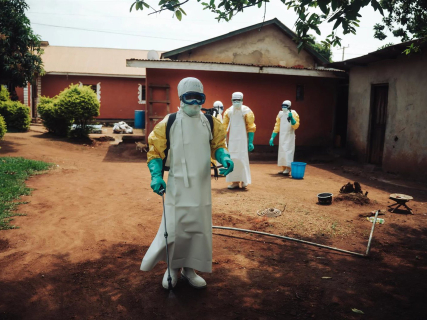

The organization Doctors Without Borders (MSF) has denounced that the communities of the Democratic Republic of the Congo (DRC) are not receiving the necessary aid to cope with the Ebola outbreak declared by the Congolese government on May 23 and recognized two days later by the World Health Organization (WHO).
"The epidemic continues to spread and the pace at which it advances is greater than the response capacity deployed," stated the international president of this organization, Dr. Javid Abdelmoneim, who added that "treatment centers remain essential to save lives, but this response needs more than just additional beds."
In the same vein, he emphasized that "better detection of cases, safe isolation of sick individuals and their contacts, and support for healthcare workers" is needed. "It is also necessary to protect against infection those who go to existing health centers for care," he explained, adding that "the response must be built with the communities, not around them."
This outbreak has so far caused 2,476 deaths and more than 5,200 confirmed infections, making it the second deadliest after the one recorded between 2014 and 2016, and the fastest spreading. In light of this situation, MSF calls for intensifying the training of healthcare personnel and community leaders in order to improve case identification, referrals, and infection prevention and control measures.
"We know our communities and we know how to reach our people," explained Ezrome Kiza Lumani, a community leader who lives in the countryside. "When Ebola arrived, we did not wait," he emphasized, adding that families were spoken to, their fears were heard, and people with symptoms were encouraged to seek medical attention, as the role of the communities "is fundamental."
MORE THAN 60% OF DEATHS OCCUR OUTSIDE TREATMENT CENTERS
MSF has pointed out that more than 60 percent of deaths from the Ebola virus disease in DRC have occurred outside treatment centers "and often far from them," which implies that "many people are dying in their homes or communities without receiving medical attention, while the virus continues to spread before cases are detected."
"With the appearance of cases in new areas that have little or no previous experience in managing the Ebola virus disease, there is an urgent need for healthcare workers with specific training, not only within treatment centers but also in the affected communities," insisted, on this occasion, the Emergency Coordinator of MSF in Ituri province, Trish Newport.
The NGO maintains a presence in the provinces of Ituri, North Kivu, South Kivu, Tshopo, and Haut-Uele, where its teams manage seven Ebola treatment centers and around fifteen isolation units, with more than 400 operational beds, approximately one third of the entire capacity of the emergency response.
Additionally, it has more than 1,400 professionals involved in the fight against the epidemic and, since the outbreak began, has treated more than 2,000 patients, of whom more than 800 have been confirmed with Ebola virus disease. However, Newport emphasized that "the WHO, other United Nations agencies, humanitarian organizations, including MSF, and the Congolese Ministry of Health must urgently expand this training and support."