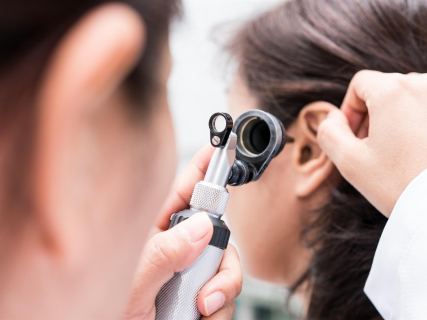

The president of the Spanish Society of Otorhinolaryngology and Head and Neck Surgery (SEORL-CCC), Dr. Serafín Sánchez, has raised the need to analyze the possible implementation of a hearing screening program in the school stage, with the aim of identifying hearing losses before their effects become clearly visible.
"The screening would allow us to look for hearing loss before we have to discover it by its consequences," the specialist has insisted, also emphasizing that it is essential "to be attentive to the signals that may indicate that a child is not hearing correctly." Nevertheless, he has warned that "we cannot rely exclusively on those signals appearing or being recognized in time."
In the framework of Pediatric Day, which is commemorated this Thursday, October 8, Sánchez has reminded that "when the difficulty in hearing ends up manifesting as a language, attention, or learning problem, it may have already been interfering with their development for some time." A child who seems distracted, he pointed out, may be suffering from a hearing loss that contributes to their concentration or academic performance problems.
Among the main difficulties of childhood hearing loss is the fact that the child themselves, on many occasions, does not perceive that they hear worse. They may take the way they listen as normal, without having points of comparison that allow them to identify or explain their problems. In other cases, the child hears, but has difficulties understanding certain words, following the teacher's explanations, maintaining a conversation with background noise, or responding when spoken to from a certain distance.
"Passing the hearing screening at birth does not guarantee that a child will maintain normal hearing in the following years," Sánchez has emphasized, reminding that the neonatal test "has represented a fundamental advance for the early detection of congenital hearing losses." However, he has specified that "it constitutes an evaluation of hearing at a specific moment in life and does not allow for the identification of hearing losses that appear later or evolve progressively."
In this line, he has cited a work carried out in Spain and presented at the 76th National Congress of the SEORL-CCC, in which 63 children with a diagnosis of hearing loss were studied. The results showed that the neonatal screening program allowed for the detection of 72 percent of cases, while the remaining 28 percent was identified later, with an average age of five years.
Late-onset hearing losses and the need for a second evaluation
"There are late-onset hearing losses and others that progress with growth," Sánchez has pointed out, who has argued that, for this reason, it is essential to have "a second opportunity to detect them" before their sequelae alert "that something is happening." "The onset of hearing loss after having passed the neonatal screening is well documented," he added.
This view is in line with that of the World Health Organization (WHO), which in 2025 disseminated a specific manual to facilitate the implementation of visual and auditory screening programs in the school-age child population. The document warns that untreated sensory alterations can have a considerable impact on development and learning, and offers recommendations for organizing screening, referral, follow-up, and care for the cases that are detected.
In parallel, the American Academy of Pediatrics (AAP) proposes a preventive schedule that includes objective hearing checks at four, five, six, eight, and 10 years, in addition to new evaluations at different stages of adolescence, in order not to overlook hearing losses that arise or progress over time.
"Neonatal detection allowed us to extraordinarily advance the diagnosis of many childhood hearing losses," recalled the president of the Pediatric ORL Commission of the SEORL-CCC, Dr. Enrique Guillén Lozada. In his opinion, after this advance, "the next step" must be to ask "what happens with those that appear later." In this sense, he concluded that "detecting earlier also means giving better opportunities to communicate, learn, and develop on equal terms."