
The European Commission presented on Tuesday a plan for candidate countries to the European Union to progressively integrate into the bloc before their full accession, and to introduce new safeguards that allow for sanctions during the 15 years following their entry if serious violations of the rule of law or the essential values of the EU occur, with the possibility of suspending their voting rights.
These measures are part of a broad package of changes with which Brussels wants to adapt the institutions, policies, and community budget to future enlargements. Among the proposals, the Commission emphasizes the need to limit the use of unanimity to reduce the veto power of the States and opens the possibility of cutting the size of the community Executive, which today is made up of 27 commissioners, one from each member country.
The community Executive has sent this proposal to the Twenty-Seven and the European Parliament with the aim of preparing the Union for the arrival of new partners by making the most of the tools of the current treaties, without having to modify them, something that would require the unanimity of all member States.
The approach, which now governments and the Eurochamber must negotiate, is presented at a time when several candidates have accelerated their accession processes and when Montenegro aims to conclude negotiations before the end of the year, with the goal of becoming a full member State by 2028.
Fewer vetoes and a smaller European Commission
In the institutional field, the Commission proposes to cut the areas in which each member State retains veto rights and advocates for more use of the so-called passerelle clauses, which allow for replacing unanimity with qualified majority without the need to reform the treaties, although unanimous support from the Twenty-Seven is still essential to activate them.
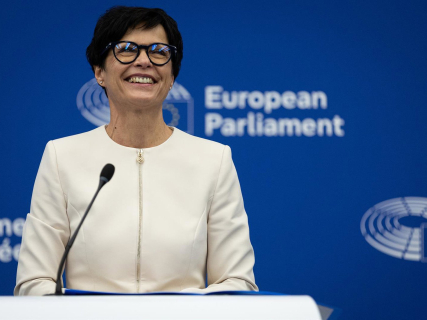
"The treaties allow it. It is possible to reduce the number of areas in which a single country can veto decisions that all others support," defended the European Commissioner for Enlargement, Marta Kos, in a press conference where she mentioned as examples sanctions, the fight against tax fraud, or interim decisions in the accession processes of candidate countries.
Moreover, the community Executive wants to promote the use of enhanced cooperation, which allows a group of States to advance together in certain policies while leaving the subsequent incorporation of the rest open, as a way to expedite decision-making in a larger Union.
In parallel, Brussels suggests reviewing the size of the European Commission in light of upcoming enlargements. The document recalls that treaties allow the College of Commissioners to be made up of a number equivalent to two-thirds of the member States, through a system of equitable rotation, instead of the current scheme of one commissioner per country.
According to the Commission, a smaller Executive would facilitate the creation of broader portfolios and simpler internal coordination, although it admits that the current model provides the College with direct knowledge of the political, economic, and administrative reality of all partners.
Progressive integration of candidates before entering
Another pillar of the proposal is to deepen the gradual integration of candidate countries before they become member States, allowing them to participate early in certain policies, programs, and community structures as they meet the required reforms for their accession.
"Gradual integration does not replace full membership, it is an accelerator of enlargement," emphasized the commissioner, who specified that this process will depend both on the progress of reforms and on the strategic alignment of candidates with the European Union.
In practice, this early integration could translate into early access to programs such as Erasmus+ or Horizon Europe, into enhanced participation in EU agencies like Frontex, and into a gradual incorporation into segments of the single market, as well as into European networks of transport, energy, and digital connectivity and into expert groups and community committees.
However, this participation will be "reversible" and will be subject to compliance with reforms and respect for the values and strategic interests of the EU, so that Brussels may withdraw the benefits granted if a candidate fails to meet the conditions.
New safeguards against democratic backsliding
The Commission also proposes to strengthen protection mechanisms to prevent new member states from failing to comply, once inside the EU, with the commitments made during negotiations, especially regarding the rule of law, democracy, and Fundamental Rights.
"We must be sure that, after entering, they never fall below those standards again," warned Kos, who defended the need to learn from previous enlargements and equip the EU with instruments that allow for "cutting financial support or restricting voting rights" in the case of serious backsliding.
To this end, Brussels proposes an "insurance policy" in the form of an institutional safeguard applicable during the first 15 years after the accession of a new country, which would allow for a reaction to "serious violations of the fundamental values of the bloc" or the principle of "loyal cooperation," reaching in the most extreme cases to suspend its voting rights in the Council.
Furthermore, the Commission wants future member states to voluntarily commit for a determined period not to block new EU enlargements due to bilateral disputes with other candidates, as has happened in the Balkans, to prevent such conflicts from paralyzing accession processes.
Adjustments for the possible entry of Ukraine and roadmaps
Apart from institutional changes, the analysis by Ursula von der Leyen's team concludes that the EU can absorb enlargement in most of its current policies, although it identifies areas that will require specific adjustments, including the common agricultural policy in the event of Ukraine's accession.
Due to "the scale, structure, and very high productivity" of the Ukrainian agricultural sector, the Commission proposes to study concrete measures that significantly limit financial support and market access for certain sensitive agricultural products, in order to prevent Kiev's entry from having negative effects on European farmers and, at the same time, help the country recover its traditional export markets in third countries.
In parallel, the Commission has pointed out Montenegro, Albania, Moldova, and Ukraine as the four "most advanced" candidates and plans to present on October 28, along with its annual enlargement reports, indicative roadmaps for each of them, in which the next steps, indicative timelines, and specific objectives for continuing progress towards accession will be defined.
"There will be no shortcuts," emphasized the Slovenian commissioner, who insisted that the pace of each candidate will continue to be determined by their own merits and by the fulfillment of the reforms required by Brussels.