
The attorneys general of eight states in the United States, including two with Republican governments, have filed a joint lawsuit against the artificial intelligence company OpenAI this Wednesday. They accuse the company that created ChatGPT of "causing harm to children, deceiving parents" and of violating various consumer protection regulations.
According to the statement released by the Iowa Attorney General's Office, "The Attorney General (of Iowa), Brenna Bird, announced today at a press conference that she is going to sue OpenAI for causing harm to the children of Iowa, deceiving parents, and violating the Iowa Consumer Fraud Act," a formulation that has been reproduced almost identically by the attorneys general of Arizona, Idaho, Nebraska, and West Virginia. These states have filed separate lawsuits, as have Arkansas, Kansas, and Montana.
The group of attorneys, which includes officials appointed by both Democrats and Republicans, argues that OpenAI has continued to promote the development of its artificial intelligence tools while being aware that they needed additional safeguards. They also argue that the company has violated the consumer protection laws of their states and that it markets a product that poses a risk to particularly vulnerable groups, such as minors.
Several of the attorneys general detail in their informational notes that one of the reasons for concern is the use of ChatGPT to access instructions on self-harm and even on suicide. Among those who have focused on this point is the Attorney General of Arkansas, Republican Tim Griffin, who emphasizes that, in numerous cases, some users "managed to bypass OpenAI's security measures and generate responses that, according to the company itself, its protection mechanisms were designed to prevent."
In the same vein, the Attorney General of Arizona, Democrat (and Republican until 2019) Kris Mayes, has stated that "OpenAI jeopardized the safety of Arizona residents by not implementing adequate protections for users or transparency measures, despite clear indications that minors were regularly interacting with its chatbot." Therefore, she emphasized that her department will seek, through this legal action, to "protect the children of Arizona and hold the company accountable for its repeated violations."
The new lawsuits are added to other legal fronts opened against OpenAI, in a context where the courts analyze to what extent developers of AI systems can be considered responsible for episodes linked to mental health. In Canada, for example, the family of a young woman who was seriously injured in a school shooting has sued the company, alleging that it knew in advance the plans of the alleged perpetrator and did not alert the authorities.
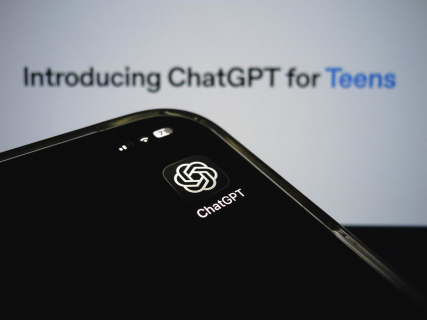
Currently, the use of ChatGPT is allowed from the age of 13, although those under 18 need the consent of a parent or legal guardian. OpenAI claims that it tries to verify the age of those who use the service by combining the age declared by the user, various behavioral indicators, and, when deemed necessary, additional verification processes.
The company's spokesperson, Drew Pusateri, has defended in a statement sent to several U.S. media that the firm has incorporated "industry-leading age-specific protections" into its tools, which, according to him, other tech companies do not yet have.
"While no system can be perfect, we will continue to collaborate with experts to guide our work and develop additional safeguards, such as parental controls, break reminders, and age-appropriate model protections that already exist," explained the OpenAI representative. He also assured that its executives are "committed to working with states to promote pragmatic AI policies that apply to the entire industry, and not just to one company."