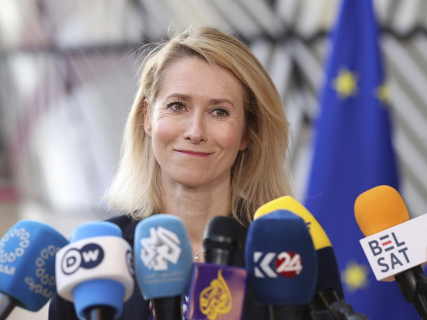

The foreign ministers of the European Union are expected to give the green light this Monday to their broadest sanctions package against Russia, which will affect around 1,600 individuals and entities linked to the Russian military-industrial complex. The meeting, marked by the resurgence of hybrid attacks attributed to Moscow on community soil, comes after episodes such as the recent incident at the German airport in Leipzig.
The decision will be adopted at the Foreign Affairs Council (FAC) taking place in Luxembourg and aims to increase pressure on the Russian war economy, complicating the functioning of its military framework. At the same time, the Twenty-Seven will study new responses to sabotage actions, disinformation campaigns, and other destabilizing operations attributed to the Kremlin.
The new sanctions on the 1,600 people and entities will add to those already in force since the beginning of the invasion of Ukraine in 2022, which affect about 3,000 figures linked to the Kremlin and its military offensive against Kiev. In addition, the member states plan to approve another list with 77 sanctioned individuals related to the elections to the Russian State Duma held in September in occupied Ukrainian territories.
EU diplomatic sources emphasize the magnitude of this new package and have even joked that it is a "big beautiful package" ('big beautiful package'), evoking the expression popularized by former U.S. President Donald Trump to describe his ambitious budget and tax reform (One Big Beautiful Bill Act).
The debate comes after a series of security incidents in various member states, especially on the eastern flank of the Union, which have reactivated alarms about the intensification of Russian hybrid operations.
In this context, the ministers will also discuss a possible tightening of entry and movement restrictions for Russian citizens in the Schengen area. The proposal would mainly affect tourists, diplomats, and former combatants who have participated in the aggression against Ukraine, although, according to other diplomatic sources, a definitive agreement is not expected this Monday.
The foreign ministers will also address the evolution of the war in Ukraine, following the intervention of Ukrainian Minister Andri Sibiga, focusing on the reinforcement of the country's air defense, the mobilization of 6.6 billion euros from the European Peace Facility, and the continuity of the European military training mission on Ukrainian territory.
Additionally, the financing needs of Kiev for 2027 will be analyzed, including the option of resorting to frozen Russian assets. This issue continues to divide the Twenty-Seven, especially Belgium, given that most of these funds are deposited in Euroclear, a financial entity based in Brussels.
Reinforcement of the naval mission in the Red Sea
Another central point of the meeting will be the situation in the Middle East, with special attention to the deterioration of maritime security in the Red Sea and the threats to freedom of navigation in the Strait of Hormuz and Bab el Mandeb, in a context of intensified Houthi attacks against civilian infrastructure and trade routes.
The ministers will discuss how to enhance the European naval operation ASPIDES, deployed in the Red Sea to safeguard merchant traffic in the area, after Kaja Kallas has called on member states for an increase in military resources to improve the response to missiles and drones.
According to community sources, the mission primarily requires frigates equipped with air defense systems capable of intercepting threats from the air. Several countries have begun to respond to the High Representative's request, although a fixed figure on the additional resources that could be added is still not being handled.
It is also expected that on Monday an international commitment to defend freedom of navigation will be made public, under the principle that maritime transit "should not be subject to fees or tolls." According to European sources, this declaration will have the support of states from different regions of the world, in addition to EU partners.
New European mission in Lebanon
In parallel, the Twenty-Seven intend to formally approve the creation of a new European military mission to support Lebanon, designed to advise, train, and strengthen the capabilities of the Lebanese Armed Forces and internal security forces.
This is a non-executive mission, designed to bolster Lebanese security institutions in the face of regional instability and the foreseeable withdrawal of the United Nations Interim Force in Lebanon (UNIFIL). However, it is not expected to replace the 'blue helmets' or take on their peacekeeping tasks in the south of the country.
European sources are hopeful that the deployment could start before the end of the year, once the necessary procedures to activate the operation are completed. An initial provision of around 1,500 personnel is being considered, although they warn that this number could be adjusted depending on the scope of training and advisory activities.
The bloc will also analyze the situation in Gaza and the West Bank, as well as the upcoming electoral events in the region: the Israeli elections on October 28 and the Palestinian legislative elections on November 28, for which the EU has reiterated its willingness to send an electoral observation mission.
EU Enlargement and European Security
On the other hand, the ministers will hold a specific session to assess the impact on the security and defense of the Union of a future enlargement, on the eve of the leaders' summit on October 15 and 16, where the strategic incorporation of new member states will be addressed.
The analysis will focus on how candidate countries, particularly Ukraine, Moldova, and the partners in the Western Balkans, can contribute to strengthening European security through greater military, industrial, and diplomatic cooperation, as well as through a progressive alignment with common foreign and security policy.
In the chapter on international current affairs, the Twenty-Seven will also study the deterioration of the democratic situation in Georgia, following the Georgian government's measures against civil society organizations and the country's growing distance from its commitments to the EU.
Finally, the situation of the International Criminal Court (ICC) will be addressed, after the approval of new U.S. sanctions against this court, which the Union has reiterated it is willing to defend.