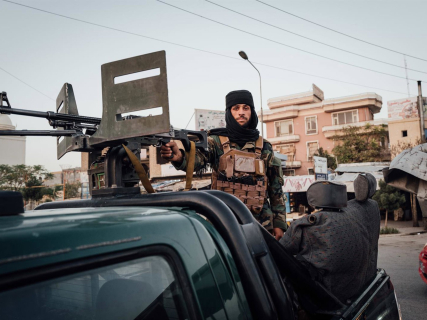

The National Resistance Front of Afghanistan (NRF), which leads the insurgency against the Taliban in the Panjshir valley, has rejected this Wednesday the existence of a supposed plan to attack the United Nations Assistance Mission in Afghanistan (UNAMA). The response comes after the fundamentalist regime spread on social media a video with forced confessions about this alleged plot.
In an official statement published on its social media channels, the NRF has denounced that the "manipulation of diplomatic footprints through forced confessions sets a dangerous precedent in international relations," emphasizing that these practices "undermine independent oversight and restrict humanitarian operations through fear."
The opposition movement has formally requested UNAMA and international security bodies to "conduct an independent investigation into the circumstances and coercion behind this video," in order to clarify the context in which the statements disseminated by the Taliban were made.
The NRF has also reiterated the principles on which its struggle is based and has emphasized that "our operations remain focused exclusively on countering the oppression of the Taliban regime and restoring the rule of law," specifying that they remain "out of bounds, the civil, diplomatic, international, and non-combatant entities."
In parallel, the organization has drawn the attention of diplomatic missions and organizations present in Afghanistan, urging them to "treat the narratives produced by the regime with extreme caution and independently assess security protocols against possible risks orchestrated by the Taliban."
Under the leadership of Ahmad Masud, the NRF took up arms in September 2021 to confront the Taliban, just a month after the Islamist movement announced the recovery of control of the country following the fall of Kabul.
Since the withdrawal of international troops at the end of August 2021, Afghanistan remains under the absolute control of the Taliban. Although no state has formally recognized the movement as a legitimate authority, the regime maintains regular diplomatic contacts with neighboring countries, as well as with various agencies and international organizations.