The Nepalese prime minister and his ministers donate one month of salary in aid for the severe flood.

The Government is preparing a package of aid for families and companies affected while the official balance rises to 538 dead and at least 937 missing.

3 minutes

fotonoticia 20260828132250 1920

fotonoticia 20260828132250 1920

Add DEMÓCRATA to Google

Ask FREN

Published

Last updated

3 minutes

Most read

The Prime Minister of Nepal, Balendra Shah, and the rest of the members of his Government will allocate one month's salary to the reconstruction of the areas affected by the severe floods recorded this week. The money will be deposited into the state fund dedicated to financing disaster response.
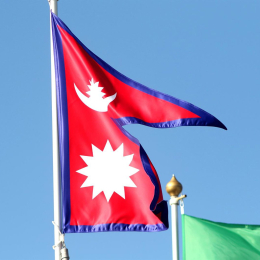
The decision comes as search and rescue operations continue. The latest official balance raises the number of deceased to 538 and the missing to 937 in Nepal, although authorities warn that both figures may continue to rise.

One month's salary for the emergency fund

The Nepali Government has agreed that all members of the Council of Ministers, including the Prime Minister, will contribute their salary corresponding to one month to the Disaster Relief Fund. The Executive has not yet communicated how much money this measure will raise.

The contribution aims to assist the affected individuals and to reconstruct homes, roads, bridges, and other damaged infrastructure. The floods have particularly hit the towns located next to rivers and the mountainous areas near the border between Nepal and China.

Assistance for affected families and businesses

The Council of Ministers has also tasked the Ministry of Finance with the preparation of a package of assistance, rehabilitation, and reconstruction for the affected families and businesses. The measures will initially focus on Rasuwagadhi, the area around the Bhote Koshi river, and the populations located downstream.

The Government has not detailed the financial allocation, the requirements to access the aid, or the expected timelines. Authorities will first need to assess the extent of the damages and determine how many homes, businesses, and infrastructures need to be repaired or rebuilt.

In the same meeting, but through a different decision, the Executive authorized the public company Krishi Samagri Company Limited to acquire 25,000 tons of DAP fertilizer from India through an agreement between both governments.

The death toll rises to 538

The National Authority for Disaster Risk Reduction and Management of Nepal has reported the recovery of 538 bodies, while at least 937 people remain missing. The district of Chitwan accounts for the highest number of fatalities, with 221 deceased.

The figures correspond exclusively to Nepal. On the other side of the border, Chinese authorities have reported another five dead and 558 missing in Gyirong County, in the Tibet Autonomous Region.

Emergency teams continue to search for survivors among the mud, debris, and destroyed infrastructure. Access difficulties, road interruptions, and the risk of new floods are affecting operations.

The risk of new floods continues

Nepalese authorities are monitoring at least two accumulations of water formed in the mountainous area upstream. One of them began to overflow this Friday, which forced the temporary suspension of some rescue work and the relocation of teams to higher places.

The danger will continue as long as these natural deposits are not completely emptied. The water retained by ice, rocks, and sediments can suddenly break the barriers and cause new floods in the rivers that cross the affected communities.

What could have caused the flood in Nepal

Preliminary analyses of satellite images suggest that a landslide of ice and rocks blocked the Lhende River, approximately 20 kilometers upstream from the Miteri bridge. The obstruction would have formed a temporary reservoir that eventually broke and released a large amount of water and sediments.

This hypothesis is still not definitive. Specialists are still investigating whether a glacial lake overflow occurred or if the flood was mainly caused by the breaking of the barrier created by the landslide.

The definitive magnitude of the damages has also not been quantified. The package commissioned to the Ministry of Finance must determine the needs of the affected families and businesses before the main reconstruction actions can begin.

More key points, information and questions with FREN

AI-GENERATED CONTENT

What are the next steps for the approval and implementation of the aid package commissioned to the Ministry of Finance of Nepal?

I do not have specialized or up-to-date access to the specific procedures of the Government of Nepal, so I cannot precisely describe the specific steps that the aid package commissioned to its Ministry of Finance will follow. My scope is the Spanish political and institutional system. However, I can generally and comparatively explain the typical phases of approval and implementation of an aid package managed by a Ministry of Finance in many parliamentary systems, so you have a reference framework applicable —with caution— to the Nepalese case.

1. Technical definition of the aid package

The first step is usually the technical development of the program within the Ministry of Finance itself:

  • Diagnosis of the problem to be addressed (affected sectors, target households, expected impact).
  • Design of measures: type of aid (direct subsidy, tax credit, loan guarantees, conditional transfers, etc.).
  • Budget estimation: total cost, time horizon, and possible sources of funding (ordinary budget, borrowing, international aid, reallocation of items).
  • Preliminary evaluation of macroeconomic impacts and fiscal sustainability.

This phase usually culminates in a technical document or draft that serves as a basis for subsequent political and regulatory decisions.

2. Political approval within the Government

Once the technical design is finalized, the Ministry of Finance usually submits the proposal to the collective government body (Council of Ministers or equivalent):

  • Discussion about the political priority of the aid package compared to other measures.
  • Consultation with other affected ministries (economy, social development, agriculture, energy, etc.).
  • Decision on the most appropriate regulatory instrument: budget reform, decree, regulation, administrative program, etc.

Approval at this stage usually materializes in a government agreement that authorizes the measure and sets its main guidelines.

3. Regulatory and budgetary processing

The next step is to translate the political agreement into rules and decisions with legal effects:

  • Budget modification or approval, if the package requires new credits or reallocations.
  • Development regulations: decrees, regulations, or orders establishing access requirements, application and payment procedures, and control mechanisms.
  • Sometimes, parliamentary approval is required, especially if it involves changes in budget laws or creation of new taxes/tax benefits.

Depending on the system, this phase can be faster (if government regulations are used) or slower (if a formal law approved by parliament is required).

4. Operational design and administrative coordination

In parallel or after legal approval, practical execution is prepared:

  • Definition of application channels (physical offices, digital platforms, partner banks).
  • Design of clear and verifiable forms and eligibility criteria.
  • Assignment of responsibilities between the Ministry of Finance and other executing bodies.
  • Establishment of monitoring, auditing, and ex post evaluation mechanisms.

It is also decided here whether pilot phases will be implemented or if the launch will be immediate and large-scale.

5. Public communication and launch

Before opening aid calls, there is usually a communication phase:

  • Official announcements about the content of the package, deadlines, and access methods.
  • Information campaigns aimed at potential beneficiaries and intermediaries (NGOs, business associations, banks).

The effective launch begins when application periods open, files are received, and the first payments or benefit grants are made. From there, a continuous phase of management and control begins, where detected problems are usually corrected (administrative bottlenecks, low fund absorption, targeting errors).

6. Monitoring, control, and adjustments

Finally, a serious aid package incorporates mechanisms for:

  • Periodic monitoring of budget execution and number of beneficiaries.
  • Anti-fraud controls and audits internal and, if applicable, external.
  • Impact evaluation to assess whether the aid achieves the pursued objectives and whether it is necessary to extend, redesign, or close the program.

Although Nepal's institutional architecture has its own characteristics, these general steps are usually repeated, with nuances, in most countries. To know the specific itinerary of the aid package you refer to, it would be necessary to consult official and specialized sources from the Nepalese State itself or the international organizations involved.

What powers and functions does the Prime Minister of Nepal have according to Nepalese legislation?

I cannot answer your question in detail because I am specialized exclusively in the politics and institutions of Spain. This includes, above all, the functioning of the Spanish constitutional system, the Government and its ministries, the Congress and the Senate, the regional parliaments, the regulations and political and regulatory activity related to Spain, as well as the interaction of these actors with companies, organizations, and other stakeholders within the Spanish public sphere.

The question you raise — the powers and functions of the Prime Minister of Nepal according to Nepalese legislation — requires a specific analysis of Nepal's constitutional and legal framework (its current Constitution, laws organizing the executive power, possible rules on political responsibility, relationship with the Nepalese Parliament, etc.). All this is outside my scope of knowledge and the databases and tools I have access to, which are focused on the Spanish institutional reality.

For a rigorous answer about Nepal, it is advisable to consult directly:

  • The Constitution of Nepal in its latest consolidated version, especially the articles related to the executive power and the Council of Ministers.
  • The Nepalese organic or statutory laws that develop the role of the Prime Minister, their appointment process, responsibilities, term duration, and parliamentary control mechanisms.
  • Doctrinal commentaries or manuals of comparative constitutional law focused on Nepal, explaining how those provisions are interpreted in practice.

On the other hand, I can help you in detail with analogous topics but referring to Spain. For example:

  • Explain the powers and functions of the President of the Government of Spain according to the Constitution and Spanish laws.
  • Analyze how the relationship between the Government and the General Courts is articulated, the mechanisms of political responsibility (motion of censure, vote of confidence), or the appointment of the president after general elections.
  • Compare, within the Spanish scope, the role of the President of the Government with other institutional actors, such as the King or the regional presidents.

If you are interested, you can reformulate your question in a comparative key but focused on Spain, for example: “What powers does the President of the Government of Spain have and how does it generally differ from a prime minister of a parliamentary system like Nepal’s?”, and I can develop the Spanish part in detail and guide you, at a very high level and without normative precision, on the most common comparative elements between parliamentary models.

What legal requirements must families and businesses meet to access state aid in disaster cases in Nepal?

I cannot tell you with certainty what specific legal requirements families and businesses must meet to access state aid in disaster cases in Nepal, because it is foreign legislation outside my area of expertise. I am specifically designed to work with politics, institutions, and regulations of Spain, so I do not have a reliable basis to describe in detail the Nepalese legal framework nor its disaster aid procedures.

Still, I can guide you generally on how this type of aid is usually organized and what practical steps should be taken to locate the correct and updated legal information about Nepal, and also explain what types of questions I can help you with directly within the Spanish scope.

1. Why I cannot specify Nepal’s requirements

The conditions to access aid in disaster cases (earthquakes, floods, landslides, etc.) depend on:

  • The internal legislation of the affected country (in this case, Nepal).
  • The specific programs that the government approves after each disaster.
  • Agreements with international organizations (UN, World Bank, cooperation agencies) and NGOs that channel part of the resources.

Each country has its own civil protection, disaster management, and social assistance laws. In Nepal’s case, those requirements are set in national rules and administrative procedures that I do not have integrated nor can systematically verify with official sources, unlike what happens with Spanish regulations.

2. Where to find reliable information about Nepal

To know precisely the legal requirements in Nepal, I recommend these routes:

  • Official websites of the Government of Nepal: particularly the ministries responsible for disaster management, social affairs, or reconstruction. They usually publish:
    • Government decisions on aid packages after a specific disaster.
    • Forms, deadlines, and documents needed for applications.
  • Embassies and consulates: the Nepalese embassy in your country or diplomatic representations of other states in Kathmandu can offer practical information, especially for foreign companies wishing to access support programs or participate in reconstruction.
  • International organizations and UN agencies: when they finance or co-finance compensation or reconstruction programs, they usually publish:
    • Eligibility criteria for local beneficiaries (families, SMEs, cooperatives).
    • Specific requirements for international companies (registration, compliance with standards, etc.).
  • NGOs specialized in humanitarian action and reconstruction: many prepare guides in accessible language for the affected population in the country, explaining in practical terms the steps to request aid or compensation.
  • Local legal advice: if it is a company that wants to operate or claim in Nepal, having a local law firm is practically essential to correctly interpret the regulations and formal requirements.

3. What is usually required in this type of aid (as guidance)

Although I cannot speak specifically about Nepal, many disaster aid regulations require, both from families and businesses:

  • Proof of damage suffered (expert reports, photographs, official certifications after zone inspection).
  • Connection to the affected area (habitual residence, ownership or lease of the home or premises, company’s registered address in the area).
  • Identification and basic documentation (identity documents, commercial registers, activity licenses, etc.).
  • Prior compliance with legal obligations (for example, in some countries it is required that the company was duly registered, up to date with tax or labor obligations, to be eligible for certain aids).

The exact combination of these requirements, the type of aid (direct subsidies, soft loans, tax exemptions, resettlement, etc.), and economic thresholds can only be known by examining the rules and programs in force in Nepal at the time of the specific disaster.

4. What I can help you with directly

Where I can provide detailed and verified information is in everything related to:

  • Spanish regulations on disaster or emergency aid.
  • Procedures in the General Courts or regional parliaments when approving aid packages.
  • Spanish regulatory framework for companies participating in international cooperation or reconstruction.

If you are interested, you can reformulate the question focusing on Spain (for example, how Spanish aid to families or companies affected by disasters abroad, such as Nepal, is regulated) and I can give you a much more precise legal answer.

Play

Test your knowledge with FREN!

How much do you know about this topic? Answer the following 3 questions.

To which fund will the Nepalese prime minister and ministers allocate one month of their salary?

Question 1 of 3

How many people have been officially reported dead after the floods in Nepal?

Question 2 of 3

What additional measure did the Nepalese Government take in the same Cabinet meeting?

Question 3 of 3

Hola, soy Fren. ¿Cómo te ayudo?