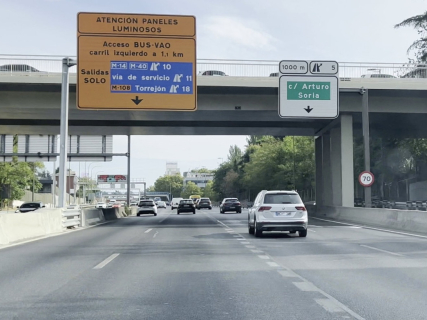

The bus-VAO of the A-2 could reduce travel time by up to 25% for those using this infrastructure, according to calculations made during the project's tests. The measure is designed to act on one of the main access corridors to Madrid and improve the circulation of vehicles that meet the established conditions.
The corridor concentrates around 120,000 daily trips, which makes any improvement in travel times a measure with potentially considerable impact on daily mobility.
The infrastructure also has a projected budget of 11 million euros. However, despite having that financial forecast and the results obtained during the analysis phase, its implementation remains pending.
A lane reserved for certain vehicles
The principle of operation of the bus-VAO consists of reserving a space on the road for certain vehicles. The purpose is to especially favor trips where several people are traveling and to make more efficient use of the available capacity on the road.
The system thus modifies the distribution of space allocated to traffic instead of merely expanding the road. Its operation will depend on the specific conditions established for accessing the lane and on drivers respecting the usage rules.
The experience analyzed during the project provides a reference on the behavior that this solution could have when incorporated into ordinary traffic.
The project is still pending to be put into service
The main unknown continues to be when it will be available for drivers. The infrastructure is not yet operational, so the results of the tests have not been transferred to regular circulation. The difference is significant: the savings calculated during the experimental phase represent the estimated potential of the system, but it does not mean that users of the A-2 are currently experiencing that reduction in their trips. The future commissioning will allow verifying whether the behavior observed in the tests is maintained when the lane operates under normal traffic conditions.
The application of the system aims to offer an alternative to those who make recurring trips through this access to Madrid. The objective is that a more efficient use of vehicles contributes to reducing the pressure on the road. The result will depend on factors such as traffic intensity, the number of vehicles using the lane, and compliance with access conditions. For that reason, the maximum percentage obtained in the tests cannot be automatically transferred to each driver.
The pending issue is for the project to move from calculations and tests to its effective operation. Until then, the impact on travel times will remain a forecast and not an advantage available to those currently using the A-2.