Train strike today after the Urda accident: which services are operating and what the drivers are demanding

The 24-hour strike at Renfe remains in place, called before the Urda accident, to demand progress in railway safety and the fulfillment of pending agreements

fotonoticia 20261028120949 1920

fotonoticia 20261028120949 1920

Add DEMÓCRATA to Google

Ask FREN

Published

Last updated

3 minutes

Most read

Elecciones 29N · Encuestas

La media de las encuestas

Media a 27 de octubre de 2026 · 15 institutos

  • PP31,0 %
  • PSOE27,3 %
  • Vox18,9 %
  • Sumar6,3 %
  • Podemos2,9 %
  • ERC2,3 %
010203040ene 2024jul 2024ene 2025jul 2025ene 2026jul 2026

Media del último estudio de cada instituto en 30 días y su evolución semanal desde el 23J. Partidos con al menos un 2 %.

Todas las encuestas

Elecciones generales del 29 de noviembre · Demócrata

The Renfe train drivers have begun this Thursday, October 29, a 24-hour strike to demand improvements in railway safety and compliance with the agreements reached with the administrations and companies in the sector. The stoppage, called by the Spanish Union of Railway Drivers and Assistants (Semaf), coincides with the day after the tragic Urda accident.

Semaf has decided to maintain the call despite the seriousness of the disaster. The union has conveyed its condolences to the victims and their families, has asked for prudence regarding the causes of the accident and has urged driving professionals to take extreme precautions. It has also announced that it is studying new measures in defense of railway safety.

The strike may cause cancellations, changes in frequencies and timetable changes for trains. Added to these disruptions is the interruption of high-speed rail between Madrid, Ciudad Real and Andalusia due to the Urda accident, which forces the organization of transport alternatives independent of the labor conflict.

What trains are affected by this Thursday's strike

The call affects the driving staff of all the companies in the Renfe group throughout the national territory. Therefore, it may affect the services of Cercanías, Media Distancia, Alta Velocidad, long-distance and freight. The strike runs from 00:01 to 23:59 this Thursday.

The Ministry of Transport has set minimum services to maintain part of the usual offer. These percentages represent the service that must be guaranteed, but they do not mean that all trains will run on their ordinary schedule or that incidents cannot occur.

Minimum services of the train drivers' strike of October 29
Type of service Minimum service
Cercanías at peak hours 75%
Cercanías for the rest of the day 50%
Media Distancia 65%
Alta Velocidad and long-distance 73%
Freight 26%

Source: Renfe and Ministry of Transport. In Cercanías, the state peak periods are from 06:00 to 09:00, from 13:30 to 15:30 and from 18:30 to 20:30.

In Catalonia, specific minimum services apply for Rodalies and Regionales: 66% of the usual offer between 06:00 and 09:30 and between 17:00 and 20:30, and 33% during the rest of the day. The Generalitat has published the minimum schedules by line so that travelers can check the planned services.

Renfe recommends consulting the train status before traveling and traveling only when it is essential on the affected services. The company warns that changes may occur even on corridors subject to minimum services.

What the drivers are demanding

Semaf called the strike after considering blocked the agreements that, according to the union, were supposed to translate into structural changes to strengthen railway safety. The organization maintains that, after the meetings with the Ministry of Transport, Adif, the State Railway Safety Agency and Renfe, measures it considers priorities were still pending.

Among its main demands is the implementation of binding protocols to act in the face of weather emergencies and risk situations on the track. The union also asks for clear coordination of operational communications and demands that safety prevail over the urgency to maintain traffic.
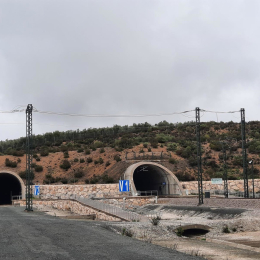
The list of demands includes technical solutions to improve the reliability of railway rolling stock, the hiring and training of new drivers, the application of the interruptions provided for in driving times and the unlocking of the reduction coefficients of the retirement age. Semaf also demands that the protocol of care for professionals who suffer a collision be fully applied and defends the model of "just culture", which seeks to avoid the automatic attribution of responsibilities to workers before the facts are clarified.

The union likewise calls for a direct working channel between the trade unions, the State Railway Safety Agency and the Labor Inspection to supervise both working conditions and safety measures.

Renfe's position: it maintains that it has complied with the agreements

Renfe disagrees with the union's diagnosis. The company maintains that it has complied with the measures that corresponded to it within the agreement reached in February to strengthen the railway system after the Adamuz accident and states that much of the current claims depends on other administrations or regulatory bodies.

According to the company, the measures that were under its responsibility have been carried out, including staff reinforcement, changes in maintenance, and actions to improve the reliability of the material. Renfe puts at more than 1,200 the hires made to reinforce railway operations and staffing levels.

The company also argues that some of the demands of the drivers who are going on strike refer to regulatory changes that it cannot approve on its own, such as changes in driving times or certain issues linked to the Labor Inspectorate. For that reason, it considers the strike unjustified and regrets the inconvenience it may cause travelers.

More key points, information and questions with FREN

AI-GENERATED CONTENT

What is the status of parliamentary procedures to modify train drivers' driving times in Spain?

The modification of train drivers' driving times is being promoted through regulatory means, not as a law to be approved by the Congress and the Senate. The instrument is a draft royal decree that modifies Royal Decree 929/2020, on railway operational safety and interoperability. The latest specific milestone found is the public hearing, whose deadline ended on May 18, 2026; the consulted sources do not record its subsequent final approval or publication in the Official State Gazette (BOE).

What has been processed so far

The identified sequence allows distinguishing three moments:

  • Commitment with the unions, in February. The Ministry of Transport and Sustainable Mobility agreed with SEMAF, UGT, and CCOO to modify Royal Decree 929/2020 so that stops of less than 45 minutes by train drivers count as effective driving time. This appears in the official communication of the agreement, published on February 9, 2026.
  • Prior public consultation. The information found places this first participation phase between March 9 and 24, 2026. Its function was to gather contributions before finalizing the regulatory proposal.
  • Public hearing and information. The draft was then subjected to allegations, with a deadline until May 18. Demócrata explained the draft on April 29, 2026, detailing both the change regarding driving and the modifications to railway supervision.

Therefore, public participation has already ended. This does not mean that the reform is approved: the closing of allegations is a preliminary step to the government decision and does not turn the draft into a binding obligation.

What would change for train drivers

The modification affects the calculation of driving time more than a reduction of the general maximums. The regulation described in the sources establishes six hours of continuous driving and nine hours of daily driving. Continuous driving is considered interrupted when a break of at least 45 minutes is taken.

The draft intends to specify that intermediate periods shorter than those 45 minutes also count as driving, even if during them the driver is not directly controlling the train. The practical consequence would be that these brief interruptions would consume time within the applicable limits, which is relevant for organizing round-trip services, shifts, and reliefs.

The same draft includes another modification: expressly expanding the obligations to facilitate access to facilities, trains, and equipment when the State Railway Safety Agency conducts inspections, even if the supervision affects an entity different from its owner.

What remains pending and the role of the Cortes

The next steps in this process are the examination of allegations, preparation of the final text, and the corresponding administrative reports before approval by the Council of Ministers and publication in the BOE. No confirmed date is recorded to complete these steps, nor a milestone after the hearing that allows a more precise current status.

No specific parliamentary file aimed at approving this sectoral change has been identified. Therefore, it cannot be described as pending amendments, committee review, or voting in the Cortes. Debates about the general working day should not be confused with this specific reform.

In conclusion: relevant monitoring is with Transport, the Council of Ministers, and the BOE, not in a parliamentary calendar. The proposal to count short breaks should not be considered in force until the corresponding regulation is approved and published.

What are the competencies of the Ministry of Transport regarding railway safety according to Spanish legislation?

The Ministry of Transport and Sustainable Mobility has competencies in planning, regulatory promotion, and strategic direction in railway safety. However, it does not concentrate all functions: technical supervision mainly corresponds to the State Railway Safety Agency (AESF), while infrastructure managers and railway companies are responsible for safe operation. This distinction is essential to interpret Spanish legislation.

1. Planning and safety improvement

The Railway Sector Law 38/2015 establishes the general framework. Its article 5 assigns the Ministry the indicative strategy for development, maintenance, and renewal of the General Interest Railway Network (RFIG), with a minimum horizon of five years. It is also responsible for planning the establishment and modification of its lines, stations, and terminals, consulting the managers and affected autonomous communities.

Regarding safety, article 64.3 requires the state administration and its bodies to prioritize continuous improvement and accident prevention. Article 9 of Royal Decree 929/2020 specifies that the Ministry establishes strategic lines to achieve common safety objectives in the RFIG.

2. Approval of annual plans

The Ministry must prepare and publish annual safety plans. Order TRM/975/2024 regulates the procedure: the AESF prepares the draft and the Ministry approves it, after a report from the Directorate General of the Railway Sector and consultation with affected agents.

These plans develop strategic lines through objectives, measures, and activities. Their scope includes the state administration, infrastructure managers, railway companies, maintenance entities, and other agents included in the regulation.

3. Technical regulation and coordination

Article 5 of Royal Decree 253/2024 assigns the Directorate General of the Railway Sector the proposal and drafting of general provisions and technical regulations on the RFIG. It also participates in European and international standards and proposes their incorporation into Spanish law.

These functions are exercised without infringing the AESF's competencies on operational safety, interoperability —technical system compatibility— and dangerous goods. The Ministry coordinates managers and operators, promotes new technologies, and cooperates with other administrations. It also participates in the evaluation of management and technical control of general infrastructure managers.

4. Inspection and sanctioning power

Article 104 of Law 38/2015 distinguishes two areas:

  • Ministry: inspection and control of compliance with regulations on railway transport services and auxiliary and complementary activities of state competence.
  • AESF: inspection and supervision of the safety of infrastructures, rolling stock, personnel, and railway operation, as well as the transport of dangerous goods.

The same article allows the responsible inspection bodies to halt services, works, or activities in serious circumstances that compromise safety. Meanwhile, article 9 of the AESF Statute, approved by Royal Decree 1072/2014, grants the Agency sanctioning power in railway safety.

5. Limits of ministerial responsibility

The AESF's attachment to the department does not make the minister the ordinary decision-maker for certificates, authorizations, or technical inspections. The Agency exercises these functions according to its powers and the applicable European framework. It also does not replace managers and operators in maintenance, risk management, and safe operation.

In summary: Transport sets strategy, planning, and regulatory framework; AESF supervises; managers and operators manage daily safety. This distribution refers to the state-competent railway system, without eliminating the corresponding autonomous competencies.

What legal requirements must be met to apply retirement age reduction coefficients to train drivers?

To apply reduction coefficients to railway train drivers, inclusion in a recognized professional category, time worked in it, and general pension eligibility requirements must be accredited. It is essential to distinguish between applying existing railway coefficients and recognizing new ones: these are different procedures and their requirements should not be mixed.

1. Being included in specific railway regulation

The reference is Royal Decree 2621/1986, which integrates certain special regimes into the General Regime and preserves particularities for railway workers. It is not enough to work in a railway company or have a similar contractual designation: the performance of a category included in the regulation must be accredited.

Protected categories include train drivers and certain assistants. For several categories of electric or diesel traction, a coefficient of 0.10 is contemplated; for certain functions linked to steam locomotives, 0.15. The correspondence between category, functions, and coefficient must be individually verified, without automatically extending the benefit to any train or metro driver.

2. Accrediting effective computable work

The reduction is calculated on the time effectively worked in the protected activity, not on the entire working life. For example, twenty years recognized with a coefficient of 0.10 produce a reduction of two years on the applicable ordinary age.

To justify these periods, company certificates of services and categories, contracts, payslips, and employment history are relevant. Documentation must allow identification of the functions performed and their dates; total seniority in the company alone does not prove all bonifiable periods.

3. Meeting pension access conditions

The coefficient reduces the age but does not replace general contribution requirements nor other requirements to obtain retirement. Individual recognition corresponds to the National Social Security Institute (INSS), before which the pension must be requested and protected services accredited.

Additionally, article 206 of the General Social Security Law establishes a general limit of 52 years. Coefficients also do not serve to prove the age required for partial retirement or other early retirement modalities. They should not be confused with coefficients that economically penalize voluntary or involuntary early retirement.

4. If a new coefficient is intended to be recognized

The general framework is Royal Decree 402/2025. This procedure does not automatically grant new rights nor replace the specific regime of those already recognized with reductions. For new recognitions it requires:

  • Objective justification: exceptionally arduous, toxic, dangerous, or unhealthy work, with high rates of illness or mortality, supported by technical studies.
  • Impossibility to correct conditions: the law states that establishing coefficients "will only proceed when it is not possible to modify working conditions."
  • Collective initiative: for salaried workers, joint request by the most representative employer and union organizations, identifying activity, occupations, and functions.
  • Evaluation and normative approval: assessment of objective circumstances and government approval of the corresponding royal decree, with the coefficient, conditions, and additional contributions.

Therefore, for a driver already covered, the decisive factor is to accredit their category and services before the INSS. To expand protection, a company agreement or union claim does not substitute the required normative recognition.

Play

Test your knowledge with FREN!

How much do you know about this topic? Answer the following 3 questions.

Which union has called the train drivers' strike on October 29?

Question 1 of 3

What is one of the main demands of the striking train drivers?

Question 2 of 3

What percentage of minimum services has been set for commuter trains during peak hours in the strike?

Question 3 of 3