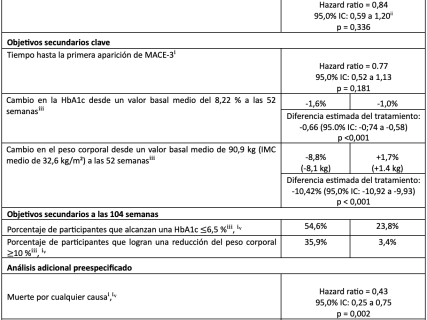

In ACHIEVE-4, participants treated with orforglipron* presented a 16% lower risk of MACE-4 and a 23% lower risk of MACE-3, achieving the primary objective of non-inferiority compared to insulin glargine
Eli Lilly and Company has shared detailed results from the phase 3 trial ACHIEVE-4, in which the efficacy and safety of Lilly's oral medication were evaluated against titrated insulin glargine in adults with type 2 diabetes and obesity or overweight with higher cardiovascular risk. It is the largest and longest study conducted with this drug in type 2 diabetes.
"For people with type 2 diabetes, protecting the heart is as important as controlling blood sugar", stated Dr. Klara Klein, assistant professor at the University of North Carolina School of Medicine. "ACHIEVE-4 has reaffirmed the safety of the oral drug and has shown an association with a lower risk of major cardiovascular events and death. These results, along with the simplicity of a once-daily oral medication, with no need for fasting or water restrictions, could make it a potentially very attractive option worldwide."
This innovative drug demonstrated non-inferior risk of major adverse cardiovascular events (MACE) and improved blood glucose (HbA1c), weight, and other key indicators of cardiometabolic health compared to insulin glargine. The results were presented at the 62nd Annual Congress of the European Association for the Study of Diabetes (EASD), held in Milan, and were simultaneously published in The Lancet.
In the trial, the risk of cardiovascular death, myocardial infarction, stroke, or hospitalization for unstable angina (MACE-4) was 16% lower with the oral treatment than with insulin glargine (Hazard ratio: 0.84; 95.0% CI: 0.59 to 1.20), meeting the pre-specified criteria to demonstrate non-inferiority (upper limit of the 95.0% CI of Hazard ratio < 1.8).¹ The risk of cardiovascular death, myocardial infarction, or stroke (MACE-3) was 23% lower with the oral than with insulin glargine (Hazard ratio: 0.77; 95.0% CI: 0.52 to 1.13). In pre-specified analyses, the risk of cardiovascular death was 53% lower (Hazard ratio: 0.47; 95.0% CI: 0.25 to 0.90) and the risk of death from any cause was 57% lower (Hazard ratio: 0.43; 95.0% CI: 0.25 to 0.75) with Lilly's new medication compared to insulin glargine.
"The results of Achieve-4 reinforce confidence in Lilly's oral drug, demonstrating cardiovascular safety along with sustained improvements in glycemic control and weight reduction. Additionally, the improvements observed in various cardiometabolic parameters provide a more comprehensive view of the impact that the treatment can have on people with type 2 diabetes and overweight or obesity," assured from the EASD Dr. Clara Guede, AP physician at the Lavadores Health Center in Vigo. "Having an oral option with efficacy in the range of injectable GLP-1s that can be administered without food-related restrictions or water intake represents a relevant opportunity to facilitate the management of these patients in our clinical practice."