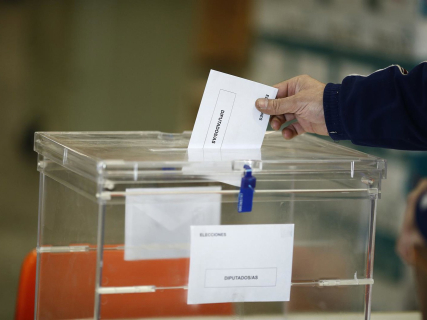

The Executive maintains that it is "materially impossible" to distinguish in the census between those who obtained nationality through the 'grandchildren's law' and those who did so through other means before the general elections on November 29. This position comes after the Supreme Court decided to provisionally suspend voting and new registrations in the Electoral Census of Absent Residents (CERA), except in cases of accredited exile.
This has been conveyed by the Government through the State Attorney's Office in the allegations process opened by the high court following the electoral advance and prior to resolving the substance of the appeal. In the document, which Europa Press has accessed, the Executive insists on requesting the Supreme Court to annul the precautionary measures adopted.
According to the Attorney's Office, "either all Spaniards registered in the CERA are suspended --since the data contained therein is, globally, that of Spaniards without any distinction-- or none are suspended, because it is materially impossible to distinguish between them in the very short time available." It also emphasizes that "since it is not possible to discern in the CERA" in the "short periods" set by electoral law between those registered who accessed nationality through the 'grandchildren's law' and "those who are Spaniards for other reasons."
The State's legal services emphasize that, according to electoral legislation, the census applicable to this process is that closed on August 1, 2026, and detail that it must be available by October 12, with final publication on October 23. In their opinion, "the necessary observance of the rules and procedures provided in the law for the celebration of the general elections that have been called implies" that the "risk" of depriving a fundamental right such as suffrage "becomes an effective sacrifice of the active suffrage right of the individuals affected by the precautionary measures adopted by the Supreme Court last September."
In the same vein, they point out that this "sacrifice" is consolidated because the rules for the preparation of the applicable census during this period require working with a register prior to the date of the order and, moreover, because it means "rendering ineffective the measure for recovering the electoral effects provided in that order since it becomes impossible to comply with."
Accusations against Vox and impact on new voters
In its writing, the State Attorney also directs reproaches at Vox, which, along with Iustitia Europa, claimed that its "true purpose" in requesting that the precautionary suspension be extended to these general elections is to achieve "the elimination of the voting rights of Spaniards who come from external exile against the constant will of the legislator since 2007."
The legal services reject that inaction can be attributed to the Government in the review of the files processed under the 'grandchildren's law', in force since 2022. "Logically, an apparent passivity in the review of hundreds of thousands of files processed over four years cannot be attributed to the Administration in light of the previous passivity of the current appellants to promote their challenge or review," they emphasize.
Against the "exorbitant" claims of Vox and Iustitia Europa, the Attorney General argues that the judges must proportionately weigh the scope of the imposed restriction, as it affects the "fundamental right to active suffrage" of "163,020 recognized Spaniards" as new voters, to whom the suspension has been applied without a hearing process.
The Supreme Court agreed to temporarily halt the 'grandchildren's law' while studying the substance of the matter, arguing that it acted for the "transparency" of the electoral process in light of the increase in the census and because, in its opinion, the general interests of the State prevail over the voting rights of those who have acquired nationality through that provision of the Democratic Memory Law that grants it to descendants of exiles.
In response to that resolution, the Government appealed, understanding that "there is no risk arising from the growth of the CERA" and that the increase in registered voters cannot alter the electoral result "by pure mathematics." The State Attorney requested the Administrative Litigation Chamber to annul the suspension and revoke the measures adopted, also warning that several consulates are facing difficulties in reviewing all the files within the established deadlines.
In its new writing, the Government reiterates that the participation of these newly naturalized individuals "would not have a significant impact on the electoral result." And concludes that, "in the weighing of interests, in light of the risk of the immediate sacrifice of a fundamental right, what must prevail is the exercise of the right to participate."