Draws for today Thursday, September 3: schedules of the National Lottery, Bonoloto, Primitiva, EuroDreams, and Daily Coupon

This Thursday, September 3, five of the main lottery and coupon draws are held: National Lottery, Bonoloto, La Primitiva, EuroDreams, and Daily Coupon of the ONCE. These are their schedules, prizes, and moments when the results will be known.

1 minute

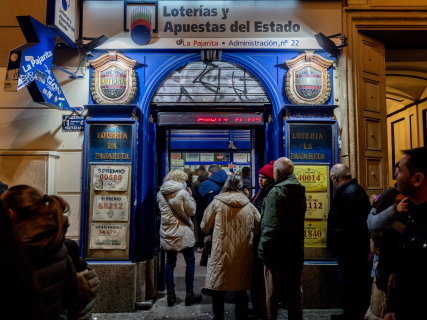
EuropaPress 7190192 gente comprando loteria sorteo extraordinario nino 29 diciembre 2029 madrid

EuropaPress 7190192 gente comprando loteria sorteo extraordinario nino 29 diciembre 2029 madrid

Add DEMÓCRATA to Google

Ask FREN

Published

Last updated

1 minute

Most read

This Thursday, September 3, 2026, five of the main lottery and coupon draws are celebrated: National Lottery, Bonoloto, La Primitiva, EuroDreams, and Daily Coupon of the ONCE. The celebration times are spread between 20:30 and 21:25, so the results will be known throughout the night.

The day includes a first prize of 300,000 euros per series in the National Lottery, a jackpot of 1.5 million euros in Bonoloto, and another of 9.5 million in La Primitiva. EuroDreams offers a prize of 20,000 euros per month for 30 years, while the Daily Coupon of the ONCE offers up to 500,000 euros.

What draws are there today, Thursday, September 3

  • National Lottery: 20:30 hours.
  • EuroDreams: 20:30 hours.
  • Bonoloto: 21:00 hours.
  • La Primitiva and Joker: 21:15 hours.
  • Daily Coupon of the ONCE: 21:25 hours.

What time is the National Lottery

The draw of the National Lottery this Thursday is scheduled for 20:30 hours. The first prize is 300,000 euros per series.

What time are Bonoloto and La Primitiva

Bonoloto is celebrated at 21:00 hours and starts with a jackpot of 1.5 million euros. La Primitiva, along with the Joker, is scheduled for 21:15 hours and accumulates a jackpot of 9.5 million.

When is EuroDreams celebrated and how much does it distribute

EuroDreams is celebrated at 20:30 hours. The main prize allows receiving 20,000 euros per month for 30 years.

What time is the Daily Coupon of the ONCE

The Daily Coupon is drawn at 21:25 hours. The first prize reaches 500,000 euros for the corresponding number and series.

When will the results be available

The results will be progressively known after each draw. Once celebrated, the winning combinations and the corresponding prizes of each game can be consulted.

More key points, information and questions with FREN

AI-GENERATED CONTENT

What legal requirements must a person meet to participate in lottery and betting draws in Spain?

In Spain, participation in draws of State Lotteries and Bets and other state-level gambling activities (lotteries, sports betting, "online" games, raffles, contests, etc.) is mainly regulated by Law 13/2011, of May 27, on the regulation of gambling, and its regulatory development, especially Royal Decree 1614/2011 (licenses, authorizations, and registers) and the technical regulations issued by the Directorate General for the Regulation of Gambling (DGOJ). Based on this framework, subjective requirements and prohibitions are established that determine who can and cannot play.

Basic requirement: legal age and full capacity
  • Minimum age: Law 13/2011 expressly prohibits the participation of minors in games subject to its scope. In practice, only persons aged 18 or older may participate.
  • Legal capacity: it is also prohibited for persons legally incapacitated or by judicial resolution to play, according to civil regulations. That is, those whose capacity to act is limited or modified by judicial decision cannot participate.
Persons registered in the General Register of Gambling Access Prohibitions

Law 13/2011 creates, and Royal Decree 1614/2011 develops, the General Register of Gambling Access Prohibitions, at the state level. This register includes:

  • Persons who have voluntarily requested to be prohibited from accessing gambling (self-excluded).
  • Those prohibited from participating by final judicial resolution.

Legally authorized state-level gambling operators (including "online" gambling) are required to consult this register and deny admission to those registered. Therefore, to participate legally, a person must not be listed in this register at the time of attempting to play.

Persons linked to operators and the gambling sector

Law 13/2011 establishes specific prohibitions to avoid conflicts of interest and guarantee the integrity of games, especially in sports betting:

  • Shareholders, owners, significant participants or holders of gambling operators, as well as their management personnel and employees directly involved in game development, cannot participate in the games they manage or operate. The prohibition extends to their spouses or cohabitants, ascendants, and descendants in the first degree, even if participation is indirect (through third parties).
  • In sports event betting, the following cannot participate:
    • Athletes, coaches, or other direct participants in the event.
    • Executives of the participating or organizing sports entities.
    • Judges or referees officiating the sports event, as well as those resolving appeals against their decisions.
  • Participation is also generally prohibited for certain persons performing regulation, inspection, or control functions over gambling (e.g., senior officials and specific personnel of the regulatory authority), under terms set by the regulations.
Differences between in-person lotteries, "online" gambling, and other bets

The same major subjective prohibitions (minors, incapacitated persons, those registered in the Prohibitions Register, persons linked to operators and sports events, etc.) apply to all state-level gambling activities, regardless of the channel:

  • In-person lotteries and traditional products of State Lotteries and Bets (National Lottery, Christmas Lottery, Niño Lottery, La Primitiva, Bonoloto, El Gordo de la Primitiva, La Quiniela, etc.): points of sale must prevent sales to minors and respect subjective prohibitions. In practice, age control largely depends on the ID checker and the diligence of the seller.
  • "Online" gambling and other remote games (authorized websites and apps of licensed operators):
    • Players must create a user registration and a game account, with real identification (personal data and usually documentary verification).
    • The operator must automatically verify that the person is of legal age and not listed in the General Register of Prohibitions before allowing play or prize payments.
    • Other "safer gambling" measures provided by regulations apply (deposit limits, risk information, etc.), which do not change who can play but do affect conditions.
  • Sports betting (in-person or "online"): in addition to the above, specific prohibitions for athletes, coaches, referees, executives, and others with direct influence on the event operate with particular strength.
Practical summary of requirements to participate

In summary, a person can legally participate in State Lotteries and Bets draws and other state-level games if they:

  • Are 18 years or older.
  • Are not legally incapacitated by judicial resolution.
  • Are not registered in the General Register of Gambling Access Prohibitions (neither by self-exclusion nor judicial decision).
  • Are not part of the group of persons linked to an operator regarding the games it operates (significant shareholders, executives, involved employees, and their direct relatives).
  • In the case of sports betting, are not an athlete, coach, referee, executive, or participant with influence on the event being bet on.
Could you explain in more detail how the General Register of Gambling Access Prohibitions works and how to request self-exclusion? What differences exist between state gambling regulation and regional regulation for gaming halls and physical casinos? What specific obligations do "online" gambling operators have to verify the age and identity of players?

What are the functions and competencies of the State Society of Lotteries and Bets (SELAE)?

The State Society of Lotteries and Bets (SELAE) is a state-owned commercial company attached to the Ministry of Finance that acts as the public operator of state-level lotteries. According to information gathered from official press and the Official State Gazette, its mission combines the management of public games with the contribution of resources to public finances and social programs.

1. Organization and management of state-owned games

SELAE is the entity responsible for managing, operating, and marketing state-owned lotteries in Spain. A press piece from the newspaper Demócrata, citing gambling regulations, recalls that Law 13/2011, on Gambling Regulation, exclusively reserves the operation of state-level lotteries to operators designated by the State, including SELAE.

Its core functions include:

  • Designing and managing lottery and betting products at the state level (National Lottery, Christmas Lottery, Niño Lottery, La Primitiva, Bonoloto, El Gordo de la Primitiva, La Quiniela, etc.).
  • Establishing the rules of each game: bet or ticket prices, prize category structures, probabilities, and accumulated jackpots, according to applicable regulations.
  • Organizing draws, validating winning combinations, and proclaiming official results, which are the only ones with legal validity for prize collection.
  • Managing prize payments, including "major prizes," through its own network and collaborating financial institutions.
2. Marketing and network of points of sale

SELAE not only designs the games but also sets the operating conditions of the official sales network and commercial relations with lottery administrations. Coverage of lottery sellers' protests highlights that SELAE:

  • Defines the economic model of administrations and points of sale (commissions for lottery product sales, differentiated margins depending on the draw, etc.).
  • Authorizes and supervises more than 10,800 physical administrations and points of sale distributed throughout the territory, constituting the basic distribution network.
  • Regulates marketing through digital channels, both via its own online platform and those of points of sale, ensuring participant identification and compliance with regulations.
3. Relationship with the Treasury and financing of public policies

SELAE is attached to the Ministry of Finance, as reflected in various official press releases from the Treasury and Moncloa. From a financial and tax perspective, its role is twofold:

  • Acts as a public company whose profits are integrated into the state public sector, contributing to the financing of the General State Budgets.
  • Manages prizes subject to special tax on certain lotteries, applying the corresponding tax regulations (e.g., treatment of prizes over 40,000 euros mentioned in specialized press).

Additionally, the Joint Congress-Senate Commission for relations with the Court of Auditors has audited its prize control system (Resolution of May 8, 2025, BOE-A-2025-14671), evidencing SELAE's relevance within public financial control.

4. Control, security, and responsible gambling

The aforementioned parliamentary resolution, based on a Court of Auditors report on fiscal year 2022, details obligations and recommendations that are part of SELAE's competencies in control and risk prevention:

  • Develop internal rules on participation requirements and prohibitions in games, consistent with Law 13/2011.
  • Strengthen the Operational Unit for the Prevention of Money Laundering, ensuring its organizational and functional independence.
  • Update the Manual for the Prevention of Money Laundering and Terrorism Financing, in connection with Law 10/2010 and its Regulation approved by Royal Decree 304/2014, of May 5.
  • Improve IT systems to assess fraud risks, detect suspicious operations, and ensure proper documentation of prize payments.
  • Implement mechanisms for financial entities to collect and send identification documentation of prize recipients and expedite communication of suspicious operations to the Executive Service of the Commission for the Prevention of Money Laundering.

These functions directly connect with the principle of safe and responsible gambling and the integrity of the public lottery system.

5. Social action, sponsorship, and corporate social responsibility

Press releases from the Ministry of Finance and Moncloa show a well-established social dimension of SELAE. According to the June 25, 2026 note on the agreement with the Spanish Association Against Cancer (Treasury note on agreement with AECC):

  • Between 2018 and 2025, nearly 8 million people benefited from social programs financed with 170.4 million euros contributed by SELAE, managed by Cáritas, Red Cross, and AECC.
  • In 2025, social investment amounted to 21.7 million euros.
  • For the 2026‑2029 period, a total allocation of 87 million euros has been planned to continue supporting vulnerable groups.

Specifically, SELAE has signed multi-year agreements with:

  • AECC, for 13.3 million euros until 2029, aimed at social programs and cancer research, as well as dedicating specific National Lottery draws to them.
  • Cáritas Española, with a planned accumulated contribution of 13.36 million euros in 2026‑2029, also accompanied by commemorative tickets (Treasury note on agreement with Cáritas).
  • Other entities such as FEDER or the Carlos III Health Institute, through tickets dedicated to raising awareness of rare diseases or institutional anniversaries.

SELAE also promotes cultural sponsorship initiatives such as the social-themed short film contest organized together with the San Sebastián Festival (information on short film contest), aimed at promoting messages of social justice, wealth redistribution, and elimination of inequalities.

Overall, SELAE combines the operation of public games with a strong dimension of control, integrity, and economic-social contribution: it raises funds for the State, guarantees the security of the lottery system, and channels part of the resources toward social cohesion, culture, and health programs.

How is the legal relationship between Law 13/2011 and SELAE's internal rules on game participation structured? What specific anti-money laundering mechanisms does SELAE apply in prize management according to the 2022 audited report? What is the annual budgetary impact of SELAE's profits on the General State Budgets and how has it evolved in recent years?

What regulations govern the taxation of lottery prizes in Spain?

The taxation of lottery and betting prizes in Spain is structured based on the Personal Income Tax (IRPF) and a specific special tax on certain prizes, also extended to the Non-Resident Income Tax (IRNR) and with references in the Corporate Tax (IS). The key regulations are as follows:

1. Law 35/2006, on IRPF
  • Law 35/2006, of November 28, on the Personal Income Tax (text in BOE).

This law is the basic regulation governing IRPF and, therefore, the general treatment of prizes as income. Its original regulation is later supplemented by a specific provision for lottery and betting prizes, introduced through subsequent reforms.

2. Law 16/2012 and the special tax on prizes
  • Law 16/2012, of December 27, adopting various tax measures aimed at consolidating public finances and boosting economic activity (text in BOE).

This law creates the special tax on prizes of certain lotteries and bets and incorporates it into the IRPF, IRNR, and IS systems:

  • In IRPF, it modifies the thirty-third additional provision of Law 35/2006: subjects to a special tax the prizes of:
    • Lotteries and bets of State Lotteries and Bets and of the bodies or entities of autonomous communities.
    • Draws organized by the Spanish Red Cross.
    • Game modalities authorized to the ONCE (National Organization of Spanish Blind People).
    • Similar prizes from public bodies or non-profit entities established in other EU/EEA States with social or welfare purposes.
  • The special tax is accrued when the prize is paid or satisfied, and:
    • A 20% withholding or payment on account is applied on the taxable and non-exempt part, according to the provision itself.
    • Prizes below the exempt amount do not require filing a self-assessment and are not subject to this special tax.
  • In IRNR, Law 16/2012 adds the fifth additional provision to the consolidated text of the IRNR Law (Royal Legislative Decree 5/2004), reproducing in parallel the special tax for non-resident taxpayers without a permanent establishment and establishing:
    • That these prizes can only be taxed through this special tax.
    • Withholding or payment on account also of 20% on the taxable base of the special tax.
    • Possibility to request a refund when, applying a double taxation avoidance agreement, the tax borne exceeds the due amount.
  • In IS, the first final provision of Law 16/2012 modifies the old consolidated text of the Corporate Tax to subject taxable and non-exempt prizes to withholding or payment on account, also at 20% on the non-exempt part.
3. Law 27/2014, on Corporate Tax
  • Law 27/2014, of November 27, on Corporate Tax (text in BOE).

This law updates the IS regime and expressly refers to the special tax in the thirty-third additional provision of Law 35/2006:

  • Considers as exempt income in IS certain lottery and betting prizes exempt from the special tax of IRPF.
  • Sets the withholding rate for taxable and non-exempt prizes, linking it to that special tax (20% on the taxable and non-exempt part).
4. Regulatory regulations and forms

The practical operation of the special tax (withholdings, payments on account, and self-assessments) is detailed in several ministerial orders:

  • Order HAP/70/2013, of January 30 (text in BOE): approves the forms:
    • Form 230 (withholdings and payments on account of the special tax on prizes of certain lotteries and bets, in IRPF/IRNR and IS).
    • Form 136 (self-assessment of the special tax for IRPF and IRNR).
    And develops the mechanics of payment, deadlines, and associated formal obligations.
  • Order HAP/2368/2013, of December 13 (form 270): regulates the annual summary of withholdings and payments on account of the special tax.
  • Subsequent orders (HAC/763/2018, HFP/1286/2023, HAC/1431/2025) adjust forms 136, 230, and 270 and their filing procedures, without altering the basic structure of the tax.
5. Summary

In summary, the taxation of lottery and betting prizes in Spain is based on:

  • The IRPF (Law 35/2006) and its thirty-third additional provision, which establishes a special tax on certain prizes, with exemption up to a threshold and 20% withholding on the taxable part.
  • Law 16/2012, which creates and defines that special tax in IRPF and IRNR and coordinates its treatment in IS.
  • Law 27/2014, on IS, which integrates the regime of these prizes into the tax for exemption and withholding purposes.
  • Ministerial orders that develop the forms and procedures for declaration and payment (HAP/70/2013, HAP/2368/2013, and their successive modifications).
Could you explain with practical examples how the special tax on a specific National Lottery prize is calculated? What differences exist in the taxation of these prizes between a resident in Spain and a non-resident according to Law 16/2012? How has the exempt amount in the special tax on lottery prizes varied over time and what reforms have modified it?

Play

Test your knowledge with FREN!

How much do you know about this topic? Answer the following 3 questions.

What is the first prize of the National Lottery on Thursday, September 3, 2026?

Question 1 of 3

At what time is the Bonoloto drawn this Thursday, September 3?

Question 2 of 3

What is the main prize offered by EuroDreams?

Question 3 of 3

Hola, soy Fren. ¿Cómo te ayudo?