
The Senate of Brazil has given this Wednesday the definitive green light to a bill that launches a National Policy for Critical and Strategic Minerals (PNMCE), endowed with 7 billion reais (1.187 billion euros) in the form of investments and public aid, with which the country seeks to contest China's dominant position in the extraction and refining of these raw materials.
The new regulation will promote the extraction, processing, transformation, and research of these resources, considered essential for industries such as energy, automotive, and defense. With the PNMCE, various laws will be reformed to articulate in Brazil a complete production chain around these minerals.
To this end, a Mining Activity Guarantee Fund (FGAM) will be launched, which will receive an initial contribution from the federal government of 2 billion reais (339 million euros) destined for projects linked to production, in addition to another 5 billion reais (847.5 million euros) focused on refining within the country.
The Upper House has specified that the text has practically not undergone modifications during its passage through the Senate compared to the version previously approved by the Chamber of Deputies. The project is now awaiting the signature of President Luiz Inácio Lula da Silva for its promulgation.
The PNMCE establishes that companies dedicated to the exploitation, extraction, treatment, and transformation of critical and strategic minerals must contribute for six years 0.2% of their gross operating income to the FGAM. In parallel, they will have to allocate another 0.3% to research and development activities.
Once that period is completed, the 0.2% that feeds the FGAM may be redirected to R&D projects, up to a maximum of 0.5% in total. It will be considered that the obligation to apply all resources to these programs is fulfilled whether the money is channeled through the FGAM or directed to a private fund that promotes research in this field, although this last mechanism still needs to be concretized regulatory.
The PNMCE also incorporates mining explorations into the list of initiatives that can benefit from the issuance of 'incentivized bonds', fixed-income instruments issued by Brazilian private companies to finance large infrastructure projects.
"In this way, we expand the advantages that other national infrastructure sectors already enjoy so that investors who finance priority mining projects are on par, for example, with the energy, logistics, and sanitation sectors, which democratizes the sector's access to the capital market," stated Senator Eduardo Braga.
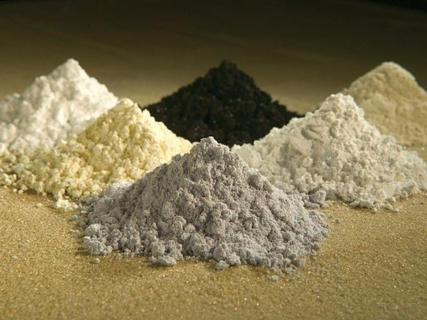
According to 2025 data from the United States Geological Survey (USGS), Brazil ranks second in the world by volume of rare earth reserves, with 21 million metric tons, only behind China, which has 44 million. The South American country thus surpasses Australia (6.3 million), Russia (3.8 million), the United States (1.9 million), and Greenland (1.5 million).