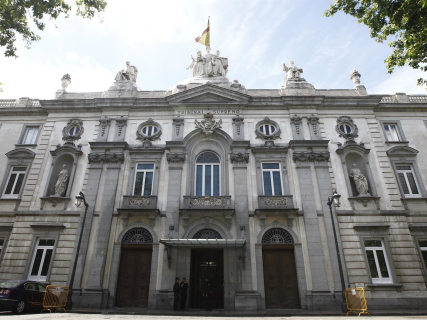

Iustitia Europa has requested the Supreme Court to provisionally suspend the voting of the general elections on the upcoming November 29.
According to sources from Iustitia Europa consulted by DEMÓCRATA, the formation of Luis María Pardo demands to halt the process for the strictly necessary time to ensure the effective execution of the precautionary measures that the Third Chamber agreed on September 10 regarding the electoral effects of certain registrations in the Electoral Census of Absent Residents (CERA).
The request, presented in procedure 1013/2026, comes after the State Attorney's Office acknowledged before the Supreme Court the "material impossibility" of executing those measures within the electoral calendar.
In a document dated October 8, the legal representation of the State estimates that there are 163,020 voters included in the census closed as of August 1 within the analyzed universe.
The formation argues that the call for November 29 has altered the circumstances under which the precautionary measures were adopted and requests the High Court to ensure their compliance before the ballots are opened.
As an alternative to the suspension, it requests that the Central Electoral Board and the Electoral Census Office be ordered to identify the 163,020 records electronically and ensure the traceability of their votes for the general counting and any subsequent review.
The legal battle originates from the complaint that Iustitia Europa filed with the Central Electoral Board on June 28.
Featured story
Iustitia Europa raises a judicial and electoral front for the review of 168,896 files before 29-N
4 minutes
A census in question
The party asserts that it had already warned of the risk of holding elections with a census whose compliance with legality was questioned. "We warned about it on June 28. Today it is happening," states Luis María Pardo, who believes that the effectiveness of judicial resolutions is crucial for the legal security of the process.
"If the State says it cannot execute the order, the Supreme Court must guarantee its effectiveness before the ballots are opened", argues the president of the formation. Iustitia Europa warns that both the eventual counting of votes affected by the judicial resolution and the exclusion of voters without individually verifying if they are included could open the door to subsequent challenges.
The writing invokes the articles 129.1 and 132.1 of the Law of Contentious-Administrative Jurisdiction to argue that the Supreme Court can adopt or adapt the necessary measures to preserve the effectiveness of its resolution in the face of the new electoral scenario. "A judicial resolution cannot arrive late to an election," summarizes Pardo.