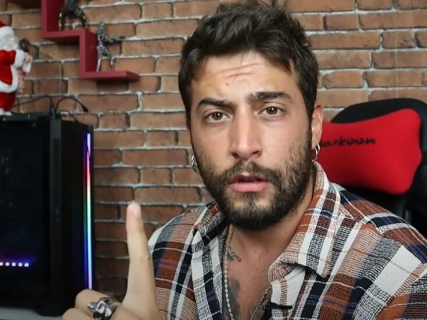

Roma Gallardo became known for attending feminist demonstrations with a camera and asking questions about equality and gender violence. Seven years after his first major viral success, the Asturian content creator has gathered around two million subscribers on YouTube and has expanded his activity towards current political affairs, with recurring criticisms of Pedro Sánchez's Government.
The advance of the general elections to November 29 has taken on special prominence in his latest publications. Gallardo has dedicated several videos to analyzing the call, questioning the decisions of the Executive, and commenting on the controversies surrounding the PSOE.
Although he does not hold any public office, his content participates in the same debates about taxes, feminism, immigration, and institutions that the parties maintain. His channel started with street interviews but over time became a space for political commentary that gathers an audience of thousands of followers.
Who is Roma Gallardo and how did he start on YouTube
Born in Mieres (Asturias) and coming from a family linked to mining, Gallardo studied an industrial specialty and began working at the age of 16, as he explained in an interview published in 2020. He opened his YouTube channel in January 2015, although it took several years to gain popularity.
The turning point came during the demonstrations on March 8, 2019. Gallardo attended a feminist mobilization and began to ask participants about legislation on gender violence and the differences between men and women.
Those interviews were widely disseminated and marked the course of his channel. In March 2026, during a conversation with Equipo de Investigación, from laSexta, the creator himself acknowledged that he had arrived at that demonstration without knowing the issue in depth and that he discovered the interest generated by the confrontation.
"This controversy among people works", he explained while recalling how those videos allowed him to expand his audience. According to him, the success of his publications also opened the possibility of leaving his previous job to dedicate himself to content creation.
The controversies that have marked his trajectory
The criticisms of feminism became one of the main identity marks of Roma Gallardo. His videos question equality policies and raise debates about false accusations, gender violence, and legal differences between men and women.
One of his most well-known episodes came in 2021, when he starred in a television confrontation with the political scientist Pablo Simón on Más Vale Tarde. The discussion arose from the departure of content creator El Rubius to Andorra and addressed topics such as taxes, the separation of powers, and the democratic mechanisms to modify laws.
Another controversy arose from the approval of the trans law of 2023. Gallardo spread content about the change of registered sex and used his own experience with that procedure to criticize the regulations promoted by the Ministry of Equality led by Irene Montero.
His interventions provoked responses and criticisms from those who believed he was using the legal procedure to ridicule the claims of trans people. Gallardo, for his part, defended his publications as a way to question the legislation.
In 2024 he was once again at the center of a controversy for his references to the so-called Kalergi Plan, a conspiracy theory linked to the idea that there would be a project to replace the European population through immigration.
His latest videos about Sánchez and the elections on 29N
The call for general elections has given a new boost to Gallardo's political content. Since the first days of October, his channel has been chaining publications about the electoral advance, the future of the Government, and the controversies affecting the PSOE.
On October 2, he published a video titled "Early elections now? The end of socialism," when speculation was still ongoing about the possibility of an electoral call. Three days later, on October 5, he spread "Let's go to elections now! Elections are anticipated! Why now?", focused on Pedro Sánchez's decision to bring forward the elections.
On October 6, coinciding with the dissolution of the Cortes, he published another content under the title "54 days to elections! They will end up closing my channel...". The current events of the Government have continued to occupy his subsequent publications. On October 7, he addressed the death of Maricarmen Abascal, the 87-year-old woman evicted in Madrid, with the video "Sánchez's move: Mari Carmen passes away and this is what they will do."
The October 11 spread "Begoña deputy of the PSOE! Sánchez's master plan," while on the 13th it published "Civil war? The confrontation has arrived." The headlines it uses and its continuous activity on YouTube place it among the digital commentators who have incorporated 29N as a recurring issue.
More than two million followers
Roma Gallardo's relationship with politics is not limited to his recent publications about Sánchez. For years he has intervened in debates about taxes, immigration, social policies, and equality legislation.
His criticisms of feminism and certain laws promoted by the Government show coincidences with positions defended by Vox, especially in gender matters. Gallardo has approximately 2.01 million subscribers on YouTube and 608,500 followers on Instagram. His main YouTube channel has accumulated around 960 videos and more than 356.6 million views since it was created in January 2015.
The creator explained in an interview in 2020 that the income from his videos allowed him to leave his previous job. He then identified YouTube, Google, and Facebook among his sources of income. In July 2026 he explained that he had opened another channel dedicated to the world of automobiles, one of his personal hobbies, with the purpose of developing content away from current controversies.
The journey of Roma Gallardo shows the evolution of a creator who started by interviewing citizens on the street and who now dedicates a good part of his publications to commenting on the Government's decisions and electoral current affairs.
His videos about the electoral advance, the controversies of the PSOE, and equality policies circulate before an audience built over the years, without the need for the creator to formally participate in a candidate's campaign. In light of 29N, his case again highlights the relationship of the influencer world in the Spanish political conversation.