The influencers and their digital power before the 29N: Wall Street Wolverine and the liberal discourse

Víctor Domínguez has turned his videos about economics, taxes, and politics into a communication platform with hundreds of thousands of followers. With a discourse close to economic liberalism and a public relationship with figures like Javier Milei, he represents the growing weight of content creators in the Spanish political debate.

6 minutes

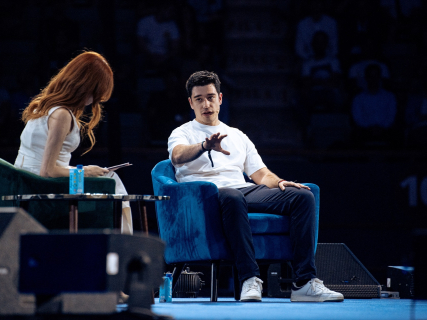
EuropaPress 6781446 youtuber victor dominguez wall street wolverine interviene primera jornada

EuropaPress 6781446 youtuber victor dominguez wall street wolverine interviene primera jornada

Add DEMÓCRATA to Google

Ask FREN

Published

Last updated

6 minutes

Most read

Wall Street Wolverine is the name by which Víctor Domínguez is known on social media, a Spanish content creator and entrepreneur who has built his popularity from videos about economics, taxation, investment, and politics. His criticisms of state interventionism, tax pressure, and the policies of Pedro Sánchez's Government have made him a recognizable figure within the liberal and conservative digital ecosystem.

Unlike other influencers who have begun to incorporate political interviews into formats dedicated to entertainment, Wall Street Wolverine addresses current events from an explicit ideological positioning. His posts combine comments on economic decisions, analysis of government measures, and opinions on the role of the State, with language aimed at an audience accustomed to consuming information through YouTube, X, and other platforms.

His trajectory gains interest ahead of the general elections on November 29, 2026, when parties once again pay attention to digital creators as channels to disseminate their messages. In his case, the relationship between politics and social media does not solely depend on interviewing leaders. A good part of his activity consists of interpreting current events from his own economic and political positions.

Who is Wall Street Wolverine and how he started on the internet

Víctor Domínguez, publicly known as Wall Street Wolverine, was born in Madrid in 1995. His name began to gain presence on the internet thanks to his content related to financial markets, investments, and economics, before gradually expanding his activity towards political commentary.

The name of his project refers to the financial universe of Wall Street, although his content is not limited to the Stock Exchange. Taxation, public spending, economic regulation, and the differences between political models occupy an important part of his interventions.

One of the most well-known aspects of his trajectory is his move to Andorra, a country with a tax regime different from the Spanish one. The residence of content creators in the Principality has generated a debate in recent years about taxation, public services, and tax competition, issues that also frequently appear in his posts.

Digital power

The digital power of Wall Street Wolverine is supported by a community that consumes its content on economics and politics and shares it on social networks. In May 2025, Domínguez had nearly a million followers on X, as he explained during an interview with The Objective. His capacity for dissemination does not depend solely on the volume of followers but also on the circulation of short videos, comments, and snippets of interviews that can reach users outside his usual audience.

Unlike creators primarily dedicated to entertainment, Domínguez directly intervenes in the ideological debate. His criticisms of the Government, his defense of less state intervention, and his proximity to references of economic liberalism allow him to connect with audiences interested in those positions. His trajectory illustrates how an influencer can act as a political commentator, interviewer, and organizer of in-person meetings, although his popularity alone does not determine his influence on voting.

From Andorra to Madrid: the economic forum that brought Javier Milei to Spain

One of the projects that best reflects the evolution of Wall Street Wolverine is the Madrid Economic Forum, a meeting dedicated to economics, entrepreneurship, and political debate that has included the participation of the Argentine president, Javier Milei.

The forum has its origins in the Andorra Economic Forum, held in 2023 and 2024. After those two editions, its promoters decided to move the project to Madrid and expand its scope. The first Madrid edition took place in June 2025, at the Palacio de Vistalegre, with the presence of economists, entrepreneurs, communicators, and political leaders.

Among the participants were Javier Milei, Esperanza Aguirre, Albert Rivera, Iván Espinosa de los Monteros, Daniel Lacalle, and Juan Ramón Rallo. The program combined economic interventions with debates on the Spanish political situation and the role of institutions.

The second edition was held on March 14, 2026, again in Vistalegre and with Milei as one of its main guests. Domínguez explained that the previous edition had gathered more than 7,300 attendees. The return of the Argentine president reinforced the relationship between the forum and the international libertarian movement. Milei participated in the meeting during a visit to Spain that also included contacts with Santiago Abascal.

His relationship with the Spanish right

Domínguez does not hide his ideological preferences. His public interventions are situated in the realm of economic liberalism, with favorable positions towards tax reduction, private initiative, and less state intervention.

In the interview published by The Objective in May 2025, he defended the need for the Spanish right to improve its communication capacity. "Better right-wing propagandists are needed", he stated, while questioning the methods of some of its main leaders.

In that conversation, Domínguez compared the styles of Alberto Núñez Feijóo and Santiago Abascal with those of Donald Trump and Javier Milei. He believed that Spanish politicians maintained a communication that was too institutional and advocated for more direct formulas to connect with the digital public.

However, his ideological proximity to certain positions of the right does not equate to an accredited organic link with the PP or Vox. His public activity mainly takes place through his own channels and business projects.

Interviews with politicians

Although his career began with content related to the economy, Wall Street Wolverine has expanded its activity towards interviews with protagonists of current political events.

In March 2026, for example, he hosted in his podcast the MEP Luis "Alvise" Pérez, founder of Se Acabó La Fiesta (SALF). During a conversation of more than forty minutes, the leader reviewed his experience in the European Parliament, political financing, and various issues related to his public activity.

This type of meeting allows political representatives to address audiences that regularly follow a content creator, without the need to resort to an interview on television or radio, as other interviewers with podcasts do, like Jordi Wild. The format also poses differences compared to conventional journalism. Influencers can combine questions, personal opinions, and informal conversations, without necessarily being subject to the same editorial criteria as a journalistic newsroom.

Domínguez's activity has also been the subject of journalistic verifications. In June 2025, Newtral pointed out three cases of misinformation spread from his profiles: a false claim about a supposed Islamist electoral victory in Bradford, another related to the vaccination of the CEO of Pfizer, and an edited video of a meeting between Joe Biden and Rishi Sunak.

More than 800,000 followers

Wall Street Wolverine has developed his presence on different digital platforms, mainly YouTube and X, in addition to other video distribution channels and interviews.

In May 2025, Domínguez explained that his X profile was approaching a million followers and that his old Instagram account had reached around 900,000 before being deleted. Now, he has exactly more than 880,000 followers on X and more than 900,000 on YouTube.

He also described his audience as a public that had grown with him since his early years on the internet. According to his own estimate, a good part of his followers were then between 25 and 35 years old, an age range that includes young voters and adults with diverse economic and professional interests.

His relevance also lies in the ability to maintain a continuous conversation about economic and political issues. A post about taxes, housing, or government decisions can generate responses, replies, and new content that prolong the debate for several days.

The battle for attention before the 29N

The general elections on November 29 place content creators back in the debate about political communication strategies. The experience of previous campaigns has shown that parties can resort to both traditional media and podcasts, digital interviews, and social media posts.

In this scenario, different profiles coexist. La Pija and La Quinqui have hosted political leaders within a program mainly dedicated to entertainment, while Jordi Wild has proposed interviews with candidates from an extensive conversation format. Wall Street Wolverine represents another model. A creator whose usual content is already focused on economic, political, and ideological issues.

For a party or a leader, appearing in these spaces can mean accessing a community that follows the presenter due to thematic affinity, entertainment, or interest in their opinions.

The trajectory of Wall Street Wolverine shows how digital platforms have allowed communicators outside of traditional media to participate regularly in political discussion, interview institutional representatives, and organize meetings with international leaders.

In his case, the evolution from economic videos to the organization of a forum with Javier Milei as a guest reflects an activity that is no longer limited to social networks and is part of the Spanish political communication ecosystem.

More key points, information and questions with FREN

AI-GENERATED CONTENT

What is the status of the organization of economic forums similar to the Madrid Economic Forum in other Spanish cities?

The landscape of urban economic forums in Spain shows a dense and growing offer, but quite fragmented and with diverse profiles. If we take the Madrid Economic Forum (MEF) as a reference — a liberal congress, with a large capacity, promoted by private organizers and with a strong political-cultural component — in other cities there are indeed relevant economic forums, although they rarely reproduce exactly the same format and positioning.

Madrid: a very dense ecosystem

In Madrid, besides the Madrid Economic Forum itself, an ecosystem of major business meetings has been consolidated:

  • Madrid Leaders Forum, which in 2026 will celebrate its fourth edition as the “most important business forum in the Community of Madrid.” It is promoted by CEIM-CEOE and the consultancy MB Comunicación, with institutional support from the Community of Madrid, City Council, Chamber of Commerce, and CEOE. It brings together hundreds of executives and public officials around major topics (in 2026, leadership in the AI era) and can be considered fully annual and consolidated.[link]
  • Madrid Investment Forum, organized by the Community of Madrid (Invest in Madrid office) with sponsorship from the Chamber of Commerce, CEIM, and the newspaper La Razón. In 2025 it celebrates its second edition, with venues in several municipalities and a focus on attracting international investment, which points to a stable format of an annual investment forum.[link]
  • Other spaces, such as the Forum of Cities at Ifema Madrid, oriented towards urban innovation and circular economy, complete the offer of major sectoral and urban governance meetings.[link]

In this context, the MEF joins a city that already functions as a national hub for economic and business congresses, with a combination of institutional (Community, City Council, Chamber) and private (business associations, media, consultancies) drive.

Barcelona and Bilbao: urban economic forums with a European focus

On the Barcelona–Bilbao axis, the Eurocities network and its Economic Development Forum stand out:

  • In Bilbao, the city hosted in 2024 the Eurocities Economic Development Forum, an annual reference meeting for urban development policies, innovation, and local economy, with participation from leaders of European cities and EU officials. The City Council and the Eurocities network are the main promoters, with a marked institutional and municipalist character.[link]
  • In Barcelona, the same forum will be held in 2026, again under the leadership of the Eurocities network and the Barcelona City Council, integrated into its economic promotion strategy and the Pla Impulsa.[link]

Additionally, Barcelona has a constellation of economic and business fairs and congresses (Bizbarcelona, major fairs at Fira de Barcelona, events by Foment del Treball), generally driven by public-private initiatives and with a well-established annual periodicity, although more focused on SMEs, entrepreneurship, or specific sectors than on an ideological format similar to the MEF.[link]

Málaga, Zaragoza, Vigo, and other cities: sectoral and business forums

In other cities, the dominant pattern is that of sectoral or territorial forums, rather than generalist economic congresses:

  • Málaga hosts the Global Photonics Economic Forum, an international meeting focused on the photonics industry. The City Council, the Andalusian Government, and sector agents have promoted it until it has consolidated three editions, making it a stable platform to analyze competitiveness, investment, and innovation in that sector.[link]
  • Zaragoza is preparing the City.360 fair, conceived as a national space for municipal services, with technical sessions and public-private networking. The initiative comes from the City Council and Feria de Zaragoza, in collaboration with companies, and is oriented towards urban management and solutions for cities, rather than macroeconomic debate.[link]
  • Vigo combines major fairs like Conxemar and forums such as the Global Sustainable Seafood Galicia Forum, with strong involvement from the Xunta, the fishing sector, and the Nueva Pescanova Foundation. These are international and already consolidated meetings, but very specialized in fishing and agri-food.[link][link]
  • In Seville, Valencia, A Coruña, and other capitals, activity is organized around forums promoted by regional media, chambers of commerce, business associations, and regional governments (business forums, debt forums, awards and meetings on energy, tourism, or SMEs), often with annual cycles, but without a single “big urban forum” with the aesthetics and discourse of the MEF.[link]
Degree of consolidation and comparison with the MEF

In summary, three features are observed:

  • In almost all major cities there are already recurring urban economic forums, usually annual and linked to a sector (technology, photonics, fishing, cities) or regional economy.
  • The promoters are mainly city councils, regional governments, chambers of commerce, business associations, universities, and fairs, often in alliance with media and sponsoring companies.
  • Outside Madrid, there does not yet seem to be a forum that combines as clearly as the MEF the scale of audience, the spectacle format, the explicit ideological orientation, and the vocation of a large national liberal economic congress.

Therefore, the “organization of economic forums” in other cities is already very advanced and, to a large extent, institutionalized; what is unique about Madrid is the coexistence of that institutional framework with new private congresses like the Madrid Economic Forum, which are still in the consolidation phase but occupy a niche within the market of major economic events.

Could you detail case by case which specific actors promote the main economic forums in Barcelona, Valencia, Bilbao, Seville, and Málaga? How does the ideological and content positioning of the Madrid Economic Forum differ from other forums such as the Madrid Leaders Forum or Eurocities events? What political and regulatory influence opportunities do these different economic forums offer to companies or sector associations?

What are the competencies and powers of an autonomous community president in Spain according to current legislation?

The autonomous community president (president of an autonomous community) is the head of the executive power of the community and the highest ordinary representation of the State in that territory. Their legal status is generally defined by the 1978 Spanish Constitution (especially articles 147 and 152) and, more specifically, by each community's statute of autonomy and the laws governing the organization and functioning of autonomous governments.

1. Direction of the autonomous government

The autonomous president is the head of the Council of Government (or autonomous government) and is responsible for directing the general policy of the community. Typical functions in this area include:

  • Setting the general lines of government action and coordinating the activity of the councilors.
  • Ensuring the execution of autonomous laws and the state legislation that corresponds to the community.
  • Promoting and coordinating public policies of the autonomous administration, both internally and in relations with other administrations.
  • Directing government action in crisis or emergency situations within their competence framework.
2. Normative and legislative functions

Although not a legislative body, the president plays a central role in the autonomous normative function:

  • Legislative initiative: in most statutes, the autonomous government (under the president's direction) can present bills to the autonomous parliament; the president decides and politically promotes this initiative.
  • Promulgation and publication of autonomous laws: laws approved by the parliament are promulgated, in the name of the King, by the community president; they order their publication in the official autonomous bulletin and, when appropriate, also in the BOE (Official State Gazette).
  • Regulatory power: directs the approval of decrees and other regulations of the Council of Government necessary to develop and execute the laws.
3. Relations with the autonomous parliament

The autonomous government form is parliamentary, so the president must maintain a relationship of confidence with the chamber:

  • They are elected by the autonomous parliament, which grants or denies confidence through the investiture procedure provided in the statute.
  • They are politically accountable to the chamber, which can demand responsibility through a motion of censure or, in some statutes, other control mechanisms.
  • They may appear before the parliament to present the government program, general policy lines, key bills, or to respond to control sessions.
4. Power of dissolution and electoral call

In many communities, the statute grants the president the power to dissolve the autonomous parliament and call early elections, with limits and conditions (minimum periods since the previous dissolution, impossibility of dissolving when a motion of censure is underway, etc.).

In any case, the president:

  • Calls the ordinary autonomous elections when the mandate ends.
  • Issues the decree of dissolution of the chamber, when the statute allows it, and sets the date of the elections within the basic state electoral framework.
5. Appointments, dismissals, and government organization

Generally, it corresponds to the president to:

  • Appoint and dismiss councilors who make up the Council of Government, configuring the structure and composition of the autonomous executive.
  • Create, suppress, or modify departments and bodies of the autonomous administration, within the applicable regulations.
  • Designate representatives of the community before State–autonomous community cooperation bodies and other public institutions.
6. Relations with the State and the General Courts

The president is the ordinary representation of the State in the community's territory and the main interlocutor with the Government of Spain:

  • Participates in sectoral conferences and in the Conference of Presidents.
  • May promote, through the autonomous government, competence conflicts before the Constitutional Court or file unconstitutionality appeals against state norms considered to invade competences.
  • Intervenes in the designation, by the autonomous parliament, of the autonomous senators representing the community in the Senate.
  • Signs and negotiates, on behalf of the community, cooperation agreements with the State or other communities, subject to constitutionality controls and basic legislation (e.g., Law 40/2015 on the legal regime of the public sector regarding agreements).
7. Institutional representation and other functions

Finally, the president exercises a function of institutional representation internally and externally:

  • Represents the autonomous community in official acts, national and international forums when appropriate.
  • May deliver institutional messages to the autonomous citizenry and, in some statutes, to its parliament.
  • Sometimes assumes the presidency of certain autonomous entities or bodies by reason of their office.

In summary, the figure of the autonomous president reproduces, at a territorial scale, the scheme of the President of the Government in the parliamentary system: directs the autonomous executive, relies on the confidence of the chamber, exercises central functions in autonomous normative production, and acts as the apex of the community's relations with the State and other administrations.

Could you explain with concrete examples how the power to dissolve the autonomous parliament varies among different communities? What are the main differences between the functions of an autonomous president and those of the President of the Government of Spain? What is the step-by-step investiture procedure of an autonomous president according to the most common statutes of autonomy?

What legal requirements must content creators meet to transfer their tax residence to Andorra?

Transferring tax residence from Spain to Andorra is not just "registering" or renting a flat in the Principality. For a content creator (YouTuber, streamer, influencer), the change requires simultaneously meeting the requirements of Spanish regulations, the Spain–Andorra Double Taxation Agreement, and Andorran immigration and tax legislation, and being able to prove it with facts.

1. When you are still considered a tax resident in Spain

According to the Personal Income Tax Law (IRPF) and recent doctrine cited in specialized analyses and rulings such as the Shakira case, Spain considers you a tax resident if any of these criteria are met:

  • More than 183 days of presence in Spain during the calendar year (sporadic absences are generally counted unless you prove tax residence in another country).
  • That Spain is the main center or base of your economic activities or interests (art. 9.1.b LIRPF): where you generate most income, where your relevant assets are, the company operating the channel, the studio, the team, etc.
  • Family presumption: residence in Spain is presumed if your legally non-separated spouse and minor children habitually reside here, unless proven otherwise.

The Tax Agency, as shown in cases of athletes and artists analyzed by the National Court and specialized press, does not limit itself to the declared address: it reviews days in Spain, card payments, flights, where the studio is, where contracts with platforms and brands are signed, where family and staff reside, etc.

2. Spain–Andorra Double Taxation Agreement

The bilateral agreement (BOE-A-2015-13248) applies if both countries consider you a resident. To "break the tie," follow this sequence, which is key for creators who split time between both territories:

  • Permanent home available to you.
  • If there is a home in both countries: center of vital interests (closest personal and economic ties).
  • If doubt remains: where you habitually live.
  • Ultimately, nationality and, if conflict persists, agreement between administrations.

Therefore, spending less than 183 days in Spain is not enough if family, business, and real management remain here.

3. Requirements to be a tax resident in Andorra

Andorra distinguishes between migratory residence (immigration permit) and tax residence, although they usually go hand in hand. Generally, for the Andorran Administration to issue you a tax residence certificate (a key document vis-à-vis Spain and other countries), among other official elements, the following are considered:

  • Effective stay in Andorra normally exceeding 183 days per year if you want it to be your state of residence for treaty purposes.
  • Having a valid residence permit (active, passive, digital nomad, etc.), each with its requirements of economic means, insurance, minimum investment, or activity linkage.
  • Having housing in Andorra (ownership or rental) and being able to prove its habitual use.
  • Demonstrating sufficient resources and, in certain modalities, making an investment or deposit.
  • Absence of criminal records and complete civil documentation.

Besides the certificate, it is advisable to accumulate evidence: rental contracts or deeds, utility bills, entry and exit records, contracts and invoices issued from Andorra, health insurance, children’s schooling, etc.

4. Obligations when leaving Spain

Ceasing to be a Spanish tax resident is not done just by "stopping filing the Income Tax return." You must at least take care of:

  • Form 030: notify the Tax Agency of the change of tax address abroad and update your census status. It does not by itself "de-reside" you, but it must align with the real change.
  • Income Tax for the year of transfer: the fiscal year in which you leave is delicate. It must be analyzed whether you remain a resident all year, if there is dual residence, and how the Agreement applies.
  • Form 720: if you remain a Spanish tax resident in a given year and have assets abroad above thresholds, there may still be an informative obligation, even if you actually live part of the year in Andorra.
  • Other possible forms (Wealth Tax, Temporary Tax on Large Fortunes, corporate forms, VAT, withholdings, etc.) while you maintain obligations in Spain.

5. "Exit tax" for large fortunes

The IRPF regulations contemplate an exit tax for people who transfer their residence outside Spain when:

  • The combined market value of their holdings generally exceeds 4 million euros, or
  • They own at least 25 % in an entity whose market value exceeds approximately 1 million.

In these cases, "fictitious" capital gains on latent gains of holdings may be generated even if they have not been sold. This is a critical point for creators operating through companies that concentrate image rights, brands, and contracts.

6. Specific risks for content creators

According to economic press and the Tax Agency’s own Tax Control Plan, influencers and creators are in the spotlight for verification, with special attention to:

  • Transfers to Andorra with real activity still executed from Spain.
  • Andorran or other countries’ companies without real economic substance (no structure, no staff or means there).
  • Discrepancy between declared tax residence and objective data: card payments, flights, habitual streaming from studios in Spain, etc.

In summary, the fundamental requirement is not so much "being a content creator" as truly moving your life and business: living mainly in Andorra, managing your activity there, moving the center of your economic interests, and fulfilling formal exit obligations in Spain and registration in Andorra. The Andorran certificate is necessary but not sufficient if facts indicate you remain, in practice, a Spanish resident.

How should a content creator plan, step by step and with an approximate calendar, the year in which they change their tax residence from Spain to Andorra? What types of concrete evidence (tickets, contracts, expenses, videos, etc.) are usually most useful before the Tax Agency to prove that residence and activity have really moved to Andorra? How do the different residence modalities in Andorra (active, passive, digital nomad) differ in practice for a YouTuber or streamer and what fiscal implications do they have?

Play

Test your knowledge with FREN!

How much do you know about this topic? Answer the following 3 questions.

What is the real name of Wall Street Wolverine?

Question 1 of 3

Which international president participated in the Madrid Economic Forum alongside Wall Street Wolverine?

Question 2 of 3

What is one of the main platforms where Wall Street Wolverine shares his content?

Question 3 of 3