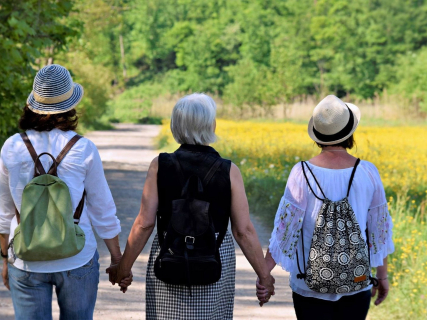

The social prescription that incorporates contact with nature is revealed as an effective tool to mitigate loneliness in adults residing in urban neighborhoods with high socioeconomic vulnerability, according to an essay carried out in Barcelona by the European consortium RECETAS.
In the study, a reduction in loneliness was observed in all individuals who participated in one of the two analyzed models of social prescription. However, group activities guided by facilitators proved especially effective for those starting from higher levels of loneliness and poorer emotional state.
The research, coordinated by ISGlobal, a center promoted by the "la Caixa" Foundation, and published in "The Lancet Regional Health - Europe," concludes that the type of support can be personalized based on the characteristics and needs of each participant.
Loneliness is increasingly considered a priority public health challenge, impacting both physical and mental health. In Spain, around 20 percent of the population reports feeling lonely, and in Barcelona, it is estimated that this situation affects about 100,000 people.
Social prescription aims to respond to emotional and social needs by connecting people with existing resources and activities in their environment. Nature-based social prescription (PSBN) adds to this approach the interaction with green spaces, such as parks, gardens, or other natural environments.
In this framework, the European project "RECETAS" evaluated Friends in Nature (FiN), an intervention that combines experiences in nature with peer support and structured group activities. "FiN combines different strategies: it creates groups with peer support, offers socialization opportunities reinforced by experiences in nature, and a process of empowerment," explains Laura Coll-Planas, the first author of the work and currently a researcher at the University of Vic.
TWO MODELS TO STRENGTHEN THE BOND WITH NATURE AND THE COMMUNITY
The clinical trial included 320 adults aged 18 years or older who expressed loneliness in 12 neighborhoods of the metropolitan area of Barcelona with high socioeconomic vulnerability. The median age was around 63 years, and approximately 80 percent of the participants were women.
Half of them were offered the FiN program, which consisted of weekly 2-hour sessions in small groups over nine weeks, accompanied by trained facilitators. These sessions combined group dynamics and peer support with outdoor activities in the nearby environment, such as visits to gardens, parks, riverbanks, coastal areas, and spaces of heritage and cultural interest.
The proposals were chosen from a specific catalog of activities for each neighborhood, developed together with community agents and enriched with suggestions from the participants themselves. The rest of the group received a 30-minute motivational interview and a list of nature-related activities available in their neighborhood, which they could do on their own.
In the overall sample, loneliness was reduced by an average of 10.5 percent after three months and 16.8 percent after one year, with no significant differences between the two intervention models at three months. No relevant changes in health-related quality of life were detected when analyzing the total participants.
However, a finer analysis revealed that the starting point marked differences. Individuals with greater loneliness and poorer emotional well-being benefited more from the FiN model with a facilitator and group activities.
In contrast, those with lower loneliness and better emotional state achieved similar reductions in loneliness with the lighter intervention (a single interview and guidance towards local nature resources).
A FLEXIBLE SUPPORT ACCORDING TO INDIVIDUAL NEEDS
These results suggest that there is no one-size-fits-all solution when addressing loneliness. Those facing greater social and emotional difficulties may require additional support, peer support, and the group structure that FiN offers, while others may improve with simple help to identify and take advantage of opportunities already available in their community.
The findings obtained in Barcelona contrast with those of another RECETAS trial developed in Helsinki with frail older adults living in assisted living facilities. In that case, the FiN intervention achieved reductions in loneliness greater than those of the control group and improved several dimensions of health-related quality of life. The differences between both populations underscore the need to adapt PSBN programs to the context and circumstances of the individuals they target.
The work also presents limitations: the majority of participants were women and the median age was around 63 years, which could restrict the extrapolation of the results to men and younger adults.
Despite this, for the ISGlobal researcher and senior author of the study, Jill Litt, the data obtained provide key information to consolidate PSBN as a strategy aimed at strengthening community assets and improving social health in urban environments. Furthermore, they suggest that the different PSBN pathways may have variable effectiveness depending on each person's initial situation.
The approach surpasses the idea of contact with nature as a simple passive health intervention, as Litt and her team explain in a commentary in "Nature." By fostering shared experiences in natural spaces, PSBN can promote the creation of bonds, active participation in community life, and the feeling of being part of the natural environment. "It is essential to generate the ingredients of a fulfilling life: with purpose, sense of belonging, and meaning," concludes Litt.