
At least 69 congressmen elected in the elections held last Sunday in Brazil are being investigated for alleged crimes of corruption, embezzlement, manipulation of public contracts, and environmental crimes, among other irregularities.
According to data collected by the Brazilian portal UOL, one in nine members of the new Congress is listed as under investigation. According to this information, 33 parliamentarians have already been formally accused, while another 36 have open proceedings awaiting the Prosecutor's Office to file charges.
The majority of the procedures refer to cases of misappropriation of public resources, although investigations for domestic violence and racially motivated crimes are also included. The Constitution of Brazil only allows for the suspension of political rights when there is a firm criminal conviction, that is, without the possibility of further appeals.
Among the names mentioned is the deputy of the Liberal Party (PL) Mario Frias, on whom the Police have opened an investigation for an alleged embezzlement of up to two million reais (about 355,000 euros) linked to parliamentary amendments intended to produce the film "Dark House," a biopic about former president "Jair Bolsonaro."
According to the same outlet, most of the affected charges belong to right-wing parties, including the Liberal Party of the "Bolsonaros" and the various formations that make up the so-called "centrão" — the big center — an informal bloc that has become a key piece to ensure governability in the country.
For decades, any president who has occupied the Palace of Planalto has needed the support of this group, which includes, among others, Progressives, União Brasil, Brazilian Democratic Movement (MDB), and Republicans, forces that also concentrate a good part of the names listed in the investigation list.
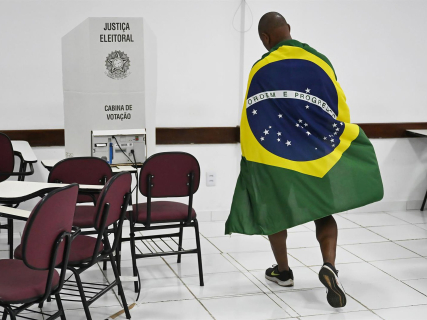
In the electoral event on October 4, more than 1,650 positions were at stake, with a first round in which the new president and vice president were chosen, the composition of Congress, state legislative assemblies, and regional governors. The second round is scheduled for October 25.
The right achieved control of the Chamber of Deputies and the Senate, as well as important regional governments such as that of São Paulo, and especially highlighted the result of the ultraconservative candidate "Flávio Bolsonaro" for the Presidency, who obtained 47% of the votes, two points above President "Luiz Inácio Lula da Silva".