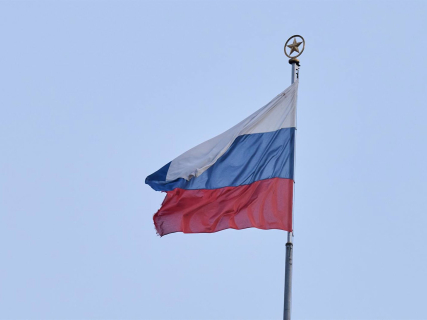
From INF to New START: the treaties that limited weapons between Russia and the West

Europe came to have a network of treaties that limited missiles, tanks, and nuclear arsenals and allowed inspections between former adversaries. Much of that architecture has disappeared or been severely weakened.

3 minutes

fotonoticia 20260819113519 1920

fotonoticia 20260819113519 1920

Add DEMÓCRATA to Google

Ask FREN

Published

3 minutes

Most read

For decades, Russia and the West did not limit themselves to accumulating weapons: they also built a framework of limits, inspections, and transparency mechanisms to know what the adversary had and reduce the risk of escalation. That system has lost several of its main pieces in just a few years.

The last major change came on February 5, 2026, when New START, the treaty that limited certain deployed strategic nuclear weapons of the United States and Russia, expired.

Before that, the INF Treaty and the U.S. and Russian participation in Open Skies had disappeared from the bilateral framework. The regime of conventional forces in Europe was also deeply eroded after Russia's withdrawal from the FACE Treaty and the subsequent suspension of obligations by numerous Western states.

INF: the treaty that eliminated an entire category of missiles

The Intermediate-Range Nuclear Forces Treaty (INF) was signed in 1987 by Ronald Reagan and Mikhail Gorbachev.

Its scope was extraordinary: the United States and the Soviet Union agreed to eliminate their ground-launched ballistic and cruise missiles with ranges between 500 and 5,500 kilometers, along with their launchers.

The agreement ended in August 2019, when the United States withdrew.

Washington and NATO had accused Russia for years of developing and deploying the 9M729 missile in violation of the treaty. Moscow denied those accusations and made its own reproaches about U.S. systems. With the U.S. withdrawal, the INF ceased to be in force.

FACE: capping the large European armies

The architecture was not solely nuclear.

The Treaty on Conventional Armed Forces in Europe (FACE or CFE), signed in Paris in 1990, established legally binding limits on five major categories of conventional weaponry: tanks, armored vehicles, artillery, combat aircraft, and attack helicopters.

It was one of the major mechanisms aimed at preventing either of the two former blocs from quickly concentrating enough forces to launch a large offensive.

According to OSCE data, its implementation allowed for the withdrawal of more than 60,000 pieces of conventional weaponry from service.

Russia suspended its implementation in 2007 and completed its withdrawal in November 2023. Afterwards, numerous NATO states also suspended their obligations under the treaty.

The instrument continues to exist formally for some States, but it no longer fulfills the pan-European function for which it was conceived.

Open Skies: adversary planes over own territory

Another mechanism had a logic difficult to imagine in the current relationship between Moscow and Washington: allowing other States to fly over national territory to observe military installations and forces.

The Open Skies Treaty, in force since 2002, authorized unarmed observation flights over the territories of the participating States. Its objective was to increase transparency and facilitate verification.

More than 1,500 observation missions were carried out.

The United States abandoned the treaty in 2020 citing Russian non-compliance. Russia withdrew the following year. The treaty continues for the other members, but it lost its two main military powers.

New START: the last major bilateral nuclear limit

The New START, signed in 2010 by the United States and Russia, limited their deployed strategic nuclear arsenals and established verification mechanisms.

In 2021 both countries agreed to extend it for five years, until February 2026.

The relationship subsequently deteriorated. Russia suspended its participation in the treaty in 2023, although Moscow then stated that it would continue to respect certain quantitative limits.

Finally, New START expired on February 5, 2026 without a successor treaty in force.

Its disappearance means that the United States and Russia are no longer subject to that legally binding bilateral framework that limited their deployed strategic nuclear arsenals.

What still remains

The disappearance of these instruments does not mean that all arms control has disappeared.

Global nuclear non-proliferation agreements and OSCE transparency mechanisms continue to exist, such as the Vienna Document, in addition to the Open Skies Treaty among the countries that remain part.

But the network created during the last decades of the Cold War and the first years after it is much smaller today.

Those agreements did not depend on trust between allies. They were designed precisely for the opposite situation: to allow States that considered themselves adversaries to limit certain weapons, inspect each other, and make their military movements somewhat more predictable.

More key points, information and questions with FREN

AI-GENERATED CONTENT

What parliamentary procedures would be necessary for the United States and Russia to negotiate a new nuclear arms control treaty?

For the United States and Russia to negotiate a new nuclear arms control treaty, strictly speaking, no prior parliamentary procedure is required: the decision to start negotiations is a prerogative of the executive powers (White House/Department of State and Presidency/Ministry of Foreign Affairs of Russia). However, in both countries, Parliament plays a key role in authorizing, conditioning, and especially ratifying the outcome of those negotiations.

It is advisable to clearly separate three phases: political impetus and negotiating mandate, substantive negotiation and signing of the text, and finally parliamentary ratification and entry into force.

1. Political impetus and negotiating mandate

Both in the United States and Russia, the Executive can initiate exploratory contacts and negotiating rounds without the need for prior legislation. A political decision by the president and his national security team is sufficient. However, Parliaments can influence through:

  • Resolutions or motions (not always binding) urging the Government to open disarmament negotiations, setting priorities or red lines.
  • Budgetary conditions, for example linking funds for nuclear or strategic defense programs to the Executive seeking arms control agreements.
  • Hearings and appearances of Foreign Affairs and Defense officials, where the Legislature pressures to resume or intensify talks.

In practice, a new relevant treaty (like START or New START) only progresses if there is a minimum prior parliamentary consensus in both countries, even before drafting a single clause.

2. Negotiation and signing by the executive power

At this stage, the initiative is almost entirely with the Executive:

  • The presidents (or their foreign ministers) appoint heads of delegation and negotiating teams.
  • A negotiation framework is agreed upon: objectives for reducing nuclear warheads, covered systems, verification, deadlines, etc.
  • A series of diplomatic rounds are held culminating in an agreed text that the presidents can sign.

Although not “parliamentary procedures” in the formal sense, it is common for negotiators to maintain constant dialogue with leaders of parliamentary committees on Defense, Foreign Affairs, or Intelligence to ensure that what is agreed will be politically acceptable for ratification.

3. Parliamentary ratification in the United States

In the United States, the Constitution requires a direct role for the Senate regarding treaties:

  • The treaty is referred to the Senate, where it goes through the Committee on Foreign Relations, which holds hearings, requests technical reports, and can propose reservations, understandings, or declarations.
  • The Committee issues a report and submits the text to the full Senate. To give its consent, a two-thirds majority of the senators present is required.
  • The Senate does not rewrite the treaty but can condition its ratification on certain interpretations or additional obligations for the Executive. If the qualified majority is not reached, the treaty fails.
  • Once the Senate has given its “advice and consent,” the President can deposit the instrument of ratification and the treaty enters into force as provided in its own clauses (often after ratification by the Russian side as well).

4. Parliamentary ratification in Russia

In the Russian Federation, the Constitution also provides for the intervention of the Federal Assembly in the most important treaties:

  • The President refers the treaty to the State Duma, which examines it and votes on a federal ratification law, generally by a simple majority of deputies.
  • Then, the text goes to the Federation Council, which must also approve it. Defense and international affairs committees are mainly involved here.
  • After parliamentary approval, the President signs the ratification law and the Russian State can deposit its instrument of ratification.

In both systems, ratification may be accompanied by complementary internal legislation (for example, rules on verification or restructuring of strategic forces) which also requires ordinary parliamentary processing.

In summary, to initiate the negotiation of a new nuclear arms control treaty between the United States and Russia, a prior parliamentary procedure is not essential, but for that treaty to have legal and political validity, both Parliaments must intervene decisively: the U.S. Senate giving its consent by a two-thirds majority, and the Russian Duma and Federation Council approving the ratification law. Without that dual legislative validation, any agreement would remain a mere political declaration, lacking the force and stability of an international disarmament treaty.

What are the legal powers of the President of the United States and the President of Russia to negotiate and sign international disarmament treaties?

In both countries, the head of state has a central role in negotiating disarmament treaties, but their effective power is conditioned by the constitutional distribution of powers with the legislative branch and by political practice. Broadly speaking, the President of the United States has very broad capacity to negotiate and implement agreements but faces a strong counterbalance in the Senate; the President of Russia concentrates more powers, with less intense parliamentary control in practice.

President of the United States

The United States Constitution (Article II) establishes that the president:

  • Is the head of the Executive Branch and commander-in-chief of the Armed Forces.
  • Has the power to “make treaties”, provided he obtains the “advice and consent” of the Senate, with the favorable vote of two-thirds of the senators present.
  • Directs foreign policy, appoints ambassadors and other representatives, and receives those from other countries.

Applied to disarmament or nuclear arms control treaties (START, New START, test ban treaties, etc.), this means:

  • The president leads the negotiation: defines the U.S. position, directs delegations, can order or halt contacts, and sign the agreed texts.
  • However, a formal disarmament treaty does not enter into force for the U.S. without Senate ratification. After signing, the president submits the treaty to the Senate, which examines it in committee and plenary, and can accept, reject, or indefinitely delay it.
  • Meanwhile, the president can assume political commitments or provisionally apply certain measures, but full international binding and stable modification of the internal legal framework require that ratification.

Additionally, U.S. constitutional practice has developed:

  • Executive agreements: the president can enter into international agreements without following the formal treaty procedure requiring two-thirds Senate ratification. These can be based on:
    • The president’s own powers in foreign policy and defense.
    • Prior laws of Congress delegating authority.
    In disarmament matters, these have been used for technical arrangements, verifications, or confidence-building measures, although major structural agreements are usually processed as treaties.
  • Implementation power: once a treaty is ratified, the president directs its execution through Executive orders, military instructions, and regulations, within limits set by Congress and the treaty itself.

President of Russia

The Constitution of the Russian Federation grants the president a very broad role in foreign policy and defense. Among his main powers are:

  • Determining the fundamental guidelines of the State’s domestic and foreign policy.
  • Directing foreign policy and representing Russia internationally.
  • Signing international treaties on behalf of the Russian Federation.
  • Being commander-in-chief of the Armed Forces.

Regarding disarmament or arms control treaties:

  • The president heads the political and strategic negotiation, sets red lines, and authorizes instructions to Russian delegations.
  • He can sign the treaty once the agreement is reached, acting as the State’s representative.
  • The Constitution and the Federal Law on international treaties provide that many treaties – especially those affecting security and disarmament – must be submitted to parliamentary ratification, usually by the State Duma and the Federation Council through ratification laws.

However, institutional design and political practice mean that:

  • The president has a decisive influence over the parliamentary process, since legislative majorities usually align with the Executive.
  • There is room for intergovernmental agreements and presidential decisions that adjust the implementation of disarmament treaties without the need for a new full legislative process.
  • The president can suspend or denounce treaties through initiatives that Parliament usually endorses quickly, especially in security matters.

Summary comparison

In summary, in both systems the president:

  • Leads the negotiation of disarmament treaties.
  • Can sign agreements on behalf of the State.
  • Needs, for formal treaties, some type of parliamentary ratification.

The key difference lies in the balance of powers: in the United States, the Senate is an effective counterbalance that can strongly block or condition disarmament treaties; in Russia, although formal ratification corresponds to Parliament, the political concentration around the president means his effective capacity to promote, modify, suspend, or abandon disarmament agreements is broader and less subject to institutional opposition.

What legal requirements must a country meet to accede to the Open Skies Treaty or the OSCE Vienna Document?

The Open Skies Treaty and the Vienna Document are OSCE instruments related to confidence- and security-building measures. Although both belong to the same field, their legal nature is different, and therefore the requirements for a country to accede are also different.

1. Open Skies Treaty

The Open Skies Treaty is an international arms control treaty, legally binding. It establishes a regime of unarmed observation flights over the territory of the States Parties to increase military transparency.

In general terms, for a country to accede, several types of requirements must be met:

  • International legal capacity: the State must be a fully recognized subject of international law (sovereign State), with capacity to conclude treaties according to the Vienna Convention on the Law of Treaties.
  • Political requirement of belonging to the OSCE area: the Treaty was conceived for States in the Euro-Atlantic area, practically OSCE participating States. The accession of a new State requires the consent of the existing Parties, normally by consensus.
  • Formal accession procedure: the treaty provides for the possibility of accession by other States, through:
    • Formal request for accession to the Treaty depositary.
    • Approval by the States Parties (according to the mechanism provided in the Treaty itself).
    • Deposit of the instrument of accession, which is an international legal act.
  • Internal ratification: according to each country’s constitutional order, accession usually requires:
    • Parliamentary approval or by the competent body.
    • Constitutionality review if provided by the Constitution.
    • Official publication of the treaty and the authorization law.
  • Technical and organizational requirements: without being “legal” in the strict sense, these are practical conditions for membership:
    • Designation of a national authority responsible for Treaty implementation.
    • Capacity to receive observation flights (entry/exit aerodromes, air and security coordination).
    • If the State also wants to conduct flights, certification of aircraft and sensors according to Treaty standards.
    • Internal regime for handling and classification of information obtained during flights.
  • Compatibility with internal law and other treaties: the State must ensure that the Treaty obligations are compatible with its Constitution, security and defense legislation, and existing defense agreements (for example, with allies or military organizations).

2. OSCE Vienna Document

The Vienna Document on confidence- and security-building measures (latest version, 2011 amended) is not a treaty, but a politically binding commitment adopted by consensus among OSCE participating States.

This implies that the “accession” regime is different:

  • Being an OSCE participating State: the basic condition is to be admitted as a participating State of the OSCE. That admission is decided by consensus of the participating States and implies acceptance of the so-called OSCE acquis (all previous politico-military commitments, including the current Vienna Document).
  • There is no classic ratification: the Vienna Document is not signed or ratified as a treaty. The commitment arises from the consensus decision within OSCE bodies; the new State participates in that consensus or declares acceptance of existing commitments.
  • Adaptation of internal regulations: to comply with the Vienna Document obligations, the State usually needs:
    • Internal rules allowing military information exchange (budgets, personnel, weapon systems, deployment plans).
    • Regulation to authorize and receive military inspections and evaluations on its territory.
    • Designation of national contact points and administrative structures managing notifications, exchanges, and visits.
  • Respect for basic political principles: the OSCE links its confidence measures to compliance with the principles of the Helsinki Final Act (sovereignty, territorial integrity, non-use of force, etc.). A State wishing to join must commit politically and normatively to these principles, although there is no formal legal “test” as in a treaty.

In summary, for the Open Skies Treaty we are talking about a formal accession and ratification process to an international treaty with strict legal obligations; for the Vienna Document, acceptance upon entering the OSCE of a set of politico-military commitments, which then require adapting internal law and defense structures to implement them.

Play

Test your knowledge with FREN!

How much do you know about this topic? Answer the following 3 questions.

On what date did the New START treaty between the United States and Russia expire?

Question 1 of 3

What did the CFE Treaty signed in 1990 establish?

Question 2 of 3

What did the United States and NATO claim to justify withdrawing from the INF Treaty?

Question 3 of 3

Hola, soy Fren. ¿Cómo te ayudo?