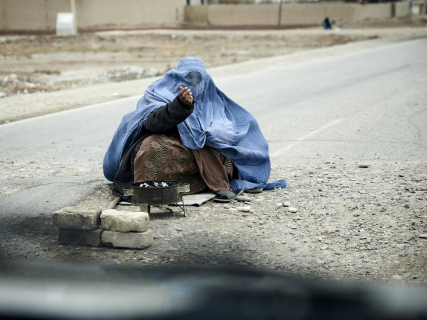

The United Nations made public this Thursday that more than 50 women and girls have been detained in Afghanistan for alleged violations of the "dress code" imposed by the Taliban since their return to power in August 2021. The organization has emphasized that the verified figure is probably lower than the actual one and has added that many other women "face threats of arrest."
The UN Assistance Mission in Afghanistan (UNAMA) has indicated that it is "gravely concerned" about this new wave of detentions. Between July and September, the mission has been able to confirm the arrest of at least 52 women and one girl in Kabul and in the province of Herat. "The number of cases may be considerably higher due to the lack of reporting, stemming from concerns about security and stigma," it has pointed out.
According to the statement, "the incidents were related to alleged violations of the dress codes imposed by the 'de facto' authorities." The mission has specified that the detainees were arrested "for not wearing a chador, showing their hair, using colorful scarves or makeup, or being in public spaces without a 'mahram' -- a male family companion."
UNAMA has explained that "the women were released after being detained for several hours," but has expressed its "alarm" over other episodes that include "verbal abuse, physical assaults, and threats against women, including those who run businesses." In its view, these practices violate the fundamental rights of women and girls and leave them exposed to "serious social stigma and increased marginalization" after their arrest.
In light of this situation, the mission has urged the Taliban authorities to "end the discriminatory practices of enforcing rules that affect women and girls" and to "ensure respect for Human Rights and the dignity of all Afghans." It has also demanded that the Taliban leadership "fulfill Afghanistan's obligations under International Human Rights Law."
The UN's warning comes just days after the International Criminal Court (ICC) made public arrest warrants against two other senior Taliban officials, specifically the ministers of Education and Higher Education, for alleged crimes against humanity committed in the country.
These orders are added to those already issued against the leader of the movement, Mullah Hebatullah Akhundzada, and the president of the Supreme Court, Abdulhakim Haqani. The Taliban have categorically rejected these decisions, reminding that they do not recognize the jurisdiction of the ICC and defending that "the leaders of the Islamic Emirate of Afghanistan have not committed any act that makes them subject to arrest or punishment by any court."
The four Taliban leaders are accused of allegedly ordering or favoring crimes against humanity, including the persecution of girls, women, and other individuals, within the framework of the "discriminatory social norms" imposed since the group regained control of the country, following the flight of then-President Ashraf Ghani and the withdrawal of international forces.
So far, the Taliban regime in Afghanistan has not been officially recognized by any state or international organizations. Despite this, the group insists on claiming that recognition and the lifting of sanctions against Kabul are essential for the authorities to address the deep economic and social crisis worsened since 2021.