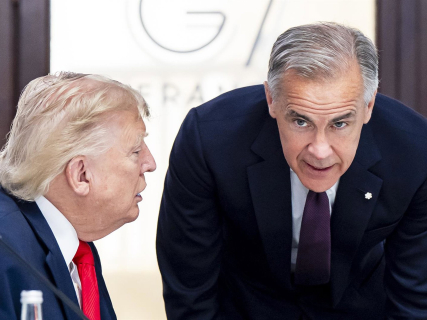

The negotiating teams from the United States and Canada are rushing this Friday the last hours to try to close a trade agreement that stops the entry into force of tariffs of 50% on certain Canadian products, after several weeks of intense conversations between both partners.
According to what the Bloomberg agency has reported, citing sources close to the dialogue, Washington would have accepted to lower the tariffs on Canadian automobiles to 15% and set the tariffs on steel and aluminum at 25%, two sectors that have been at the center of trade disputes in recent months.
According to these same sources, U.S. officials have indicated that the conversations "are going in the right direction towards reaching an agreement" and are confident in sealing a commitment before the new levies are activated.
At the beginning of this week, the White House was willing to cut in half the current tariffs of 50% that weigh on some imports of aluminum and steel from Canada. However, the pressure from representatives of these industries led the U.S. government to consider additional limits to that reduction. Under the scheme of a possible tariff quota, purchases that exceed an agreed volume would continue to bear the general rate of 50%.
"The agreement with Canada is progressing," Trump declared to reporters this Friday. "I only make good deals -- much better deals for the United States, both with Canada and Mexico," he added.
In this context, Washington seeks to tighten the conditions of access to the U.S. market for automobiles, while Ottawa aims to maintain greater maneuvering room. For this reason, both delegations have held meetings at the headquarters of the U.S. Department of Commerce to finalize the details of the pact, after Trump described the regime applied to Canadian exports as "discriminatory treatment."
At the same time, the Canadian government is pursuing a reduction of tariffs on lumber and the complete elimination of the threat of new 50% levies announced by Trump last July.
The negotiations have developed against the clock, just hours before the United States began to impose the 50% tariffs, which would affect Canadian imports worth approximately 20 billion dollars (17.28 billion euros).
The U.S. president decided on Wednesday to grant a three-day postponement for the application of those tariffs, which were set to take effect on Thursday, after reaching an understanding to resume the construction of the Keystone XL pipeline, intended to connect Nebraska with the Canadian province of Alberta.
At the same time, Vice President JD Vance has defended protectionist policy from a steel plant in Ohio, emphasizing the benefits of tariffs for the national metal manufacturing industry. Meanwhile, representatives of the U.S. steel sector have warned that any exemption or tariff reduction to Canada could jeopardize investments and jobs in local plants.