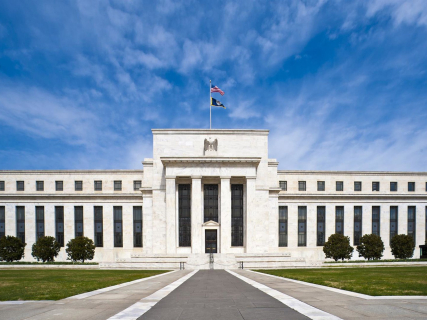

The president of the Federal Reserve of the United States, Kevin Warsh, sent a message of firmness on the fight against inflation during his first speech at the Jackson Hole symposium, a key event for central banks and financial markets.
Warsh has defended that the institution's priority remains to bring inflation back to the 2% target and has warned that if the indicators do not show sufficient progress towards that goal, the Fed will have to act.
Although the head of the U.S. central bank has not announced an interest rate hike, his words have been interpreted by investors as a shift towards a more restrictive monetary policy stance.
"It is the responsibility of the Federal Reserve to ensure price stability. There are no excuses," Warsh stated during his speech.
Markets increase the probability of a rate hike
The message from the new Fed president had an immediate impact on market expectations. CME Group interest rate futures contracts raised the implied probability of a rate hike from the 35% reflected on Thursday to 57% after his speech.
Investors were hoping that Warsh would provide some signal about the Federal Reserve's upcoming moves, especially after months of debate about the timeline for possible cuts or rate adjustments.
The Fed president avoided directly commenting on a specific decision, but made it clear that the central bank will not consider the disinflation process closed until a sustained improvement is observed.
"We must have the certainty that core inflation is heading towards our target, clearly and at a sufficient pace. Otherwise, we have work to do," he noted.
A Fed facing a complex economic scenario
Warsh takes the helm of the Federal Reserve at a time marked by several economic uncertainties. Inflation remains above the 2% target, growth is uncertain, and debt markets show signs of tension, in an international context also affected by the war in Iran.
The new Fed president has acknowledged that some recent inflation data has been better than expected, although he believes that it is still not enough to confirm a structural improvement.
"Those indicators do not tell me that core inflation has improved substantially," he explained.
Warsh also defended the credibility of the institution and assured that the markets trust the Fed's ability to restore price stability.
"I can assure you that you are right," he stated.
A message with Trump's pressure as a backdrop
Warsh's intervention was especially monitored due to the relationship with the White House. President Donald Trump has repeatedly criticized the Fed's monetary policy and called for a faster rate cut, a position that clashed with the strategy followed by the previous president of the central bank, Jay Powell.
The key question of the speech was whether Warsh would prioritize addressing those political pressures or if he would maintain the institution's independence in the face of rising prices.
His message in Jackson Hole points to the second option: the Fed will maintain its commitment to price stability even if its decisions may generate tensions with the U.S. Administration.
With this intervention, Warsh opens a new stage at the helm of the U.S. central bank and leaves the markets awaiting the next inflation and employment data before the next monetary policy meeting.