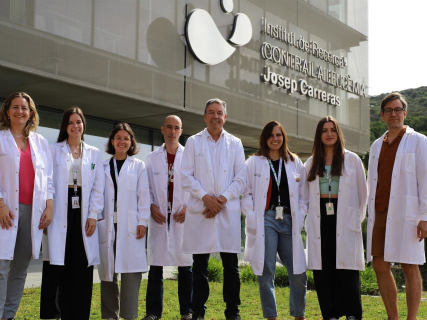

A study coordinated by the Josep Carreras Leukemia Research Institute (IJC) has revealed that certain inherited genetic variants, present from birth, allow for the identification of patients with a higher likelihood of developing aggressive hematological cancers linked to previous cancer treatments.
In some cases, individuals suffer from aggressive hematological cancers several years after being treated with chemotherapy or radiotherapy for a prior tumor. These conditions, termed treatment-related myeloid neoplasms (t-MN, for its acronym in English), are currently classified mainly according to the type of treatment received, although clinical evolution can vary greatly among patients.
In the work, published in "Blood Advances," the research group examined the genetic information and clinical data of 100 individuals diagnosed with treatment-related myeloid neoplasms.
The analyses revealed that nearly one-third of the participants had some inherited genetic variant associated with cancer predisposition or hematological diseases. From these alterations, three differentiated molecular subgroups could be defined, each with its own biological traits and distinct clinical trajectories.
Individuals with hereditary variants in cancer predisposition genes more frequently exhibited broad chromosomal alterations and changes in the TP53 gene, two traits linked to a more unfavorable prognosis. In contrast, those with variants related to hematological diseases, or who did not show identifiable hereditary variants, generally presented distinct molecular profiles and a more favorable evolution.
INTEGRATE THE STUDY OF INHERITED GENETICS INTO CLINICAL EVALUATION
The findings suggest that inherited genetics has a much greater weight in treatment-related myeloid neoplasms than previously recognized. Instead of basing classification solely on the chemotherapy or radiotherapy administered, the systematic incorporation of germline genetic study could allow for a more precise stratification of patients and a better estimation of their risk.
"Incorporating germline genetic study into the evaluation of these individuals could improve disease classification, guide clinical decision-making, and identify both patients and relatives who could benefit from genetic counseling, closer monitoring, or preventive strategies before or after cancer treatment," indicated Julia Mestre, researcher at the IJC and first author of the study.
The work also found that exposure to chemotherapy was particularly associated with a worse evolution in those who were carriers of hereditary cancer predisposition variants. In this group, treatment was more frequently related to complex chromosomal alterations and mutations in TP53, which helps to understand why some individuals develop especially aggressive forms of these neoplasms.
According to the authors, although additional research will be needed before translating these results into routine clinical practice, this study provides a basis for refining the approach to individuals who develop treatment-related myeloid neoplasms.
Thus, integrating the analysis of inherited genetics into clinical assessment could facilitate more personalized therapeutic decisions, improve monitoring strategies, and identify patients and relatives who could benefit from genetic counseling and specific surveillance programs.