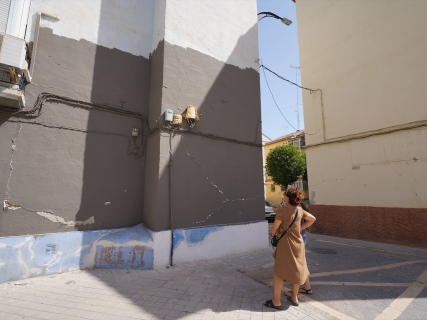

Granada and its metropolitan area have recorded seven consecutive earthquakes this Tuesday, four of them with a magnitude equal to or greater than 4, according to the latest report provided by the Emergency Counselor of the Junta de Andalucía, Antonio Sanz.
The sequence began around 10:00 AM with a quake of magnitude 4.8. Following that first movement, six other tremors occurred, three of which also reached or exceeded magnitude 4.
The Junta has activated the monitoring device and has asked the population for calm. Sanz has urged citizens to consult only official sources in light of the circulation of images and messages that do not correspond to what happened in Granada.
More than 500 calls to 112 and a dozen medical assists
The 112 room of the Andalusian Emergency Agency has received more than 500 calls related to the earthquakes. The alerts include requests for information, questions about how to act, and requests for medical assistance.
The emergency services have attended to a dozen medical cases. Most are related to anxiety crises and falls experienced during moments of nervousness caused by the tremors.
The report communicated by the Junta includes three people with minor injuries, including a minor. The injuries have occurred due to the fall of debris or glass during the seismic movements.
Many people left their homes and went out into the street after feeling the shakes. The succession of several earthquakes in a short interval caused situations of unease in Granada city and in different municipalities of the metropolitan area.
The Junta gathers the Advisory Committee of the Emergency Plan
Antonio Sanz will travel to Granada to participate in a meeting of the Advisory Committee of the Emergency Plan and visit some of the affected areas.
The emergency teams will inspect streets in Granada city and in different metropolitan municipalities to assess the damages. Architects and municipal technicians are reviewing homes, buildings, historical properties, and elements of cultural heritage.
The Junta expects to complete a more precise assessment of the impacts during the afternoon. The goal is to check the condition of the buildings and detect possible risks arising from landslides, cracks, or accumulated damage after the successive earthquakes.
What to do if another earthquake occurs
The Board asks to call 112 when there is a real emergency and to avoid unnecessary travel to the affected areas.
During an earthquake, elevators should not be used. If the shaking surprises you inside a home, it is recommended to move away from windows, glass, and objects that may fall, and to protect yourself under a sturdy table when possible.
It should also be avoided to stay near facades, cornices, or buildings that show visible damage. New tremors can cause collapses in elements weakened by previous earthquakes, even when the magnitude of the new movement is lower.
Alert for false photographs and alarmist messages
The Emergency counselor has warned about the dissemination of photographs taken in other places that are being presented as damage caused by the earthquakes in Granada.
The Board considers that this content is generating unnecessary alarm and asks to verify the origin of the images before sharing them. Information about magnitudes, epicenters, and new movements should be contrasted with the National Geographic Institute, while damage assessments and assistance should be followed through 112 and the involved administrations.