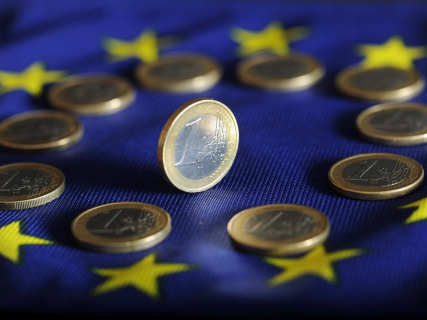

The euro has surpassed 1.17 dollars this Thursday and has reached its highest level against the US currency in three months. A stronger euro makes purchases denominated in dollars cheaper for Spanish companies and consumers, but it can also become a problem for exporters and companies that obtain a good part of their income in the United States.
The common currency reached during the Thursday session up to 1.171 dollars, before losing part of the advance and returning to the zone of 1.168 dollars. The movement has occurred at the same time that the dollar fell to three-month lows against a basket of the main international currencies.
The main impetus of this session comes from the United States. The US Treasury has announced that it will double the repurchases of long-term public debt, to at least 4 billion dollars per operation, a measure aimed at improving liquidity and easing the tensions that had driven up bond yields.
The announcement initially weakened the dollar and favored the euro and other currencies. This scenario is compounded by a growing difference in the outlook on interest rates on both sides of the Atlantic: markets have reduced bets on new increases by the Federal Reserve while still contemplating a possible additional tightening by the European Central Bank.
Why the euro is rising now
The movement is not solely due to the inherent strength of the European currency. A significant part of the rise of EUR/USD is explained by the weakness of the dollar.
The market has been monitoring the increase in financing costs in the United States for weeks and the doubts about the sustainability of its public deficit. The yield on the US 30-year bond had reached levels not seen since 2007, which led the Treasury to intervene by increasing its repurchases.
The ECB, at the same time, keeps its official rates at levels higher than those at the beginning of the year. In June, it raised the deposit rate by 25 basis points, to 2.25%, in response to inflationary pressures generated by energy prices and the conflict in the Middle East. In its July meeting, it decided to keep it unchanged.
Frankfurt, however, insists that there is no predetermined path for rates and that each decision will depend on inflation and activity data. Therefore, market expectations can change rapidly.
The winners: importing oil, raw materials, and products from the United States is cheaper
For Spain, an appreciation of the euro has a first favorable consequence: fewer euros are needed to buy the same product whose price is denominated in dollars.
This especially affects numerous raw materials traded internationally in the U.S. currency. Oil is the most evident example. If the price of the barrel remained unchanged in dollars and the euro appreciated against the U.S. currency, the equivalent bill in euros would decrease.
Spain, as a net importer of energy, can benefit from this exchange rate effect. It does not mean that a rise in the euro automatically causes a drop in gasoline, diesel, or electricity prices: the final cost also depends on the international price of crude oil and gas, taxes, margins, and other components.
Spanish companies that import machinery, components, technology, or U.S. products and pay for their purchases in dollars also benefit. A stronger euro reduces the cost in national currency as long as the operations are not previously hedged against exchange rate fluctuations.
Traveling to the United States also becomes cheaper
Spanish tourists planning to travel to the United States are among the most direct beneficiaries.
With one euro at 1.17 dollars, each euro allows you to buy around 1.17 dollars, compared to a lower amount when the exchange rate is, for example, near parity.
Hotels, restaurants, vehicle rentals, or purchases made in the United States are therefore somewhat cheaper measured in euros, although the commissions applied by banks and cards can modify the effective exchange rate that the consumer receives.
The same reasoning applies to students, companies, or Spanish families that have periodic payments denominated in dollars.
The losers: Spanish exports become more expensive
The other side of the coin is in exports.
A stronger euro makes products sold from the eurozone more expensive for a buyer with dollars, unless the exporting company reduces its margins to compensate for the exchange rate effect.
This may affect Spanish companies with significant exposure to the U.S. market, especially those that compete directly with producers from the United States or with manufacturers from countries whose currencies have not appreciated as much.
The impact is not automatic either. Many large companies use currency hedges to reduce volatility and lock in certain exchange rates in advance.
Companies that earn in dollars may receive fewer euros
Spanish multinationals that generate a significant part of their sales or profits in the United States may also be harmed.
If a company makes 100 million dollars in profit, the amount that appears in its consolidated accounts in euros depends on the exchange rate. The stronger the euro, the fewer euros it gets when converting that amount of dollars.
This accounting effect is especially relevant for companies with a large international presence. It does not necessarily imply that their U.S. business has worsened: they may maintain exactly the same sales in dollars and yet report less income when converting to euros.
A strong euro can also weigh on U.S. tourism
Spain may also feel the movement in the opposite direction through tourism.
When the euro appreciates against the dollar, traveling in Spain becomes more expensive for an American. The effect of a limited movement in the exchange rate is usually small compared to factors like flight prices, hotels, or disposable income, but a prolonged appreciation can indeed make the destination more expensive.
The United States has become one of the highest spending tourist markets for Spain, so the evolution of the euro-dollar exchange rate is particularly relevant for hotels, restaurants, and businesses oriented towards American visitors.
What happens to those with investments in dollars
The change also affects Spanish savers.
A person who has U.S. stocks, funds denominated in dollars, or any other asset exposed to that currency may suffer a loss due to currency effect when converting their investment back to euros, even if the price of the asset has not fallen.
For example, if a stock maintains exactly the same price in dollars but the dollar loses value against the euro, its valuation for an investor whose reference is the euro decreases.
The funds and products that cover exchange rate risk can partially neutralize this effect, although that coverage has costs and not all investment vehicles incorporate it.
One euro at 1.17 dollars does not change mortgages by itself
The rise of the euro does not directly imply a reduction in mortgage payments.
The Euribor fundamentally depends on expectations about the ECB's interest rates, not on the specific level of the euro against the dollar. In fact, if the European currency is backed by expectations of higher rates in the eurozone, both movements can occur simultaneously: a strong euro and relatively restrictive financing conditions.
The ECB currently maintains the deposit facility rate at 2.25%, after the increase applied in June, and in July it decided to leave it unchanged while it assesses the impact of energy tensions on inflation.