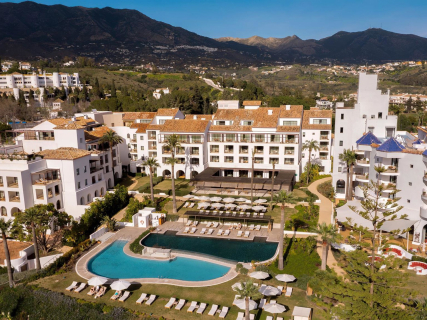
Where hotels have risen the most in Spain: the most expensive destinations this summer

The price of hotels rises by 5.9% in Spain and the average rate per occupied room reaches 156.92 euros, but the increase and the cost of accommodation present significant differences depending on the destination.

5 minutes

fotonoticia 20260803114645 1920

fotonoticia 20260803114645 1920

Add DEMÓCRATA to Google

Ask FREN

Published

Last updated

5 minutes

Most read

The price of hotels in Spain continues to rise in the middle of the high season. In July, establishments generated an average of 156.92 euros per occupied room, 6.79% more than a year ago, while the Hotel Price Index increased by 5.91%.

However, the national average hides significant differences between territories and tourist destinations, both in room prices and in occupancy and profitability of the establishments.

Hotels cost an average of almost 157 euros per occupied room

The starting point for understanding the map of hotel prices this summer is the national average. The ADR, an indicator that collects the average daily income obtained per occupied room, reached 156.92 euros in July 2026, compared to a level 6.79% lower a year earlier.

This figure does not mean that booking any hotel room in Spain costs exactly 156.92 euros. It refers to the average daily billing per effectively occupied room, which includes very different establishments, categories, clients, and rates.

The increase is also reflected in the Hotel Price Index, which specifically measures the evolution of prices applied by hotel entrepreneurs. This indicator advanced 5.91% year-on-year in July, confirming that the increase in billing per room coincides with a general rise in accommodation prices.

The hotel price map changes considerably depending on the destination

The national situation is not reproduced homogeneously throughout the country. The territorial data from the INE show significant differences between communities, provinces, areas, and tourist spots, especially in high-demand destinations during the central summer months.

The effect is also noticeable when observing the immediately preceding month. In June, for example, the Balearic Islands recorded the highest increase in the Hotel Price Index among all autonomous communities, with a year-on-year increase of 9.2%, well above the 5.6% recorded at that time for the whole of Spain.

The comparison also serves to show why "most expensive destination" and "destination where prices rise the most" do not mean the same thing. A municipality may present one of the highest average rates in Spain and, however, record a lower year-on-year increase than another territory that started from much lower prices.

Marbella sets the ceiling for rates at the start of summer

Among the specific tourist destinations, the Costa del Sol appears at the highest levels of the official statistics. In June, Marbella recorded the highest ADR of the tourist points analyzed by the INE, with 315.4 euros per occupied room.

The figure represented more than double the Spanish average for that month, which stood at 137.1 euros. It does not mean that all rooms in Marbella cost 315 euros, but that the establishments in the municipality earned that amount on average for each room they managed to occupy.

Another municipality in Málaga stood out for a different indicator. Estepona presented the highest RevPAR, with 249.9 euros per available room. Unlike the ADR, this indicator indirectly takes into account the occupancy level, as it divides the income among all available rooms and not just among those sold.

Balearic Islands combine high prices with very high occupancy

The price of a room is only part of the picture. The profitability of hotels also depends on their ability to fill the establishments, and it is precisely there that the main island destinations acquire special prominence during the summer.

The latest complete data prior to July already showed that the Balearic Islands reached an occupancy rate of 82.5% in June, the highest among the autonomous communities. In the tourist area of Palma-Calvià, the occupancy rose to 84.8% and reached 86.6% during the weekends.

Some municipalities were still above that. Alcúdia recorded an occupancy of 89.6% of its hotel rooms, while Llucmajor reached 92.1% during the weekends. These are levels that show the enormous pressure of demand on certain destinations in the Balearic Islands during the high season.

The five stars play in another league

The price differences do not depend solely on where the hotel is located. The category of the establishment creates an even greater gap and helps explain why some destinations with a high concentration of luxury hotels present ADRs that are much higher than the average.

Already in June, Spanish five-star hotels billed an average of 317.9 euros per occupied room, compared to 141.3 euros for four-star establishments and 110.9 euros for three-star ones.

The difference also appeared in the revenue per available room. The RevPAR reached 231.1 euros in five-star hotels, while it stood at 114.2 euros for four-star hotels and 84.4 euros for three-star establishments. Therefore, part of the territorial differences also responds to the composition of the hotel supply in each destination.

July brings the national average rate up to 156.92 euros

The jump experienced in July is considerable even compared to the previous month. The national average rate went from 137.1 euros in June to 156.92 euros in July, coinciding with the start of one of the highest tourist demand periods of the year.

Occupancy by available rooms also increased to 71.09%, while overnight stays approached 44.85 million. Hotels managed to raise their revenue per occupied room by 6.79% year-on-year while the number of overnight stays advanced only 0.33%.

This difference is relevant for interpreting the summer price increase. Hotel nights barely increase compared to last year, but the revenue obtained per occupied room grows almost 7%, which points to rates as one of the main drivers of the growth of unit revenues in the sector.

The most expensive destination is not the one that has increased the most

When comparing tourist destinations, it is advisable to avoid a common confusion. The ADR allows knowing how much hotels earn on average for each occupied room, while the Hotel Price Index measures how prices evolve. They are related indicators, but not equivalent.

Therefore, that Marbella appears with an ADR above 300 euros does not alone demonstrate that it is the place where prices have increased the most. Similarly, a territory can experience a strong percentage increase and still have rooms considerably cheaper than the major luxury destinations.

The recent behavior of the Balearic Islands itself allows observing this difference: in June it led the autonomous increase in hotel prices with 9.2%, while Marbella stood out for recording the highest ADR among tourist spots. They are two different classifications that should not be presented as if they measure the same thing.

August may push rates even higher

The data published now corresponds to July and, therefore, still does not allow knowing officially how much hotels have charged during August 2026. The hotel statistics from the INE have a monthly periodicity and the results for August will be known later.

The reference for July leaves, in any case, a market that enters the heart of summer with an average rate of practically 157 euros, prices 5.9% higher than those of a year ago and more than seven out of ten places occupied.

The territorial map adds the other half of the story: staying in a hotel this summer has not become more expensive in the same way throughout Spain. The island destinations bear an especially high occupancy and the major luxury tourist enclaves can register rates that widely double the national average. To know which destinations have finally experienced the highest increases throughout the summer, the official data for August will need to be incorporated when published.

More key points, information and questions with FREN

AI-GENERATED CONTENT

What procedures and deadlines does the monthly update of the INE hotel statistics follow, and when are the August data usually published?

The monthly update of the INE hotel statistics (Tourism Hotel Survey: EOH/IPH/IRSH) is based on a monthly survey of hotel establishments, followed by several steps of cleaning, calculation, and review before its official release. According to recent press releases, the August data are usually published in the second half of September; in 2025, for example, they were released on September 23.

1. What statistical operation it is and what it covers

The operation commonly identified as “hotel statistics” is the Tourism Hotel Survey (EOH/IPH/IRSH), which includes:

  • EOH: Hotel Occupancy Survey (overnight stays, travelers, occupied rooms, etc.).
  • IPH: Hotel Price Index (monthly evolution of prices applied by establishments).
  • IRSH: Hotel Sector Profitability Indicators (ADR, RevPAR, etc.).

According to the methodological notes included in INE publications, the:

  • population scope includes all hotel establishments in Spain,
  • geographical scope is the entire national territory,
  • reference period for the results is the month,
  • reference period for the information is “seven consecutive days of each month, randomly chosen so that all establishments together cover the entire month.”

2. Monthly procedures and deadlines

Based on the methodological documentation included in various monthly press releases of the series, the INE hotel statistics process follows, in summary, the following steps:

  • Sample design and frame: a stratified sampling by province and establishment category is applied, with exhaustive strata for 4 and 5 gold-star hotels. The sample size is around 8,000 establishments in winter and 10,000 in summer.
  • Data collection: establishments complete a questionnaire sent by the INE. The information refers to the seven consecutive days assigned within the month, so that the sample collectively covers the entire month.
  • Cleaning and validation: the INE performs quality control processes on received questionnaires, detects and corrects inconsistencies, and, if necessary, imputes missing data, following the Code of Good Practice for European Statistics.
  • Estimation and aggregation: expansion factors are applied to infer results for the entire hotel universe, and occupancy indicators, the Hotel Price Index, and profitability indicators (ADR, RevPAR) are calculated by autonomous communities, provinces, zones and tourist spots, categories, etc.
  • Monthly dissemination: once calculations are completed and series consistency reviewed, the INE releases a press release with the main results, accompanied by a table annex and access to details in INEbase.
  • Subsequent revisions: press releases indicate that certain data are updated. For example, the August 2025 release notes that the INE updates on the same day the August 2024 data of the IPH and profitability indicators, showing a scheme of provisional data and revisions.

3. When the August data are published

The dissemination schedule of this operation can be observed by looking at the press release dates. In 2025:

  • For August 2025, the note “Tourism Hotel Survey (EOH/IPH/IRSH). August 2025. Provisional data” is dated September 23, 2025 (August 2025 press release).
  • For July 2025, the publication is dated July 23, 2025 (July 2025 note).
  • For other months of 2025 (April, May, June, October, November, December), the notes are also placed in the second half of the following month (22–24, 23, etc.).

From this pattern, it can be concluded that:

  • The statistics are monthly and disseminated regularly according to the INE dissemination calendar.
  • Results referring to August are usually published around September 22–24, with slight variations from year to year.
  • The exact date is indicated in advance in the INE’s annual dissemination program and confirmed in the press release on the day of publication.

Therefore, if you are interested in an exact date for a specific year, the most accurate approach is to consult the INE dissemination calendar for the operation “Tourism Hotel Survey (EOH/IPH/IRSH),” where the publication day for August data is set, which in recent years has been around the third week of September.

What are the competencies of the autonomous communities regarding tourism and hotel regulation according to Spanish legislation?

In Spain, competencies in tourism and hotel regulation are mainly structured based on the constitutional distribution of powers between the State and the autonomous communities (CCAA). The starting point is that tourism is, as a general rule, a competency assumed by the CCAA, but conditioned by State powers over economic bases, the single market, consumer protection, labor legislation, security, environment, or European regulations.

Basic constitutional framework

The Constitution establishes in Article 148.1.18ª that autonomous communities may assume competencies in “promotion and regulation of tourism within their territorial scope”. All statutes of autonomy have included this matter, usually as an exclusive or very broad competency, which has allowed the development of autonomous tourism laws, tourist accommodation laws, and hotel classification.

At the same time, the State retains competencies with direct impact on tourism and hotel activity, among others:

  • Article 149.1.13ª CE: bases and coordination of general economic activity planning.
  • Article 149.1.6ª and 8ª CE: basic procedural and civil-commercial legislation (contracts, liability, etc.).
  • Article 149.1.1ª CE: basic conditions of equality in exercising rights and duties.
  • Article 149.1.7ª CE: basic labor legislation affecting sector personnel.
  • Article 149.1.16ª, 23ª and 25ª CE: health, environment, and bases of mining and energy regime, impacting environmental and safety requirements.
  • Article 149.1.18ª and 29ª CE: bases of the legal regime of public administrations and public security.

Additionally, the State is the interlocutor with the European Union and must guarantee respect for the free provision of services and freedom of establishment, which condition any autonomous or local regulation on hotels and other tourist accommodations.

Competencies of the autonomous communities

Based on their statutes, the CCAA exercise very broad competencies in tourism, typically including:

  • Tourism sector regulation: definition of different types of accommodations (hotels, tourist apartments, tourist-use homes, rural houses, campsites, etc.).
  • Quality and classification standards: requirements for opening, operation, and classification (stars, keys, categories, typologies).
  • Authorization and registration procedures: licenses, responsible declarations, and registries of companies and tourist establishments.
  • Inspection and sanctioning in tourism matters, including disciplinary regimes for non-compliance with autonomous tourism regulations.
  • Tourism promotion: destination marketing, creation of tourism brands, coordination with local entities and the State.
  • Territorial and urban planning linked to tourism uses, coordinated with their general urban planning competency.

The consequence is that specific hotel regulation (what a hotel is, minimum infrastructure and service requirements, mandatory client information, etc.) is mainly contained in autonomous tourism laws and regulations, which differ in each community.

Limits of autonomous regulation

Although broad, autonomous competencies are not unlimited. Among the main limits are:

  • Respect for basic State legislation: CCAA cannot violate the bases set by the State regarding market unity, competition defense, basic equality conditions, consumer protection, environment, safety, or administrative legal regime.
  • Free provision of services and single market: autonomous rules on hotels or tourist homes cannot impose disproportionate or discriminatory restrictions based on the territorial origin of the company or user. The Constitutional Court and ordinary courts have annulled or reinterpreted excessive requirements (e.g., quotas, distances, or unjustified economic requirements).
  • Respect for State labor and social security regulations: CCAA cannot set labor conditions (wages, working hours, contract types) different from basic legislation and State or sector collective bargaining.
  • Consistency with EU law: autonomous regulations must be compatible with European directives and regulations on services, consumption, data protection, or online contracting, which fully affect tourism and hotel bookings.
  • Guarantee of fundamental rights: any regulation affecting freedom of enterprise, property rights, privacy, or equality must pass a proportionality test and cannot empty their essential content.

Role of municipalities

Finally, municipalities exercise relevant competencies through their urban planning and coexistence regulations: they grant urban licenses, regulate land uses, noise ordinances, terraces, opening hours, or citizen coexistence. All this acts as an additional conditioning level on hotels and tourist accommodations, but always within the framework set by autonomous legislation and State and European limits.

What legal requirements exist for hotels to be classified as five-star establishments in Spain?

In Spain, there is no single State regulation that sets the technical requirements for a five-star hotel: the competence to regulate and classify tourist accommodations is autonomous. Each autonomous community approves its own decrees and regulations that determine star categories and minimum requirements for hotel establishments, including five-star hotels, so it is essential to always refer to the specific regulations of the territory where the hotel is located.

The consulted documentation confirms, for example, that the Community of Madrid regulates the different types of tourist accommodation (hotel establishments, tourist apartments, rural tourism, etc.) through its own sectoral regulations, in development of the autonomous Tourism Regulation Law and various specific decrees (such as Decree 159/2003 on hotel establishments, cited in the Resolution of July 17, 2025). That resolution recalls that communities have full competence in tourism and that their decrees specify what a hotel is and how it is classified. A similar situation occurs in other communities (Andalusia, Catalonia, Valencian Community, Canary Islands, Balearic Islands, etc.), which also have their own hotel establishment regulations.

Although each community sets detailed requirement tables (with areas, facilities, and scoring), the structure is usually similar and based on several blocks of demands:

  • Dimensions and equipment of rooms and bathrooms: autonomous regulations usually establish minimum areas differentiated by room type (single, double, suite) and increase these requirements as the category rises. Five-star hotels normally require a significantly larger area than three or four stars and complete bathroom equipment (private bathroom, full sanitary fixtures, and often separate shower and bathtub or high-level equipment).
  • Mandatory services and reception: generally, the five-star category implies permanent reception service or wide opening hours, continuous telephone customer service, luggage service, and a broad offer of complementary services (tourist information, external reservation management, etc.). In many communities, the difference between four and five stars is reinforced with higher demands for availability and specific personnel.
  • Staff and languages: autonomous regulations tend to require a minimum number of staff relative to hotel capacity and the presence of certain profiles (management, reception, maintenance, cleaning). For five stars, it is common to require that part of the reception and customer service staff demonstrate proficiency in at least one foreign language besides Spanish, sometimes explicitly mentioning English.
  • Food service and breakfast: the high category is associated, in most territories, with the obligation to offer higher-level food services than lower categories, both in variety and hours. At minimum, breakfast service is usually required and, in many cases, a restaurant or dining room with quality standards matching the category.
  • Common areas and leisure: autonomous regulations usually detail requirements for lobbies, lounges, corridors, sitting areas, and, in higher categories, spaces for meetings, gym, spa, or pool. Not all these elements are always mandatory, but they often form part of a points or requirements system that allows achieving the five-star category by combining certain luxury facilities.
  • Parking: in many communities, parking within the establishment or nearby, with reserved spaces for customers, is considered a common element from a certain star level. Both the existence of own spaces and ease of access and, if applicable, valet service are usually valued.
  • Accessibility: besides the general accessibility regulations applicable nationwide (State and autonomous), tourism decrees usually require a minimum number of accessible rooms, practicable routes, and adaptation of common areas for people with reduced mobility. The aforementioned resolution recalls, for example, how accommodation categories connect with urban planning and other sectoral regulations, including accessibility and use licenses.

An important transversal element is that the hotel, besides complying with its own autonomous classification regulation, must respect the rest of applicable regulations: urban and activity licenses from the municipality, fire safety rules, data protection, consumer protection, occupational risk prevention, etc. In the tourism field, the documentation shows how, for example, registration of accommodations in specific autonomous registries and obtaining corresponding use licenses in municipalities like Madrid are required even before obtaining certain State short-term rental registrations.

In summary, to design a five-star hotel in Spain, one must start from the idea that: 1) the category is defined by specific autonomous regulations; 2) these regulations contain very detailed tables combining minimum requirements and, in some cases, points systems; and 3) common blocks usually revolve around room and bathroom area and equipment, services and staff, food service, common areas, parking, and accessibility, with more demanding thresholds the higher the category.

Play

Test your knowledge with FREN!

How much do you know about this topic? Answer the following 3 questions.

What was the average price per occupied room in hotels in Spain in July 2026?

Question 1 of 3

Which autonomous community recorded the highest year-on-year increase in the Hotel Price Index in June?

Question 2 of 3

Which indicator allows you to know the average daily revenue obtained per occupied room?

Question 3 of 3

Hola, soy Fren. ¿Cómo te ayudo?