The PP calls for calm and rejects violence after the latest incidents in Ceuta

Jesús Celaya and Elías Bendodo call for the cessation of the altercations while maintaining their criticisms of the Government for the management of the migration crisis. The Assembly of Ceuta has also approved an institutional declaration against any form of violence.

3 minutes

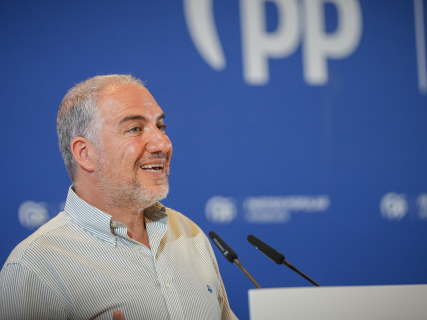
EuropaPress 7681679 vicesecretario general politica autonomica municipal analisis electoral pp

EuropaPress 7681679 vicesecretario general politica autonomica municipal analisis electoral pp

Add DEMÓCRATA to Google

Ask FREN

Published

Last updated

3 minutes

Most read

The PP has made a call for calm this Friday and has rejected the use of violence in Ceuta after the incidents recorded in recent days in the autonomous city, where there have been clashes, attacks on migrant camps, and blockades of Red Cross vehicles trying to distribute food.

The message has come both from the popular deputy for Ceuta, Jesús Celaya, during the appearance of the Minister of the Interior, Fernando Grande-Marlaska, in Congress, and from the deputy secretary of Autonomous and Municipal Policy of the party, Elías Bendodo. Both have demanded the cessation of violent episodes, although they have maintained criticisms of the Executive for the management of the migration crisis.

Celaya calls for calm and rejects attacks and blockades

During the Interior Commission of Congress, Celaya has expressly called for calm after the recent events recorded in Ceuta and has pointed out that resorting to violence or hindering the work of humanitarian organizations does not contribute to resolving the situation.

"Anyone who thinks that with violence, harassing journalists or blocking the Red Cross that helps Ceuta, is completely mistaken," the popular parliamentarian has stated.

Celaya has linked the existing tension in the city to the discontent of part of the population over the migration situation, but has defended that protests must remain free from any violent action.

The call comes after several days of tension in which some protesters destroyed and burned part of a settlement used by migrants and tried to prevent Red Cross vehicles tasked with distributing food from accessing.

Bendodo: "Violence cannot be responded to with more violence"

Elías Bendodo has subsequently conveyed a similar message. The popular leader has assured that the party understands the existing discontent among the citizens of Ceuta, but has demanded that protests be carried out peacefully.

"We perfectly understand the desperation of the Ceuta people, but we call for calm," Bendodo has pointed out. "Violence cannot be responded to with more violence."

The deputy secretary of the PP has simultaneously maintained the political offensive against the Executive. In an intervention this Friday in Cartagena, Bendodo has again held the Government responsible for the management of the crisis and has demanded the resignation of Marlaska, whom he accuses of not having reacted adequately to the massive entry of migrants recorded at the end of July.

A joint statement from all parties in Ceuta

The pronouncement of the PP coincides with a consensual institutional statement by all the groups represented in the Assembly of Ceuta, which has rejected "with total firmness" any form of violence.

The president of the Autonomous City, Juan Jesús Vivas, of the PP, has been the one to publicly convey the common message of the parties.

"The violent do not represent us, they seek to divide us, distract attention from what is important, and harm the image of everyone and of Ceuta," the statement reads.

The text aims to establish a joint position after the increase in social tension recorded in recent days and to separate the protests against the management of the migration crisis from the violent episodes.

The PP maintains its criticisms of the Government

The call for calm does not imply a change in the political diagnosis of the PP regarding the crisis. The popular party continues to attribute the main responsibility for the situation to the central Government and demands an acceleration of returns and more resources to control the border.

This same Friday, Cuca Gamarra has asked the Executive to detail how many expulsion orders are being processed and has demanded more means to manage immigration files. The PP maintains that Ceuta cannot become a permanent reception center for people who entered irregularly.

Bendodo has also defended that all people who do not have the right to remain in Spain must leave the city and has assured that the Government has already adopted some of the measures previously proposed by his party, including declaring the crisis as a matter of National Security and creating a single coordination.

The messages from Thursday

The pronouncement this Friday comes after popular leaders were asked on Thursday about the incidents involving some citizens against migrants.

The spokesperson of the PP, Borja Sémper, then responded that his party was "always against violence," although he focused a good part of his intervention on the situation of the citizens of Ceuta and on the responsibility he attributes to the Executive.

The parliamentary spokesperson, Ester Muñoz, also highlighted the existing discontent in the city and the lack of response that, according to the PP, the population had received.

More key points, information and questions with FREN

AI-GENERATED CONTENT

What are the pending parliamentary procedures to amend the legislation on managing migration crises in Ceuta?

Currently, there is no "nominally Ceutan" reform already advanced in the General Courts that exclusively regulates the management of migration crises in Ceuta. However, there are several key pieces of the general migration framework underway or in preparation that directly affect how episodes like the current one are managed, and whose pending procedures allow identifying what is missing for those changes to be effective.

1. Draft Law on migration contingencies and unaccompanied minors

In the Congress, the Draft Law approving urgent measures to guarantee the best interests of children and adolescents in extraordinary migration contingency situations is being processed, stemming from Royal Decree‑Law 2/2025. This text introduces into the Immigration Law a model for managing and relocating unaccompanied foreign minors in situations of extraordinary pressure, with explicit reference to Ceuta, Melilla, and other border territories.

According to parliamentary information, the draft (file 121/000055) is in the Congress of Deputies with the deadline for amendments extended until September 2, 2026. The Youth and Childhood Commission has full legislative competence, meaning it can approve the text definitively without returning to the Plenary.

The specific pending procedures for this draft are, summarized:

  • Final closure of the deadline for submitting amendments (to the whole and to the articles).
  • Appointment of a committee in the commission and preparation of an articulated text based on the draft and amendments.
  • Debate and approval of the report in the Youth and Childhood Commission (which acts with full legislative competence).
  • If applicable, subsequent constitutional review and publication in the Official State Gazette (BOE) with the established vacatio legis.

Until these steps are completed, that part of the legal architecture for managing migration crises – very relevant for the distribution of minors arriving in Ceuta – remains in the processing phase and may undergo substantial changes.

2. New draft bills on Immigration and Asylum

After the Ceuta crisis, the Government has approved in first reading two draft bills to adapt Spanish law to the European Pact on Migration and Asylum: one reforms the Immigration Law and the other creates a new Asylum Law (Demócrata, 08/25/2026; Demócrata, 08/26/2026). Both laws directly affect:

  • The mandatory triage at the border (medical examination, identification, biometric data, vulnerability assessment, security) with a maximum of 72 hours.
  • The border return procedures within up to 12 weeks for those not entitled to protection.
  • The structure and deadlines of asylum procedures, including those specifically at the border.

To date, these texts are still draft bills: they have not been sent to Congress. The pending procedures are divided into two phases:

a) Pre-parliamentary phase (Government):

  • Issuance of mandatory reports from advisory bodies: General Council of the Judiciary and Council of State, among others, as well as the Forum for the Social Integration of Immigrants and the State Council of NGOs.
  • Possible technical and political adjustments to the text in light of those reports.
  • Second approval in the Council of Ministers, now as a bill.
  • Formal submission of the draft(s) to the General Courts.

b) Parliamentary phase (once they reach the Courts):

  • Qualification and publication by the Congress Board and opening of the amendment period.
  • Debate on the entirety in Plenary (if there are amendments to the entirety) and referral to the competent commission (Interior, Migrations, etc.).
  • Committee phase, commission report, and vote in the Congress Plenary.
  • Referral to the Senate, with a new amendment period and report.
  • Possible return to Congress for the final decision, royal sanction, publication in BOE, and entry into force.

Until these reforms pass all these phases, crisis management like that in Ceuta will continue to be governed by current legislation and by RDL 2/2025 already ratified, as far as applicable.

3. Other reform lines affecting Ceuta

Additionally, official notes from Moncloa and Territorial Policy include the commitment to reform article 35 of the Immigration Law to establish a stable system for distributing unaccompanied migrant minors from border territories such as Ceuta, Melilla, and the Canary Islands (note from 04/18/2024; note from 11/23/2024). This modification, announced several times, remains in the political and technical work phase; to translate into real changes it will need to follow exactly the same path: draft bill, bill, submission to Congress, and double parliamentary reading.

4. Summary

In summary, the pending parliamentary procedures to amend the legislation relevant to managing migration crises in Ceuta are: to complete the processing of the Draft Law stemming from RDL 2/2025 (currently in the amendment phase in commission) and to transform into bills, submit to the Courts, and approve the Immigration and Asylum reforms and the possible reform of article 35 of the Immigration Law. Until these reforms complete the entire parliamentary cycle and are published in the BOE, Ceuta will continue managing the crisis with the current framework reinforced by executive measures (single command, comprehensive plan, judicial and administrative reinforcements).

Can you detail exactly what the Draft Law stemming from Royal Decree-Law 2/2025 changes in the distribution of minors arriving in Ceuta? What positions are the different parliamentary groups defending regarding the Immigration and Asylum reforms linked to the Ceuta crisis? How could the reform of article 35 of the Immigration Law that the Government is negotiating with the Canary Islands and other actors affect Ceuta?

What are the competencies of the President of the Autonomous City of Ceuta according to the Statute of Autonomy?

According to Organic Law 1/1995, the Statute of Autonomy of Ceuta, the President of the Autonomous City is the highest institutional and political authority of the City. The Statute itself clearly defines his main competencies, which can be grouped into functions of representation, political leadership, head of the local executive, and relationship with the Assembly of Ceuta.

1. Institutional leadership and representation

The Statute establishes that the President holds the supreme representation of the City of Ceuta. This means that:

  • He is the primary political authority of the City before the State, other autonomous communities and cities, and abroad.
  • He acts as the representative figure in official acts, agreements, and institutional relations affecting the City.

This representation refers both to the internal sphere (towards the Ceutans themselves and their institutions) and externally, as an expression of Ceuta's position within the autonomous State.

2. Presidency of the Assembly and the Government Council

The Statute explicitly indicates that the President of the City:

  • Presides over the Assembly of Ceuta, the City's representative body.
  • Presides over the Government Council, which he directs and coordinates.

As president of the Assembly, he directs plenary sessions, orders debates, and ensures the proper functioning of the representative body according to its Regulations. This includes, de facto, a relevant role in setting the political and institutional pace of the City.

As president of the Government Council, the Statute attributes to him the direction and coordination of the executive's activity, which entails:

  • Setting the major lines of the City's political and administrative action.
  • Coordinating the different Councilors and government areas.
  • Driving the strategic decisions that the Government Council then approves and executes.
3. Appointment, dismissal, and delegation over Councilors

The Statute of Autonomy grants the President decisive powers over the composition of the executive:

  • Appointing the Councilors who make up the Government Council.
  • Freely dismissing or removing Councilors, reporting to the Assembly.
  • Temporarily delegating his own executive functions to some members of the Government Council.

These powers strengthen his position as head of the local executive, allowing him to configure the political team that will execute his program and redistribute functions according to government needs.

4. Status as Mayor and election by the Assembly

A relevant peculiarity included in the Statute is that the President of the City:

  • Also holds the status of Mayor of Ceuta.
  • Is elected by the Assembly of Ceuta from among its members and appointed by the King.

The election is made among those heading the electoral lists that have obtained seats. The Statute establishes that:

  • An initial absolute majority of the Assembly is required to be elected.
  • If no candidate achieves it, the head of the most voted list in the elections is designated.

Although these are designation rules rather than competencies, they are essential to understand the President's political legitimacy and his direct link to the municipal electoral result.

5. Relationship of confidence with the Assembly

The Statute also regulates the political responsibility instruments affecting the President that complete his institutional position:

  • He can raise a vote of confidence before the Assembly on his program or a general policy declaration, after deliberation of the Government Council. If the Assembly denies confidence, he must resign.
  • He can be subject to a motion of censure approved by an absolute majority of the Assembly, which must include an alternative candidate for the Presidency. If it succeeds, the new candidate is invested President.

Although these figures are more related to parliamentary control than active competencies, they shape the framework in which the President exercises his functions and underline his political responsibility before the Assembly.

Overall, the Statute of Autonomy of Ceuta configures the President as head of the executive, highest representative authority of the City, president of the Assembly and the Government Council, responsible for appointing and dismissing Councilors, and holder of a direct relationship of confidence and political responsibility before the Assembly of Ceuta.

Which parties currently form the Government of the Autonomous City of Ceuta and how many deputies does each have?

According to the information available from the consulted sources, the Government of the Autonomous City of Ceuta is currently formed solely by the People's Party (PP), led by Juan Jesús Vivas Lara. There is no formal coalition government with other parties: the rest of the formations with representation in the Assembly are in opposition, although some maintain institutional cooperation agreements with the PP.

Regarding the parliamentary representation of the governing party:

  • People's Party (PP): has 9 deputies in the Assembly of Ceuta.

This data appears explicitly in information collected by the newspaper Demócrata, where the leader of Vox in Ceuta, Juan Sergio Redondo, defends that in the city there is "an alternative absolute majority [...] that groups the nine PP deputies and the four from Vox" to form a possible joint government. This reference clearly confirms the number of PP seats in the Assembly.

The same journalistic piece also clarifies the type of political relations the PP maintains with other groups. Redondo demands that President Vivas break his "agreements with the PSOE and the Islamist party Movement for Dignity and Citizenship (MDyC)". This nuance is relevant because:

  • It reinforces the idea that the Government Council is composed of PP members, without councilors from other parties.
  • It indicates that the institutional stability of the Popular Executive relies on political agreements with PSOE and MDyC (for example, in bodies such as the Assembly Board or the Port Authority), but without these parties being part of the Government as such.

Other information from Demócrata about who "shapes the digital debate in Ceuta" reinforces this interpretation of the government as a single-color PP. That analysis explicitly mentions the "weight of the Autonomous City Government" and lists as councilors Nabila Benzina, Pilar Orozco, Kissy Chandiramani, Nicola Cecchi, Rafael Martínez, and Alberto Gaitán, all associated with the People's Party. This fits with an Executive composed of a president and a team of councilors from the same party.

From an institutional point of view, a note from the Senate on Ceuta Day recalls that the main bodies of the autonomous city are the Government Council and the Assembly of Ceuta, and notes that in the 11th Legislature both institutions are presided over by Juan Jesús Vivas. This dual presidency (of the Government and the Assembly) is consistent with the PP being the central governing force, with 9 deputies and the capacity to build majorities through agreements with other groups.

Regarding the other parties represented in the Assembly (such as PSOE, Vox, MDyC, or Ceuta Ya!), the consulted sources allow knowing that:

  • Vox has 4 deputies, a figure mentioned in the same information referring to the possible alternative PP–Vox majority.
  • PSOE and MDyC have reached agreements with the PP in various bodies but are not part of the Government.

However, these same sources do not fully and explicitly detail the exact number of seats corresponding to each of the other parties (PSOE, MDyC, Ceuta Ya!, or others that may be present) beyond the Vox figure. To avoid speculation, only clearly documented numbers are included here: the 9 PP deputies, which is the party forming the Government of Ceuta, and the 4 Vox deputies as part of the opposition.

In summary:

  • The Government of the Autonomous City of Ceuta is a single-party government of the People's Party, led by Juan Jesús Vivas.
  • The PP has 9 deputies in the Assembly of Ceuta, according to available information.
  • Other parties (PSOE, MDyC, Vox, and Ceuta Ya!, among others) have representation in the Assembly, but only the PP is part of the Executive; Vox is in opposition and demands entry into the Government; PSOE and MDyC maintain agreements with the PP but are not formal members of the Government Council.

With the accessible data in the consulted sources, it is not possible to precisely specify how many deputies each of the other parties has, so the numerical response is limited to the party that actually forms the Government (PP) and the additional Vox figure explicitly stated.

Can you break down, party by party, the complete composition of the Ceuta Assembly in this legislature when detailed official data is available? What specific political agreements does the PP maintain with the PSOE and MDyC in Ceuta (Assembly board, public companies, budgets, etc.)? Who exactly are the councilors of the Ceuta Government and what area does each manage within Juan Jesús Vivas's Executive?

Play

Test your knowledge with FREN!

How much do you know about this topic? Answer the following 3 questions.

What stance has the PP expressed regarding the recent violent incidents in Ceuta?

Question 1 of 3

What institutional measure have all parties in the Ceuta Assembly adopted following the incidents?

Question 2 of 3

What has the PP asked the central government regarding the migration crisis in Ceuta?

Question 3 of 3

Hola, soy Fren. ¿Cómo te ayudo?