
Fortunately, the stigma surrounding mental health and, above all, regarding the act of seeking professional help to address it, has been dissipating and, currently, visiting a psychologist or psychiatrist is relatively normalized. However, this does not prevent there still being people who, due to prejudices, economic issues, or ignorance, have difficulties in receiving this support. Among older adults, these barriers remain abundant.
A study driven by the Social Observatory of the "la Caixa" Foundation, and developed by researchers from the Universitat de València and the Universitat Politècnica de València, reveals that 44.8% of people aged between 60 and 75 find it difficult or very difficult to access mental health resources.
The work, carried out by Miriam Marco from the Department of Social Psychology at the Universitat de València, and Francisco Sánchez-Sáez from the Department of Statistics and Applied Operational Research and Quality at the Universitat Politècnica de València, analyzes the responses of a representative sample of 1,411 people. Among the resources examined are psychological and psychiatric care, helplines, and support associations.
Age and Gender
The perception of difficulties varies by age: 52% of people aged between 60 and 64 find it difficult or very difficult to access these resources. The proportion decreases to 42% among those aged 65 to 69 and to 38.7% in the group aged 70 to 75.
Researcher Miriam Marco points out that this gap could be related to access expectations or a greater awareness of barriers among younger individuals within the studied group.
It also raises the possibility that older generations perceive their care needs differently and mentions that the lack of knowledge about available resources is another of the highlighted results of the research. 76.1% of respondents claim not to know any helpline regarding mental health. Among those who identify one, the most mentioned is 112, cited by 8.7% of the total. Following are the phone numbers of hospitals or health centers, with 5.2%, and 061, with 2.3%. The spontaneous knowledge of the national suicide prevention helpline, 024, is even lower: only 0.4% of participants were able to identify it.
Marco highlights the need to improve the dissemination of these resources and bring information closer to the spaces and channels that the elderly population usually uses. Knowing the existence of a helpline and how to access it is a first step for it to be used when necessary.
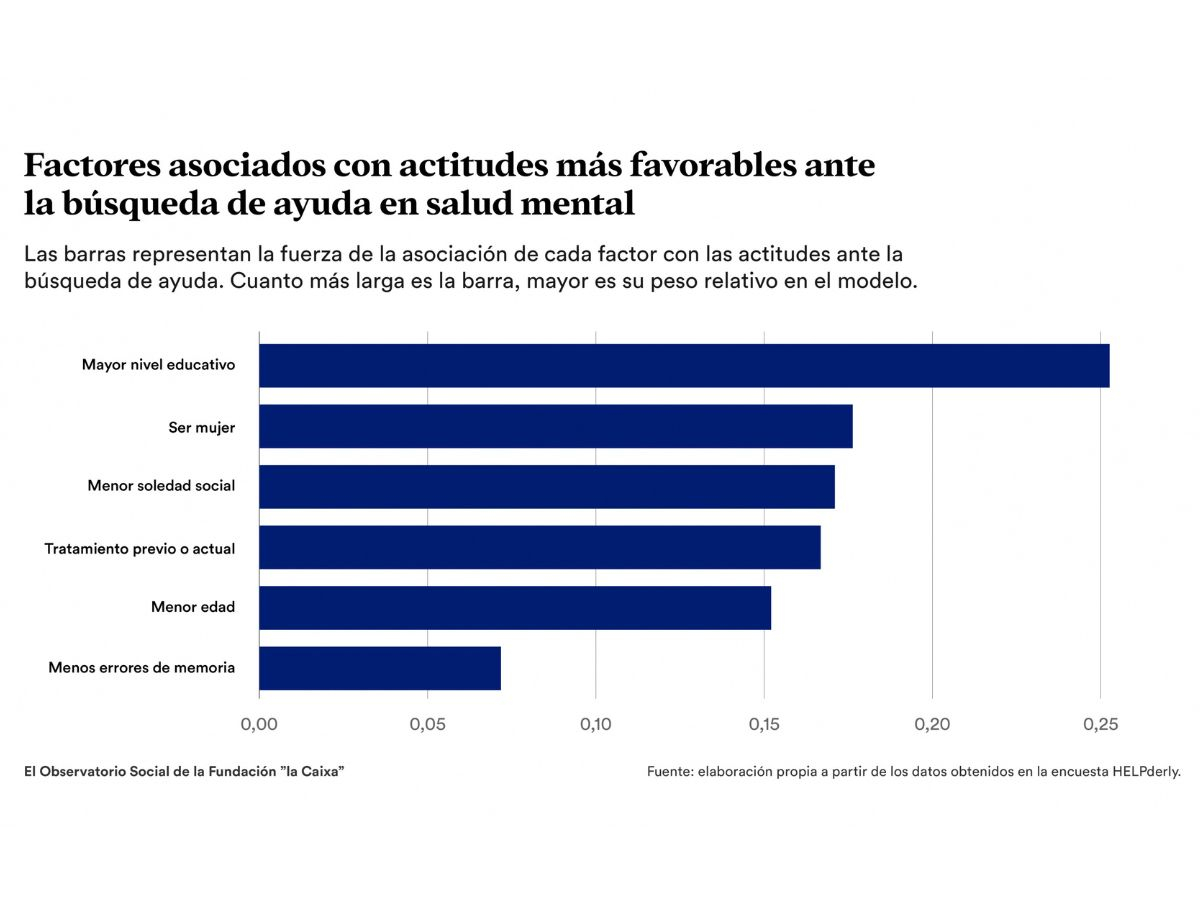
Similarly, the results reflect gender differences in attitudes towards psychological care. Women show a greater willingness to seek help and a lesser concern about the stigma associated with accessing mental health services. However, they also perceive lower quality of life and a worse state of health than men.
In addition to gender, educational level, a lower perception of social loneliness, and having received psychological treatment previously are associated with more favorable attitudes towards seeking help.
The pandemic
The study detects a moderate impact of the pandemic on emotional well-being, especially among women. However, when participants assess how the health crisis affected the mental health of people their age, the perception of deterioration is higher than when they evaluate their own situation.
42.2% of men believe that the mental health of people in their age group worsened as a result of the pandemic. Among women, the proportion reaches 59.4%.
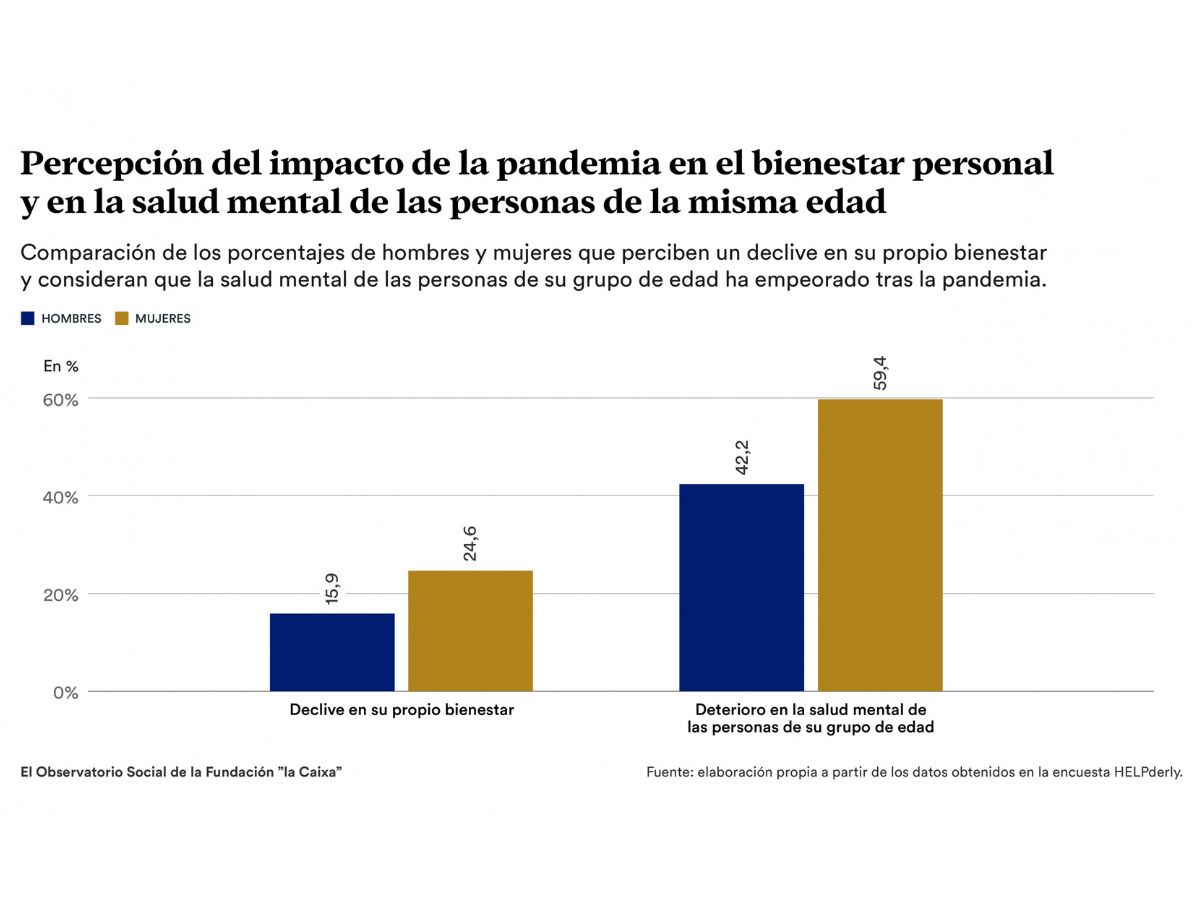
According to Marco, this disparity indicates that the perception of the deterioration of collective mental health is more intense than the individual assessment. That is to say, participants more frequently recognize a worsening among people of their generation than in their own well-being.
The researcher concludes that reinforcing education and improving communication about the available resources is essential to facilitate the search for help and promote equitable access to psychological care.