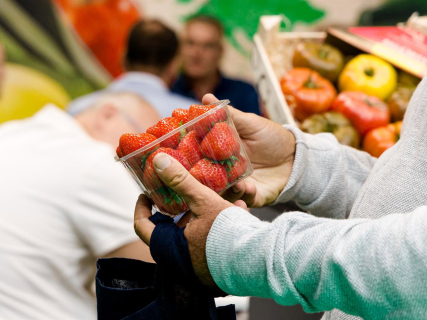

Fresh berries (strawberries, large strawberries, raspberries, blueberries, blackberries, and currants), fresh citrus fruits (oranges, lemons, limes, mandarins, grapefruits, and derivatives), along with eggs and fresh, refrigerated, or frozen fish, are among the foods that have most increased in price in Spain in the last twelve months (from July 2025 to July 2026), with increases that in several cases reach double-digit rates.
According to the most recent CPI data for July released by the National Institute of Statistics (INE) and collected by Europa Press, fresh berries register a year-on-year increase of 17.2%, while fresh citrus fruits accumulate a rise of 15.5%.
In parallel, eggs now cost 13.4% more than in July 2025; fresh fish, whether refrigerated or frozen, has increased by 7.7%, and edible offal (livers, sweetbreads, kidneys, brains, testicles) has raised its price by 6.7% in the last year.
The increase in seafood preparations also stands out, which rise by 5.9% in the middle of the paella season and typical summer meals.
These movements are derived from the latest figures of the various subclasses of the CPI, which since January of this year present some variations due to the methodological changes introduced in this indicator.
Conversely, among the foods that have most reduced their price in the last year, other fresh fruits (melons, watermelons, kiwis, grapes, pomegranates, persimmons) stand out, with a drop of 15.4%; tropical fruits (avocados, bananas, pineapples, mangos, papayas, cherimoyas, dates, and figs), which have decreased by 14.8%; coffee (-3.2%); frozen vegetables and tubers (-3.2%); cereals (-2.6%); cane and beet sugar (-2.5%); and plant-based drinks (-2%).
Between January and July, the products that have risen the most are fresh berries, with a strong increase of 40.9%, followed by potatoes (+6.8%); fresh citrus fruits (+5.9%); tropical fruits (+5.3%); and grape wine (+5.1%).
On the contrary, in that same period, the largest decreases correspond to vegetables cultivated for their fruit (tomatoes of all kinds, cucumber, zucchini, pumpkin, eggplant, pepper, or sweet corn, among others), which lower their prices by 9.6%; sugar (-3.7%); and coffee (-3.4%).
Fresh and tropical fruits, the ones that drop the most in July
In monthly rate, other fresh fruits (melons, watermelons, kiwis, grapes, pomegranates, persimmons) were the foods that most reduced their price in July compared to June, with a decrease of 12.8%.
Next are tropical fruits (-6%) and vegetables grown for their fruit (tomatoes, zucchinis, cucumbers, and eggplants, among others), which decreased by 4.8% in just one month.
On the side of increases, the products that most raised their price in July compared to the previous month were fresh citrus fruits (+3%), water (+1%), other non-alcoholic beverages (+0.8%), fresh berries (+0.7%), and fruit juices (+0.5%).
Changes in the shopping basket and in the calculation of the CPI
The CPI for January 2026 was the first that the INE published based on 2025. The most notable novelty of this new base is the adoption of a renewed consumption classification, so the index goes from 12 to 13 major groups.
In this update, the shopping basket has been revised, the weights have been adjusted, and methodological modifications have been incorporated.
Thus, products such as avocados and blueberries are included in the CPI, within food; tea soft drinks and lemon beer, in the beverages section; and X-rays in medical services, while others considered obsolete, such as ties and handkerchiefs, disappear.
The CPI base 2025 also introduces improvements in the way prices are collected and recorded. Until now, when a relevant change in the characteristics of a product was detected during data collection, the adjustment was incorporated into the index calculation one month later.
With the new system, and thanks to the widespread use of electronic devices for price collection, these adjustments are integrated in the same month in which the variation occurs.
At the same time, the INE continues to advance in methods of automated information collection, taking advantage of company databases (scanner data), automatic capture on the Internet (web scraping), and the use of computer tools in price collection in establishments, which will progressively be incorporated into the calculation of the CPI during this new base.