The year of Von der Leyen: what was promised, what was fulfilled, and what is still waiting

A year after her last State of the Union address, DEMOCRAT reviews from Strasbourg the main commitments made by the president of the Commission, from industrial acceleration and technological sovereignty to housing, migration, and energy networks, to distinguish which announcements have become concrete initiatives and which remain pending agreement or execution.

6 minutes

ILUSTRACIONES (1200 x 675 px) (1200 x 675 px) (1)

ILUSTRACIONES (1200 x 675 px) (1200 x 675 px) (1)

Add DEMÓCRATA to Google

Ask FREN

Published

6 minutes

Most read

...FROM STRASBOURG... "Five minutes to the countdown. We take stock of the good and the bad," sang Mecano. This Wednesday, in Strasbourg, instead of sailors, soldiers, singles, and married people, it will be journalists, MEPs, and lobbyists who will be tasked with looking back to analyze, a year later, the commitments that the President of the European Commission, Ursula von der Leyen, made in her last State of the Union address.

It was during that Plenary when the community leader announced some of the initiatives that have marked legislative discussions in Brussels over the past twelve months, from the Industrial Acceleration Law to the creation of a Defense Union.

The day before Von der Leyen reveals the details of her new roadmap, DEMOCRAT takes stock from Strasbourg of each of the main announcements that are now celebrating their first anniversary. A review of the promises that have progressed, those that are still under negotiation, and those that remain pending.

From startups to Regime 28

For example, the president stated in that speech that the Commission was working "on a measure regarding innovative companies." On paper, that commitment ended up transforming into the approval of the well-known Regime 28, designed to facilitate the creation and expansion of European startups, and into the Regulation on Innovation, which seeks to prioritize disruptive companies in certain public procurement processes.

"We will focus on some key elements, from the Cloud Computing Development Law and Artificial Intelligence to the controlled testing space in the field of quantum technology," Von der Leyen expressed then.
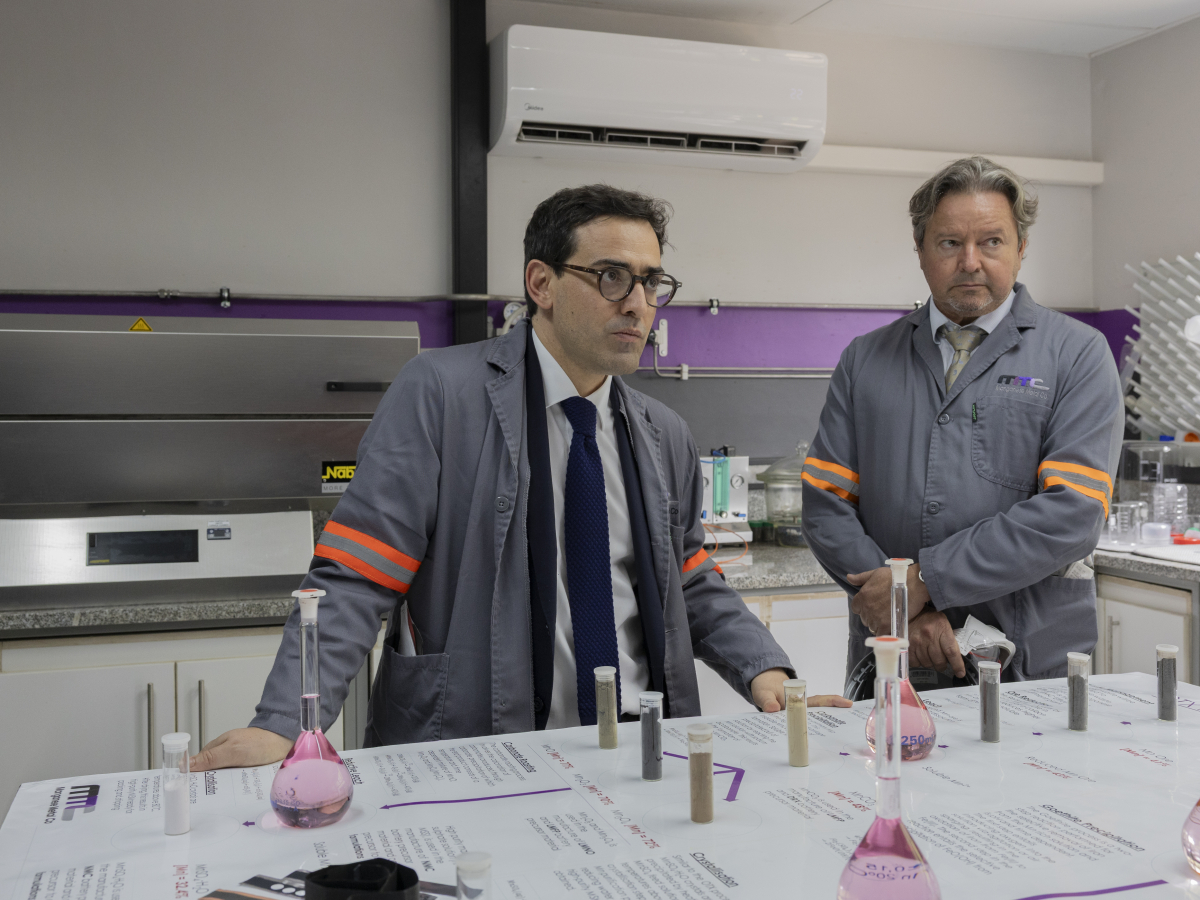
Séjourné
Séjourné -

In December 2025, Brussels signed the agreement with the European Investment Bank (EIB) to promote the creation of gigafactories for artificial intelligence, among which is the Spanish candidacy. This was joined by the launch of the Cloud Services Law, integrated into the Technological Sovereignty Package with which the Commission aims to reduce strategic dependencies and strengthen European digital capabilities.

The 'Made in Europe' reaches negotiation

It was also on that occasion when Von der Leyen unveiled one of the flagship projects of her second term. "The Commission will propose an Industrial Acceleration Law for key strategic sectors and technologies," she announced.

The industrial responsible for the bloc, Stéphane Séjourné, was in charge of presenting what has been dubbed in Brussels as "Made in Europe", an initiative aimed at boosting the demand for European products and achieving a manufacturing weight of 20% of the EU's GDP by 2035.

The proposal is currently under full negotiation among the co-legislators. The scope of European preference and its application to the continent's trading partners has become one of the main points of friction between Parliament and Council.

A year later, Von der Leyen's announcement is no longer just a political statement: it is on the legislative table and at the center of the debate on how to combine strategic autonomy, competitiveness, and trade openness.

Single market: from announcement to calendar

"We will present a roadmap for the single market until 2028. On capitals, services, energy, telecommunications, the twenty-eighth regime, and the fifth freedom for knowledge and innovation," defended Von der Leyen.

The signing came during the informal European Council summit held in Nicosia in April, which set the completion horizon for the end of next year.

In line with this commitment, the community executive presented last week the new Public Procurement Regulation. As Von der Leyen announced a year ago, the introduction of the "made in Europe" criterion in bidding processes would mean an increase of 1.8 billion euros in capital aimed at promoting production in the Twenty-Seven. The president also anticipated then the presentation of "a battery booster package," within a broader strategy to strengthen European industrial capacities and reduce external dependencies in sectors considered strategic.
"We will propose a new package of measures on networks to strengthen our network infrastructure and accelerate the granting of permits," detailed the president. Finally, the initiative presented in December was accompanied by the so-called Energy Highways, after the Commission identified "eight critical bottlenecks" in European energy infrastructure.

The objective is to accelerate interconnections, strengthen networks, and facilitate the necessary permits to deploy the infrastructures required for the electrification of the European economy.

Affordable housing: from promise to regulation

Another of the announcements from that speech was the European Affordable Housing Plan. Von der Leyen stated that the continent "had to review its rules on state aid to enable the granting of housing assistance measures."

This same September, Vice President Teresa Ribera announced the Affordable Housing Regulation, with which Brussels aims to limit certain effects of speculative purchases of second homes and provide municipalities with greater legal guarantees to act against tourist apartments. Housing has thus become one of the areas in which the Commission has moved from identifying the political problem to articulating a European regulatory framework.

Some of the clues from this year's speech are also in that of 2025. The president then asked the co-legislators for "a quick agreement on the EU common system for returns," while demanding "the full implementation of the Pact on Migration and Asylum." In June, the political agreement was reached that will allow the creation of migrant return centers in third countries with which the Union has signed partnership agreements. That same month, the Pact reached under the Spanish presidency of the Council came into force.

In the same way, Von der Leyen announced that she would recommend "to a group of experts the task of advising me before the end of 2025 on what is the best approach for Europe" regarding the protection of minors on social networks.
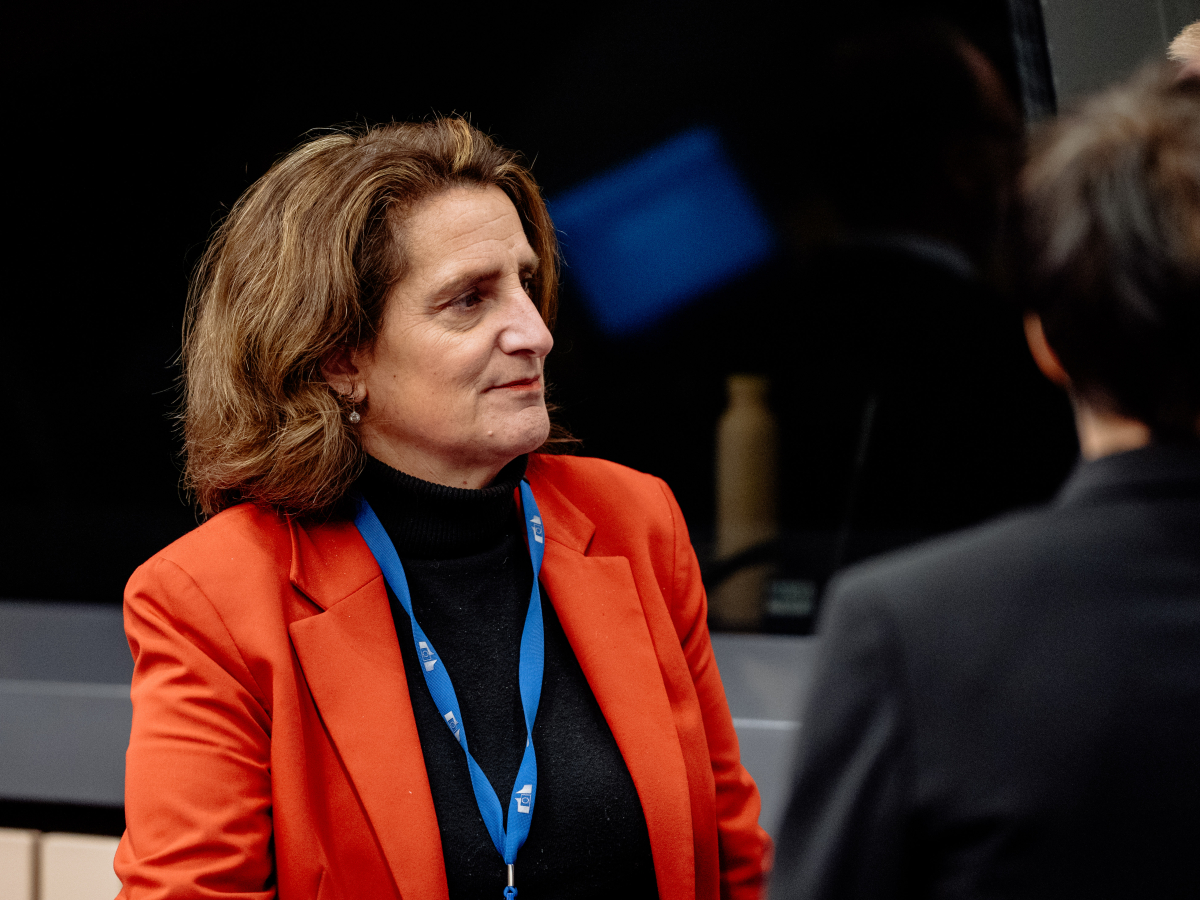
Teresa Ribera
Teresa Ribera -

The final report of that panel arrived in June and will likely be one of the issues that return to the center of the debate during this Wednesday's speech. The Commission is now studying establishing the minimum age to access social networks at 13 years, a matter that directly affects the regulation of platforms and the protection of minors in the digital environment.

Pending duties

Von der Leyen identified during that Plenary the commercial diversification as a strategic necessity for the continent. 2026 will be remembered as the political year in which the provisional application of the agreement between the European Union and Mercosur came into force, as well as for the progress towards "a historic agreement with India." But not all promises have reached the same level of maturity.

Before the president speaks at this year's SOTEU, there are still some pending challenges. Von der Leyen raised the need to abandon unanimity and move towards qualified majority in areas such as foreign policy the previous year. Brussels, however, has not yet presented a concrete reform proposal in that regard. Furthermore, in her speech, she requested to move more quickly towards a Circular Economy Law. However, in December 2025, the Commission only presented a package of pilot measures focused on the plastics sector.

The last major pending issue is related to Israel and the war in Gaza. Amid tensions over the position of the European Union, Von der Leyen announced the suspension of bilateral support, the proposal of sanctions against extremist ministers and violent settlers, and the partial suspension of the Association Agreement between Brussels and Israel in trade matters. Although the community executive formally presented proposals in this regard, the member states have still not reached the necessary majority to push them forward.

A year later, Von der Leyen's balance thus outlines a Commission that has turned a good part of its announcements into legislative files, agreements, or regulatory frameworks, but that keeps other commitments trapped in negotiation between institutions or, directly, among the Twenty-Seven.

This Wednesday, from the hemicycle in Strasbourg, the president will reset the counter to zero. The question will be to check how many of the promises from the last year become a starting point for the next.

More key points, information and questions with FREN

AI-GENERATED CONTENT

What does the ordinary legislative procedure of the European Union consist of and what are the remaining steps for the final approval of the 'Made in Europe' Industrial Acceleration Act?

The ordinary legislative procedure (OLP) is the “normal” route to approve EU regulations and directives: it places the European Parliament and the Council on an equal footing, co-legislating based on a proposal from the Commission. The future Industrial Acceleration Act (IAA), the core of the “Made in Europe” strategy, follows this procedure and, according to consulted sources, is already in the trilogue phase, that is, in the final negotiation between Parliament and Council with the Commission as mediator.

1. What the ordinary legislative procedure consists of

In simplified form, the OLP is structured in these major phases:

  • 1) Initiative of the European Commission
    The Commission drafts and adopts a legislative proposal (regulation, directive, or decision). In the case of the IAA, the Commission presented on March 4, 2026, a regulation proposal to boost demand for low-carbon industrial products and strengthen the “Made in EU” label, with origin and carbon footprint requirements and a single permit window (see the Commission press release: presentation of the IAA).
  • 2) First reading in the European Parliament
    The proposal is assigned to one or more parliamentary committees that appoint a rapporteur, debate the text, propose amendments, and approve a report. Then, the Parliament Plenary votes on the position in the first reading (amended text or, if applicable, unchanged).
  • 3) First reading in the Council of the EU
    In parallel or afterwards, the Council (Member States) studies the Commission’s proposal and the Parliament’s position, negotiates in working groups, and forms the so-called “general approach”. It can:
    • accept the Parliament’s position → the act is adopted in the first reading;
    • approve its own different position → the second reading in Parliament begins.
  • 4) Trilogues and second reading
    Although formally successive readings, in practice they revolve around trilogues: informal meetings between negotiators from Parliament, Council, and the Commission to reach a provisional political agreement on a common text.
    Once there is an agreement:
    • Parliament votes on it in Plenary (second reading);
    • the Council adopts it afterwards (or vice versa, depending on the schedule).
    If there is no agreement, a conciliation phase with a joint committee can be opened and, ultimately, a third reading; if this fails, the act lapses.
  • 5) Formal adoption, publication, and entry into force
    Once the text is approved by both institutions, it is signed by the Presidents of Parliament and the Council, published in the Official Journal of the EU, and enters into force on the indicated date (usually 20 days after publication for a regulation). In the case of the IAA, a subsequent rollout via delegated and implementing acts is also foreseen to detail technical requirements (for example, thresholds for “low carbon emissions” or “Made in EU” criteria).

2. Status of the “Made in Europe” Industrial Acceleration Act

The Commission’s documentation and press reports allow us to establish some milestones and the current status:

  • Proposal presentation (March 2026).
    The Commission adopted on March 4, 2026, the proposal for the Industrial Acceleration Act Regulation, which introduces:
    • “Made in the EU” and low carbon emission preferences in public procurement and aid;
    • specific conditions for large foreign investments in strategic sectors;
    • digitalization and simplification of permits through a single window and maximum deadlines;
    • creation of “industrial acceleration areas” to concentrate clean projects.
  • Start of the ordinary legislative procedure.
    As both the Commission and sector analyses (e.g., FEIQUE and BusinessEurope) recall, since it is a regulation, the IAA must follow the OLP in Parliament and Council: debate, amendments, and voting in both institutions.
  • Trilogue phase in 2026.
    Specialized information on European industrial policy indicates that, by spring 2026, the Industrial Acceleration Act is already in trilogues, with “informal dialogues” between Parliament, Council, and Commission to close a compromise text. It is also noted that the Irish Presidency of the Council has identified this law as one of the key industrial dossiers it aims to close during its term.

3. Remaining steps until final approval

From this point, the pending steps fit into the general OLP scheme:

  • Closing the political agreement in trilogues
    Negotiators must agree on a common text on sensitive issues: definition of “Made in EU,” sectoral scope (steel, aluminum, cement, automotive, net-zero technologies…), foreign investment conditions, and number and content of delegated acts.
  • Final vote in the European Parliament
    Once there is a compromise text, the Parliament Plenary will put it to a vote (usually as a second reading position). If approved as is, a conciliation phase is avoided.
  • Formal adoption by the Council
    The Council, coordinated by the presiding presidency, must confirm the same text (usually by qualified majority). If it fully accepts the Parliament’s position, the act is definitively adopted.
  • Signing, publication in the OJ, and entry into force
    After signing, the regulation is published in the Official Journal and enters into force on the scheduled date. From that moment, it will be directly applicable in all Member States, with transitional periods and regulatory development for technical aspects.
  • Regulatory rollout and practical application
    The Commission will have to adopt numerous delegated and implementing acts (for example, to define European content thresholds, low carbon footprint criteria, calculation methodologies, or the detailed regime of industrial acceleration areas). Additionally, Member States will have to:
    • adapt their public procurement and aid procedures;
    • create single permit windows;
    • design and notify their industrial acceleration areas.

In summary, the “Made in Europe” Industrial Acceleration Act has passed the Commission initiative phase and is in the final negotiation between Parliament and Council. For its definitive approval, the closure of a political agreement in trilogue, formal voting in Parliament and Council, and subsequently signing, publication, and entry into force of the regulation remain, followed by intense work on development and application at national and European levels.

What are the main competences and functions of the President of the European Commission according to the EU Treaties and what has been Ursula von der Leyen's political career?

The President of the European Commission is a central figure in the EU institutional system. Her competences mainly derive from the Treaty on European Union (TEU), particularly Article 17, and the Treaty on the Functioning of the EU (TFEU). Ursula von der Leyen, in office since 2019, embodies these functions today after a long political career in Germany and at the European level.

Competences and functions according to the Treaties

The European Commission is the body with almost exclusive legislative initiative and guardian of the Treaties. The President leads this collegiate body and has several key functions:

  • Political guidance and programming: the President sets the Commission’s political guidelines. She marks the legislative term priorities (e.g., Green Deal, digital agenda, etc.) and guides the annual work program. The other Commissioners act within this political framework.
  • Internal organization of the Commission: she proposes the internal structure, the distribution of portfolios, and the competences of each Commissioner. She can reassign portfolios, ask a Commissioner to resign, or reorganize responsibilities to ensure coherence of the Commission’s action.
  • External representation of the Union: according to Article 15 TEU, the President of the European Council “represents” the EU at the highest level in foreign policy, but Article 17 TEU assigns the Commission and its President the external representation in matters within their competence (e.g., trade, climate, or regulatory negotiations). In practice, the President is one of the EU’s main voices on the international stage.
  • Legislative and executive initiative: although legislative initiative corresponds to the entire Commission, the President decides priorities and which proposals to promote, when, and with what scope. She also oversees the execution of the EU budget and policies approved by the legislator (Council and Parliament).
  • Accountability to the European Parliament: the President is elected by the European Parliament on the proposal of the European Council, taking into account the results of the European elections. Subsequently, she defends the Commission’s political program before Parliament and answers MEPs’ questions. If Parliament passes a motion of censure against the Commission, she and the entire College must resign.
  • Guardian of the Treaties and general interest: as head of the institution “guardian of the Treaties,” she leads decisions to initiate infringement procedures against Member States that breach EU law, and safeguards the European general interest against national or sectoral pressures.
  • Interinstitutional coordination: the President maintains constant political dialogue with the European Council, the Council of the EU, and Parliament, seeking to ensure agreements on the legislative agenda and the Union’s major political and economic orientations.

Political career of Ursula von der Leyen

Ursula von der Leyen is a German politician of the European People’s Party (EPP) and member of the Christian Democratic Union (CDU). Born in 1958 in Brussels, she grew up in an environment closely linked to European integration, as her father, Ernst Albrecht, was a senior official of the European Commission and later Minister-President of Lower Saxony.

Before fully dedicating herself to politics, she studied Economics and, above all, Medicine, even practicing as a doctor. She joined the CDU in the 1990s and began holding political positions at local and regional levels in Lower Saxony, where she was regional Minister of Social Affairs, Women, Family, and Health.

Her leap to the federal front line came in 2005, when Angela Merkel became Chancellor. Von der Leyen was appointed Federal Minister of Family Affairs, Senior Citizens, Women and Youth, a position she held until 2009, focusing on family policies, work-life balance, and support for birth rates.

Between 2009 and 2013, she served as Minister of Labour and Social Affairs, managing labor market reforms and social benefits systems. In 2013, she became the first woman Minister of Defence of Germany, a responsibility she held until 2019, promoting modernization of the German Armed Forces and greater German involvement in European security policy, although her management was also marked by controversies over contracts and equipment.

In 2019, the European Council proposed her as candidate to preside over the European Commission. After presenting her program before the European Parliament, she was elected by a narrow majority of MEPs and became the first woman to hold the Commission presidency. Her mandate has been characterized by several major priorities: the European Green Deal, the digital agenda, the common response to the COVID‑19 pandemic (including the NextGenerationEU fund), the EU’s position on the war in Ukraine, and strengthening the rule of law within the Union.

What European legislation currently regulates the protection of minors on the Internet and which other EU countries have established a minimum age to access social networks?

In the European Union, there is not yet a single binding “digital minimum age” to access social networks, but there is a common regulatory framework that protects minors on the Internet (personal data, content, service design) and leaves Member States some margin to set their own minimum access or consent age. Several countries are beginning to use that margin to approve specific limits.

1. Currently applicable European regulatory framework

a) General Data Protection Regulation (GDPR)
The GDPR (Regulation (EU) 2016/679) is the central piece. Its Article 8 establishes that, when an information society service is directly addressed to minors, the processing of their data based on consent is only valid if the minor is at least between 13 and 16 years old, depending on the age each Member State chooses in its national law. Below that threshold, consent must be given or authorized by the holder of parental responsibility.

This provision does not by itself set a “minimum age for social networks,” but in practice many national regulations link it to this capacity to consent to the processing of personal data necessary to open and maintain an account.

b) Digital Services Act (DSA)
Regulation (EU) 2022/2065 on digital services strengthens the protection of minors online by imposing horizontal obligations on platforms and especially on very large platforms. Among others:

  • Assess and mitigate systemic risks for minors (e.g., exposure to harmful content or addictive design).
  • Prohibit targeted advertising based on profiling when the recipient is a minor.
  • Apply “security by design” measures and implement effective age estimation and verification systems.

The Commission is already using the DSA to supervise large platforms: for example, it has opened a procedure against Meta for not preventing minors under 13 from using Instagram and Facebook, despite their own terms setting that minimum age (Commission press release).

c) Audiovisual Media Services Directive (AVMSD)
Directive 2010/13/EU, amended in 2018, regulates audiovisual media services and video-sharing platform services. It requires these services to protect minors from content that may harm their physical, mental, or moral development, through:

  • Content classification and labeling systems.
  • Parental control and complaint mechanisms.
  • Enhanced restrictions for extreme violence or pornography content.

d) Guidelines and soft law
The European Data Protection Board has adopted guidelines on age verification on the Internet (Statement 1/2025 on Age Assurance), seeking a consistent approach in the EU and specifying proportionality, data minimization, and absence of tracking of minors. Additionally, the European Parliament has approved resolutions calling for a harmonized minimum age of 16 for social networks, with access between 13 and 16 only with parental consent, although these are currently non-binding recommendations (Demócrata, European Parliament).

2. EU countries with minimum age for social networks or advanced debates

On this common basis, several States are legislating or debating specific minimum ages:

  • Spain: Organic Law 3/2018 currently effectively sets 14 years as the age from which a minor can consent to the processing of personal data to register on networks. However, the Draft Organic Law for the protection of minors in digital environments, currently under processing, raises that threshold to 16 years and prohibits registering on networks below that age, except with parental consent under terms established by the law (Ministry of the Presidency note; Demócrata).
  • France: Has approved a specific law that prohibits access to social networks for minors under 15 years old, requiring platforms to prevent the creation of new accounts below that age and to close existing ones. The law, promoted by President Macron, makes it the first EU State with a general prohibition of this type (Demócrata).
  • Portugal: Parliament has approved a bill setting 16 years as the age of access to social networks, video-sharing services, and open communication services, allowing access between 13 and 16 with verified parental consent (Telefónica, “The domino effect of digital age of majority”).
  • Netherlands: The government has published recommendations advising not to allow access to social networks for minors under 15 years old, and the new Executive has set as a goal to legally establish 15 years as a binding minimum age (same previous source).
  • Greece: Is preparing a law that would prohibit the use of social networks for minors under 15 years, without access even with parental consent, through a system of a digital child “wallet” to verify age (Telefónica).
  • Germany: No state law setting a specific minimum age has yet been identified, but very advanced political proposals exist. The CDU and SPD have advocated introducing a legal minimum age of 14 years to use social networks like TikTok or Instagram, with access between 14 and 16 subject to enhanced adjustments and algorithms disabled by default (Demócrata).
  • Italy, Ireland, and other States: In the consulted sources, no sectoral law establishing a different specific minimum age for social networks yet appears. In these cases, the reference remains the digital consent threshold set in their data protection legislation under the GDPR, combined with the application of the DSA and audiovisual regulations.

In summary, the protection of minors on the Internet in the EU rests on horizontal rules such as the GDPR, the DSA, and the AVMSD, while a second layer of national laws setting minimum ages for access to social networks between 14 and 16 years is growing, with France, Portugal, Spain (in processing), Greece, and the Netherlands among the most advanced cases.

Play

Test your knowledge with FREN!

How much do you know about this topic? Answer the following 3 questions.

What was one of the measures promoted by the European Commission to facilitate the creation and expansion of startups?

Question 1 of 3

What is the objective of the 'Made in Europe' initiative proposed by the Commission?

Question 2 of 3

What issue related to minors on social networks is currently being studied by the European Commission?

Question 3 of 3

Hola, soy Fren. ¿Cómo te ayudo?