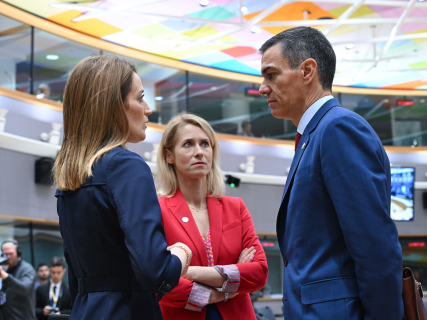
Sánchez forces a reform of European treaties to turn Ceuta into an outermost region

The initiative forces the opening of a complex negotiation process among the Twenty-Seven to modify the legal framework of the EU and allow the autonomous city to access a specific regime of funding, taxation, and aid.

4 minutes

04bf665c 15f3 49a5 9c46 2f9d7588d094

04bf665c 15f3 49a5 9c46 2f9d7588d094

Add DEMÓCRATA to Google

Ask FREN

Published

Last updated

4 minutes

Most read

The President of the Government, Pedro Sánchez, announced this Thursday during his appearance before the Plenary of Congress in light of the migratory crisis in Ceuta that he will request in Brussels the designation of the autonomous city as an outermost region (RUP). The initiative transcends the strictly administrative level and opens a complex legal and institutional pathway, since the incorporation of a new territory into this category requires modifying the provisions of the treaties that regulate the conditions applicable to the outermost regions of the European Union.

The figure of the outermost region is included in Article 349 of the Treaty on the Functioning of the European Union (TFEU), which recognizes the permanent structural disadvantages faced by certain community territories and allows for the establishment of a specific framework for the application of Union law. Currently, this group includes Canary Islands, Azores, Madeira, Guadeloupe, French Guiana, Martinique, Réunion, Mayotte, and Saint Martin.
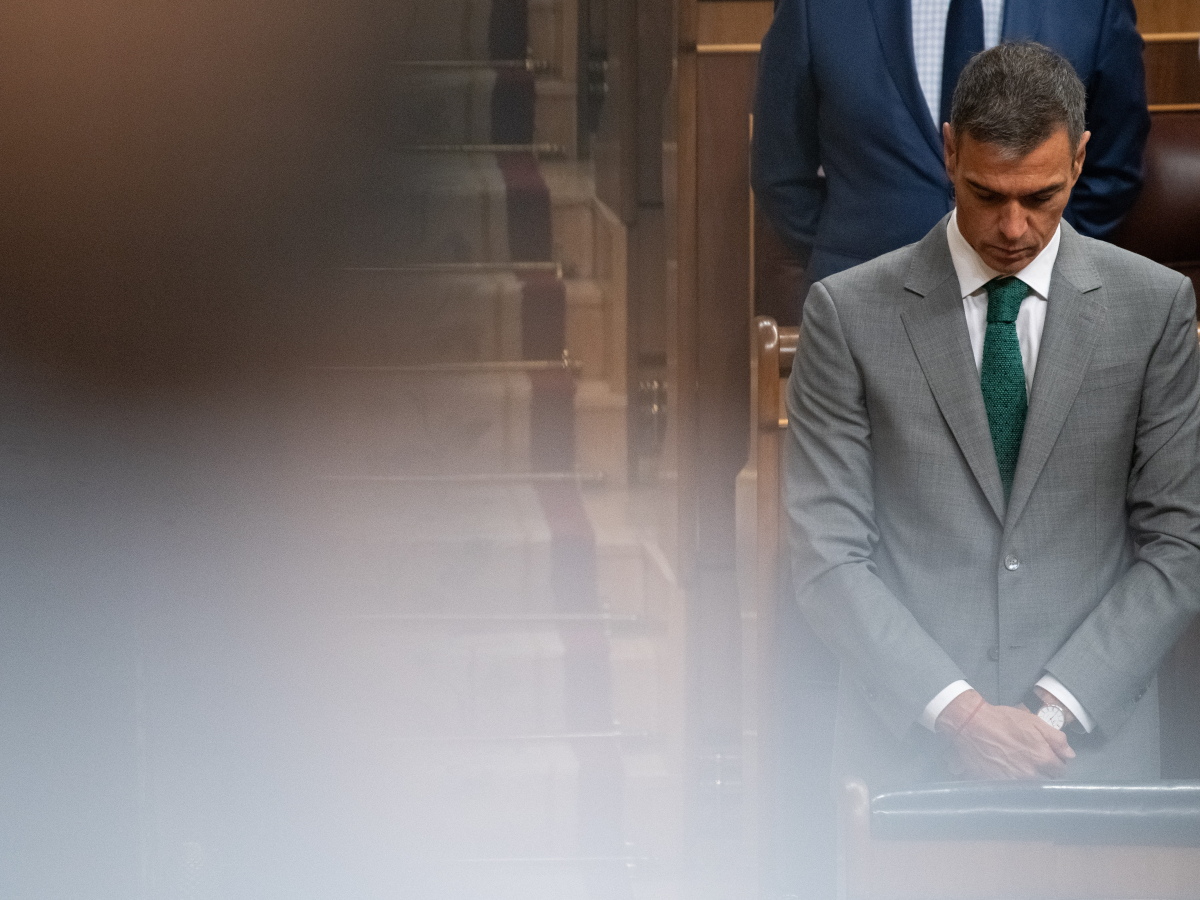
EuropaPress | Pedro Sánchez
EuropaPress | Pedro Sánchez -

The article itself establishes that, taking into account the particular characteristics of these territories, specific measures aimed at adapting the application of European policies can be adopted. Among the factors justifying this treatment are remoteness, insularity, small size, adverse climatic conditions, or economic dependence on a limited number of products.

The recognition of this status implies, therefore, much more than a political consideration. The RUP have specific financing mechanisms and regulatory exceptions aimed at compensating for the costs arising from their geographical situation. Among them are additional allocations of European funds, specific supply regimes, certain exceptions in tax and customs matters, and adapted measures in areas such as agriculture, fishing, or cohesion policy. In the case of Ceuta, one of the most relevant elements would be precisely the possibility of adapting community policies to the characteristics of a border city subjected to unique migratory and economic pressure.

A not easy path

The main obstacle for the Government's initiative lies in the very legal nature of Article 349. The list of territories recognized as outermost regions is part of the primary law of the Union, so incorporating Ceuta cannot be resolved through a simple administrative decision by the European Commission or the Council.

The ordinary procedure for treaty revision provided in the Article 48 of the Treaty on European Union requires a complex political process and, ultimately, the ratification of the modification by all member states according to their respective constitutional procedures. The Spanish Government would therefore have to ensure that the other capitals agree to open the door to a modification of the legal framework of the Union. There is also a simplified revision procedure, although its use is subject to significant limits and does not eliminate the need for the unanimous agreement of the member states nor, where applicable, the corresponding national approval procedures. In any scenario, Brussels could not unilaterally incorporate Ceuta into the list.

The path does not appear easy. Ceuta does not evidently meet some of the criteria traditionally associated with outermost regions, especially those related to insularity and the remoteness of the continental European territory. Precisely for this reason, the Spanish initiative would have to argue that the specific circumstances of the city — its geographical position, its status as the external border of the EU, its economic particularities, and the migratory pressure — justify a differentiated treatment.
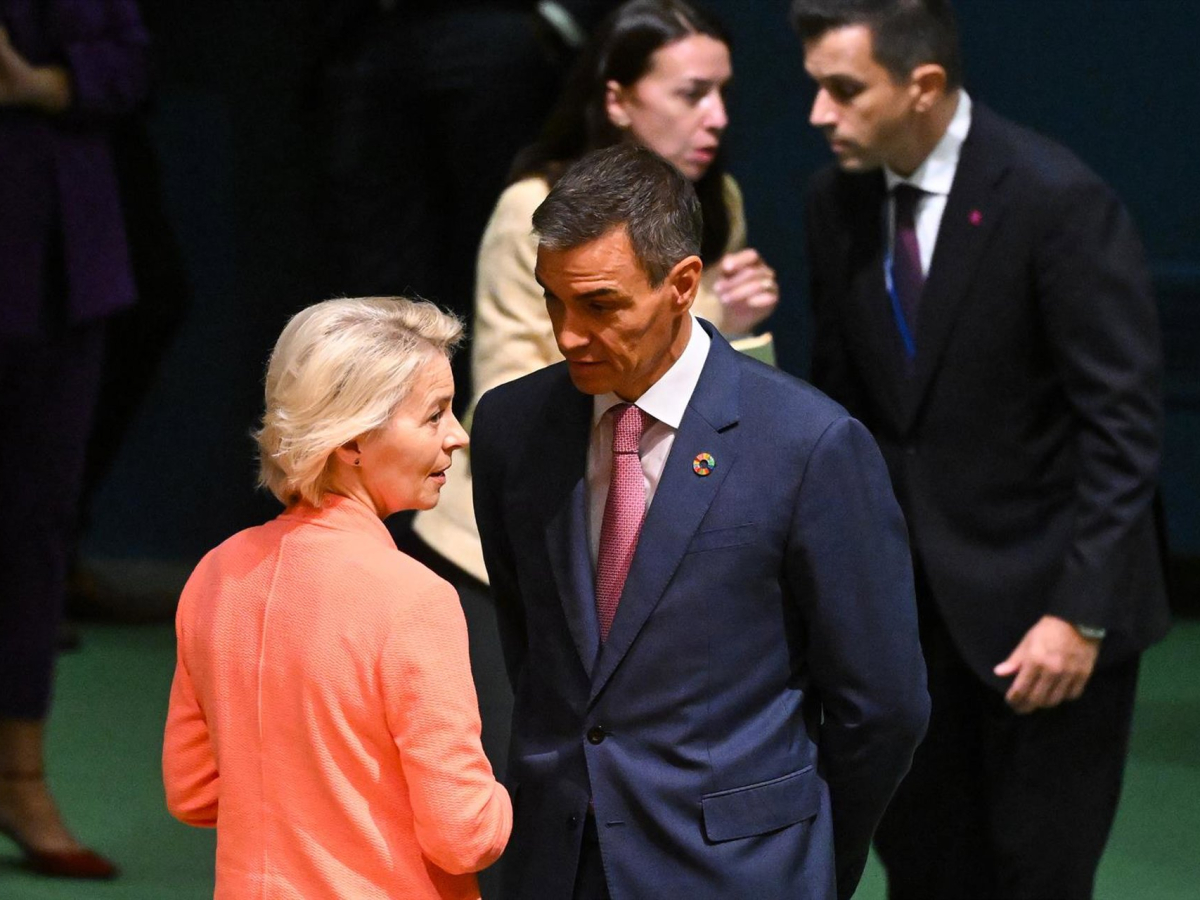
The President of the Government, Pedro Sánchez and the President of the European Commission, Ursula Von der Leyen. Photo: Lukas Coch/AAP/dpa
The President of the Government, Pedro Sánchez and the President of the European Commission, Ursula Von der Leyen. Photo: Lukas Coch/AAP/dpa -

If Spain were to push forward its proposal, Ceuta could benefit from a specific framework of financial and regulatory support, as well as certain measures aimed at compensating for the additional costs arising from its location. Its access to European instruments related to migration, cohesion, and economic development could also be strengthened. There is, moreover, a politically less ambitious alternative: to seek for Ceuta and Melilla treatment equivalent to that of the ODA without formally modifying the treaties. The Popular Party has already suggested in the past that both cities be recognized as "priority cohesion territories", with a specific regime adapted to their circumstances.

The issue, ultimately, is not only legal. The incorporation of Ceuta into Article 349 would set a European precedent. Other territories with particular geographical, economic, or border characteristics could claim similar treatment. Lampedusa, Corsica, or even other territories associated with member states could raise equivalent demands. Hence, Sánchez's proposal will require not only negotiation with the Commission and the European Parliament but, above all, a broad consensus among the Twenty-Seven. The president of the Parliament of the Canary Islands, Ana Oramas, even described a potential expansion of this regime at one point as a "tremendously complicated" process and more related to a political issue than a practical one.

More key points, information and questions with FREN

AI-GENERATED CONTENT

What is the parliamentary status of the proposal to consider Ceuta as an outermost region and what are the next steps for its processing in the European Union?

As of today, the “proposal to consider Ceuta as an outermost region (OMR)” is not articulated as a bill or legislative proposal in process, but rather as: (1) a political initiative already approved by the Congress in the form of a non-legislative motion (PNL), and (2) a commitment from the Government announced before the Plenary. At the EU level, there is no formal record that a procedure to amend the Treaties has been officially opened nor a specific file to add Ceuta to the list of OMRs.

1. Parliamentary status in Spain

The clearest reference at the parliamentary level is a non-legislative motion approved by the Plenary of the Congress on June 20, 2024. According to the official note from the Congress of Deputies, this PNL:

  • Urged the Government, among other points, to “promote, within the European Union, the adoption of the status of outermost region for the autonomous cities of Ceuta and Melilla”. See the press release from the Congress: note on the PNL about Sahara and Ceuta/Melilla.
  • It is a non-legislative initiative, meaning it does not modify rules nor initiate by itself a reform of the EU Treaties; it only sets a political position and asks the Executive to act before the European institutions.

Subsequently, on September 3, 2026, the Prime Minister, Pedro Sánchez, in his appearance before the Plenary of the Congress on the migratory crisis in Ceuta, announced that:

  • He will request in Brussels the designation of Ceuta as an outermost region, and that this requires reforming the Treaty provisions on OMRs, currently contained in Article 349 of the Treaty on the Functioning of the European Union (TFEU).
  • This announcement is detailed in the press of Demócrata: Demócrata article on the treaty reform.

In summary, the national “parliamentary status” is: PNL approved urging the Government to promote the OMR status for Ceuta (and Melilla), plus a political commitment from the Executive announced in parliamentary session. There is no record of a bill or other initiative with binding legislative procedure to directly modify EU law.

2. Has the request already been formally submitted to the EU?

From the information gathered, it follows that:

  • The Government has announced that it will ask Brussels for recognition of Ceuta as an outermost region and will promote the necessary Treaty reform for this.
  • However, the sources consulted focus on this announcement and explain the legal complexity of the procedure, without mentioning that a formal request has already been submitted to the European Council or the Council of the EU, nor that there is a decision by the Twenty-Seven to open a Treaty revision in this regard.
  • There is also no trace that a specific file to amend Article 349 TFEU to add Ceuta as an OMR has already been opened.

The proposal is therefore in a political momentum phase (mandate from Congress and Government announcement), but not in an advanced stage of legal processing within the EU institutional framework.

3. Next steps for its processing in the European Union

The incorporation of a new OMR is not decided by an ordinary regulation, but requires amending the primary law of the EU:

  • The status of outermost regions is set out in Article 349 TFEU, which lists the beneficiary territories. Adding a new territory implies modifying that list.
  • This must be done through a Treaty revision procedure (Article 48 of the Treaty on European Union, TEU), either by the ordinary route or by a simplified route applicable to certain parts of the TFEU.

In practical terms, the key steps would be:

  • Political initiative from Spain: the Spanish Government must formally raise the issue, either by proposing a Treaty revision to the European Council or by urging the Commission to submit a proposal.
  • Decision by the heads of State or Government (European Council): they must unanimously agree to open a Treaty revision to amend Article 349 TFEU.
  • Intervention of the European Parliament and the Commission: issuance of opinions or consent, depending on the chosen route.
  • Final agreement and ratification by all Member States: either through a new treaty or a revision decision which, in any case, must be approved according to internal constitutional procedures (national parliaments, and if applicable, referendums).

Only after this primary law reform is completed could Ceuta be legally recognized as an outermost region, with the package of financial, fiscal, and regulatory advantages associated with that status. Until then, the initiative remains in the realm of political pressure and diplomatic negotiation, both in Madrid and Brussels.

What are the powers and functions of the Prime Minister of Spain according to the Spanish Constitution?

The Prime Minister of Spain is the main figure of the executive power and his basic status is defined by the Spanish Constitution of 1978, especially in Articles 98 to 101 and in the provisions related to parliamentary confidence (Arts. 112 to 115). His powers can be grouped into four main blocks: political direction of the Government, relationship with the Cortes Generales, role in Government crises, and political responsibility.

1. Direction of the Government and political action

The Constitution establishes that the Government directs domestic and foreign policy, the civil and military administration, and the defense of the State, and exercises executive function and regulatory power. Within this collegiate body, the Prime Minister holds a position of primacy: he is responsible for directing the Government's action and coordinating the functions of the other members.

This directing function implies, in constitutional terms:

  • Setting the major orientations of government policy, both domestic and foreign.
  • Establishing priorities and coordinating ministers so that Government action is unitary and coherent.
  • Arbitrating and resolving conflicts that may arise between ministries.

Although the Constitution does not go into organizational details, this position implies that the Prime Minister has a decisive role in the creation, suppression, and structure of ministries, as well as in the political appointment of their heads, always with the formal intervention of the King.

2. Relationship with the King: appointment and dismissal of the Government

The Constitution configures the appointment of the Prime Minister as the result of a triangular relationship among the King, the Congress, and the candidate himself:

  • The King proposes a candidate for Prime Minister, after consulting with representatives designated by the parliamentary groups with representation.
  • That candidate undergoes an investiture session in the Congress, where he presents his program and requests the confidence of the Chamber.
  • If he obtains confidence (absolute majority in the first vote or simple majority in the second), the King formally appoints him Prime Minister.

Once appointed, the Prime Minister proposes to the King the appointment and dismissal of ministers. The Constitution does not impose material limits on whom to propose, so he politically controls the Government's composition, although the acts of appointment and dismissal are formalized by the King's decision.

3. Parliamentary confidence, dissolution, and election call

The Prime Minister is also the axis of the confidence relationship between the Executive and the Congress:

  • He can raise before the Congress a vote of confidence on his program or on a general policy statement. If he does not obtain the required majority, he must resign.
  • He is the main addressee of the motion of censure: if the Congress approves a constructive motion of censure, the Prime Minister ceases and the alternative candidate proposed in the motion is invested.

Additionally, the Prime Minister has a key competence regarding the political calendar: he can propose to the King the dissolution of the Congress, the Senate, or both Chambers and the consequent call for general elections. However, this power has constitutional limits (for example, it cannot be used when a motion of censure is underway).

4. Dismissal, responsibility, and continuity of the Government

The Constitution provides that the Government ceases due to:

  • Holding general elections.
  • Loss of parliamentary confidence (approved motion of censure or failed vote of confidence).
  • Resignation or death of the Prime Minister.

In all these cases, the resignation or dismissal is centered on the figure of the Prime Minister: when the Prime Minister ceases, the entire Government ceases. However, it remains in office in a caretaker capacity until the new Executive takes office, with limited powers, to guarantee the continuity of public authority.

5. Summary

In sum, according to the Spanish Constitution, the Prime Minister is the political head of the Executive, directs and coordinates government action, decides the composition of the Council of Ministers, is the liaison point between the Government and the King for acts of appointment and dismissal, and embodies the confidence relationship with the Congress, on which both his access to office and his permanence depend. His position makes the premiership the center of gravity of the Spanish political-constitutional system.

What specific legal requirements must be met for a territory to be formally recognized as an outermost region of the European Union according to Article 349 of the TFEU?

Article 349 of the Treaty on the Functioning of the European Union (TFEU) does not contain a closed “checklist” of requirements to become an outermost region (OMR), but it does set the key legal elements that must concur and the procedure for formal recognition. In practice, three levels combine: the nature of the territory, the structural circumstances affecting it, and the political decision of the Union.

1. Belonging to an EU Member State

First, only territories that are part of an EU Member State can be OMRs. Article 349 TFEU expressly refers to “the outermost regions of the Union,” and the current list (Azores, Madeira, Canary Islands, Guadeloupe, French Guiana, Martinique, Réunion, Mayotte, and Saint Martin) is entirely composed of territories that are integral parts of Portugal, Spain, or France.

This means that:

  • The territory must constitutionally belong to a Member State (a historical or cultural link is not enough).
  • Changing its status in the EU requires the initiative and support of that Member State.

2. Permanent circumstances contemplated in Article 349 TFEU

The core of Article 349 TFEU is the reference to a series of “permanent circumstances” that justify differentiated legal treatment. The provision requires that the territory presents, durably, a combination of factors such as:

  • Remoteness from the European continent.
  • Insularity (being islands or archipelagos, or an equivalent situation).
  • Reduced size (small territory and therefore with a limited internal market).
  • Difficult relief and climate, which increase the cost of infrastructure and economic activity.
  • Economic dependence on a limited number of products, making the local economy very vulnerable.

The TFEU does not require all these factors to be present to the same degree, but they must collectively configure a structurally unfavorable and permanent situation that hinders the homogeneous application of Union law on equal terms with the rest of the territory of the Member States.

3. Need for specific adaptation measures

Another implicit material requirement is that these circumstances make it necessary to adopt “specific measures” to adapt the application of the Treaties and derived law. Article 349 allows, in particular, adjustments in:

  • Customs and tax policy.
  • Agricultural and fisheries policies.
  • Conditions for the supply of goods and services.
  • State aid regime.
  • Access to structural funds and Union programs.

To justify the OMR status, it must be demonstrated that without these adaptations the territory would be in a situation of serious and structural disadvantage compared to the rest of the Union.

4. Formal procedure for recognition or status change

From a strictly legal point of view, formal recognition as an OMR or a change of status of a territory is articulated through a decision of the European Council, according to Article 349 TFEU itself:

  • The Member State to which the territory belongs submits the request.
  • The European Commission issues a proposal, assessing whether the circumstances of Article 349 concur.
  • The European Parliament is consulted.
  • The European Council decides unanimously to modify or specify the status, usually by a decision updating the list of OMRs in the Treaties or relevant derived law.

Unanimity in the European Council constitutes, in practice, an essential legal-political requirement: no Member State can be forced to assume a new OMR within its territory nor accept the budgetary and regulatory consequences without its consent.

5. Absence of closed numerical criteria

Unlike other EU regimes, Article 349 TFEU does not set quantitative thresholds (minimum distance, maximum size, specific GDP per capita, etc.). The assessment is case-by-case and based on:

  • The geographical and socioeconomic characteristics of the territory.
  • Its constitutional integration in a Member State.
  • The objective need for an adapted and proportionate regime.

In summary, for a territory to be formally recognized as an outermost region, it is necessary that it belongs to a Member State, permanently suffers the structural disadvantages described in Article 349 TFEU, and that, after the initiative of the State and the Commission's proposal, the European Council unanimously agrees to confer that status through the corresponding decisions.

Play

Test your knowledge with FREN!

How much do you know about this topic? Answer the following 3 questions.

Which article of the Treaty on the Functioning of the European Union regulates the figure of the outermost regions?

Question 1 of 3

What is one of the main obstacles for Ceuta to be recognized as an outermost region?

Question 2 of 3

Which body must approve the inclusion of a territory as an outermost region following the proposal of the European Commission?

Question 3 of 3

Hola, soy Fren. ¿Cómo te ayudo?