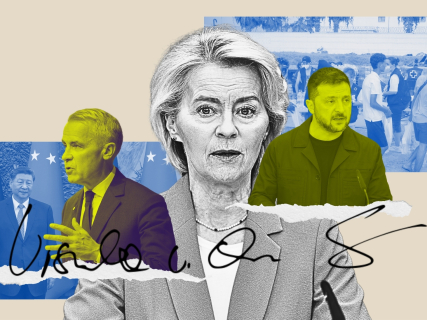

In two weeks, the president of the European Commission, Ursula von der Leyen, faces one of the dates marked on all calendars in Brussels. The community executive has been announcing for days through all its channels, even with posters installed in its buildings, the countdown to the moment when the leader will take the floor. It will be before the Plenary of the European Parliament, in the known as State of the Union debate, which in the world of Brussels abbreviations has been baptized as SOTEU.
It is a key date, as the president will lay the foundations for what will be the action of the community executive during the last political course of the legislature. Therefore, in the days leading up to it, discussions about which issues will be addressed and which will be left out of the speech flood a good part of the conversations and European front pages. In fact, the College of Commissioners held an informal retreat last Friday in which the heads of the different portfolios conveyed to the president their main concerns and priorities.
Everything seems to indicate that, throughout the more than two hours that the debate is expected to last, issues such as strengthening borders in the face of migration crises like that of Ceuta, the European response to wildfires, or the much-announced ban on minors' access to social networks will be addressed. These issues are joined by other files that have been occupying the community agenda for months, such as European security and defense, industrial competitiveness, the energy transition, or the need to reduce certain strategic dependencies on third countries.
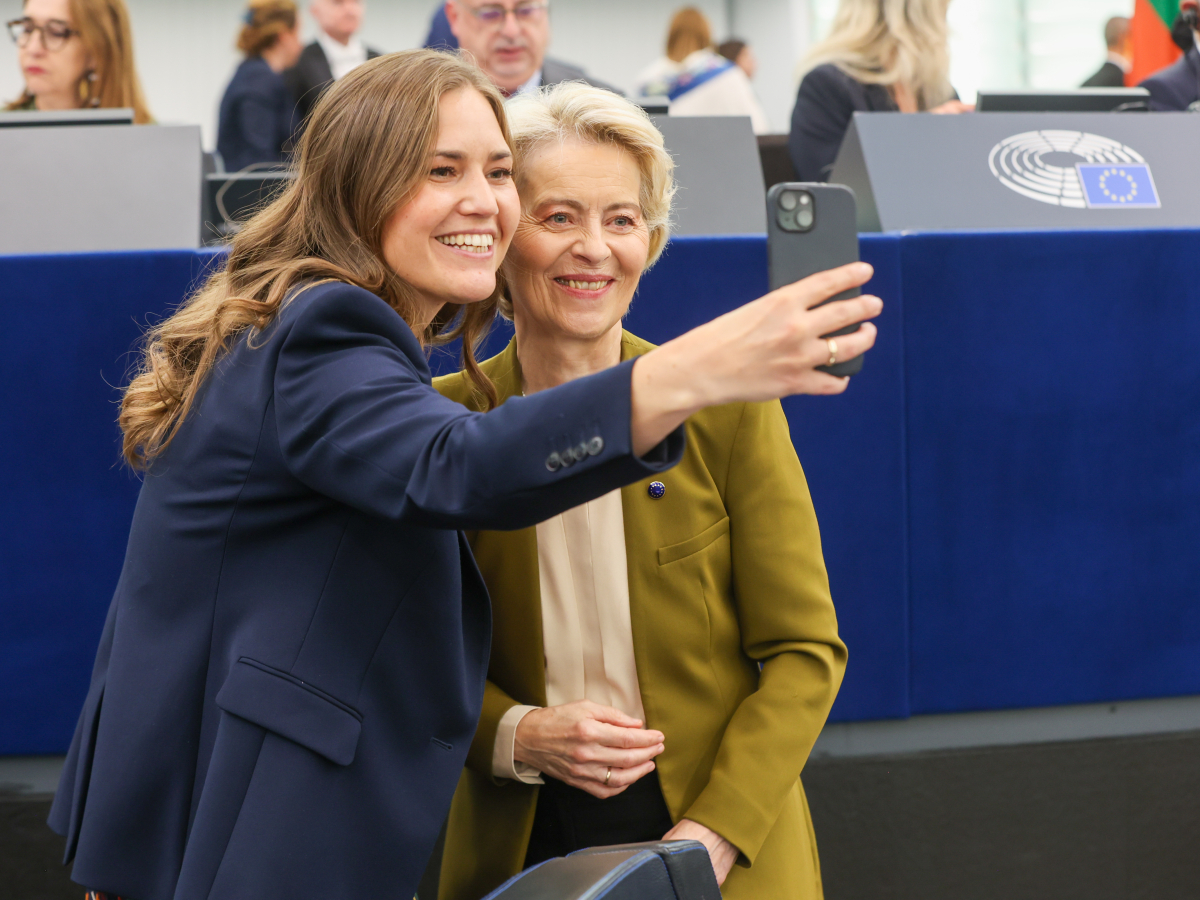
An agenda that also looks to the next generation
However, those who know the community framework firsthand warn that up until the last hours before Von der Leyen addresses the podium, there is room to introduce modifications. The speech will not only be a declaration of political intentions but also a signal about which legislative and regulatory files will concentrate the Commission's efforts in the coming months.
There is a youth that, like journalists, lobbyists, consultants, and officials, also awaits with expectation the words of the German leader. They are aware that they will have to take charge during the next decade of the decisions that are now agreed upon in Brussels. The policies designed in terms of competitiveness, housing, employment, energy transition, digitalization, or defense will have a direct impact on a generation that is now beginning to fully enter the labor market and assume economic and social responsibilities. For this reason, Demócrata wanted to take the pulse of a group of young European professionals who, during the last week of summer, gathered at the "European Summer Courses," organized by Equipo Europa, to try to respond to each of the problems facing the European Union.

The young María Vallejo is one of the people who was behind the organization of the event, which brought together nearly three hundred young people around the table of challenges that will likely be addressed in the German leader's speech. "Everything points to it being about security and defense, that is what marks the agenda right now. However, I believe she will bet on a broader concept of European resilience," she comments, alluding to the fact that it is "something that particularly interests us young people, because we are the generation that will have to sustain those decisions."
The reference to European resilience is not minor. In recent years, the Union has progressively expanded the concept of security, moving from a vision primarily focused on territorial defense to one that also incorporates supply chains, energy, critical infrastructure, cybersecurity, technology, or industrial capacity. For young Europeans, this transformation poses an additional question: how to finance and sustain this new model without transferring all its costs to the generations that are now beginning their professional journey.
Competitiveness without abandoning the green transition
Your generation also focuses on achieving a balance between "innovation and investment without giving up our climate goals". "The economic dependence on China and the future of the Green Deal could be among the main topics of your speech. It is one of the great challenges of the moment," adds Santiago Slullitel, another of the young people who is part of the organization.
The dilemma they point to connects directly with one of the main regulatory discussions facing Brussels. The Commission must ensure that the climate transition continues to advance while responding to the pressure from the European industry to reduce costs, facilitate investments, and compete with economies like the United States or China. Competitiveness and decarbonization have thus become two objectives that, far from being addressed separately, must coexist in a large part of the decisions made by the community Executive in the coming years.
Vallejo expects a response from the Commission during the speech about "how it plans to make Europe an attractive destination for investment". In his opinion, the "opinion that others have of Europe is not always favorable," referring to the negative result of the last referendum on Iceland's accession to the EU. "The challenge is to respond to all this without neglecting the European values that shape our identity and who we are," he asserts. A reflection that places another of the underlying debates for the next political course: how to strengthen European strategic autonomy without the Union abandoning the framework of values on which it has built its political and economic project.
Values, solidarity, and a more cohesive Union
Regarding the values that have characterized the history of Europe, another of the attendees at the forum, Mario Sans, also pays attention. "I hope that Von der Leyen knows how to articulate a speech aligned with the fundamental values that built Europe, from the institutional respect for human rights," he explains. In addition, he points to the Parliamentary Groups, asking them to reflect on "the lack of solidarity that the member states showed with the Spanish Administration during the Ceuta crisis". "It has portrayed us before the international community as a weak and fragmented Union, which only benefits our detractors," he summarizes.

Featured story
Sánchez forces a reform of European treaties to turn Ceuta into an outermost region
4 minutes
Ceuta will serve to open up the issues that will likely have the most weight on the European agenda in the coming months. Brussels must devise how to respond in a coordinated manner to crises that directly affect its external borders. Migration management, border protection, and solidarity mechanisms among member states will be some of the issues that will confront the deployment of the Migration and Asylum Pact.
For these young people, the discussion cannot be limited to the security dimension. The European response must be accompanied by territorial cohesion, economic capacity, and a common policy that allows member states to face crises without the response depending exclusively on their national capacities.
Housing and employment, the other major front
All of them also expect the Executive to delve into "housing strategies for young people". A problem that, as they point out, "affects a large part of the countries on the continent." Measures such as the Next Generation EU funds have partially alleviated the consequences of crises that continue to hit their pockets and, ultimately, their generations.
Housing has thus become one of the main concerns of a generation that, despite having higher levels of education and mobility than previous ones, finds it difficult to access housing and establish a stable economic trajectory. The problem affects different member states unevenly, but shares common elements: the increase in prices, the scarcity of supply, the pressure on urban markets, and the difficulty of reconciling access to housing with the early years of entering the labor market.
The new measures they demand consider that they should be accompanied by "employment and economic reactivation plans that include decent wages in the eurozone", so that sufficient economic autonomy is guaranteed "to also contribute to the development of our countries."
Featured story
Maria Luís Albuquerque: "In bank mergers there is no room for political interference"
9 minutes
Ultimately, the message that these young people convey to Von der Leyen combines a large part of the major debates that will define the next community course: security, defense, competitiveness, climate transition, housing, employment, migration, investment, and European values.
The SOTEU will go beyond a standard institutional speech. It will be the opportunity for the president of the Commission to set priorities, mark the political calendar, and anticipate which files will concentrate Brussels' regulatory capacity in the coming months. For those who are now beginning to build their future in Europe, it will also be a first response to a much broader question: what European Union will they receive when it is their turn to take over.