The United States expands sanctions against Cuba at a critical moment for Havana

The Administration of Donald Trump incorporates three leaders of the ICAP and nine Cuban state entities to the OFAC blacklist. The measures reach mining, metallurgy, foreign trade, and construction and raise the risk for banks and foreign companies.

6 minutes

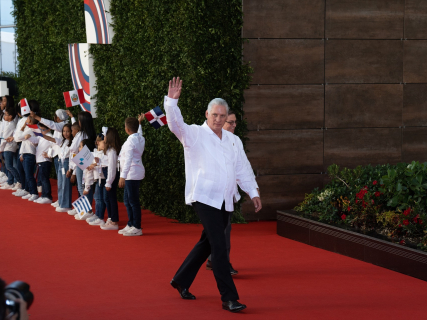
EuropaPress 5081003 presidente cuba miguel diaz canel llegada sesion plenaria xxviii cumbre

EuropaPress 5081003 presidente cuba miguel diaz canel llegada sesion plenaria xxviii cumbre

Add DEMÓCRATA to Google

Ask FREN

Published

Last updated

6 minutes

Most read

United States has imposed a new round of economic sanctions against Cuba that expands the offensive of the Administration of Donald Trump on the political and business structure of the island. The measures affect three officials of the Cuban Institute of Friendship with the Peoples (ICAP) and nine state entities linked to mining, metals, construction, and foreign trade.

The State Department announced the designations on August 20, and the Office of Foreign Assets Control of the Department of the Treasury, known as OFAC, immediately incorporated the affected persons and entities into its list of specially designated nationals.

The package of measures consists of a selective expansion of the U.S. sanctions regime that blocks the possible assets of the affected Cubans under U.S. jurisdiction, prohibits certain operations, and, above all, warns banks and companies from other countries of the risk of continuing to do business with them.

Who do the new sanctions affect?

The personal sanctions target three members of the ICAP leadership, a state institution dedicated to Cuba's relations with foreign organizations and movements:

  • Fernando González Llort, president of the ICAP.
  • Noemí Ramona Rabaza Fernández, first vice president.
  • Leima Martínez Freire, head of the North America area.

The Secretary of State, Marco Rubio, accuses the ICAP of using educational and cultural exchanges as a cover to maintain a network of political influence in the United States. Washington also links these activities to the events organized for the centenary of Fidel Castro's birth.

These claims are part of the political justification offered by the U.S. government. Havana rejects the accusations and defends the ICAP as an organization of solidarity and international cooperation.

The nine state entities included in the OFAC update are:

  • Cuban Ministry of Construction (MICONS).
  • Acinox Comercial, dedicated to the iron and steel industry.
  • Agency for Contracting Commercial Representations (ACOREC).
  • Coratur, linked to supply and wholesale trade.
  • Transimport, dedicated to the import and marketing of transport equipment and parts.
  • Consumimport, state-owned wholesale trading company.
  • Commander Ernesto Che Guevara Nickel Company, located in Moa.
  • Metalcuba, importer and marketer of metals.
  • Geominero Salinero Business Group (Geominsal).

The selection of these entities shows that Washington intends to act on sectors capable of providing foreign currency to the Cuban state and on companies that are involved in its commercial relations with abroad. Nickel, metals, construction, and imports constitute activities that are especially sensitive for an economy in need of financing and supplies.

What do the sanctions mean for Cuba?

The inclusion on the OFAC list has several consequences. All assets or interests of the sanctioned persons and entities that are located in the United States or under the control of U.S. citizens and companies are blocked.

Individuals and companies subject to U.S. jurisdiction are also prohibited from conducting transactions with the sanctioned parties, unless there is a license or an applicable exception. The prohibition extends to the delivery and receipt of funds, goods, and services.

The restrictions may also extend to companies that are not expressly listed when one or more blocked persons own, directly or indirectly, at least 50% of their ownership.

Furthermore, the Executive Order 14404, signed by Trump on May 1, 2026, allows for sanctions against foreign banks that facilitate significant operations for blocked persons or entities. Among the possible measures is limiting their access to correspondent accounts in the United States or blocking their assets under U.S. jurisdiction.

This threat of secondary sanctions is one of the most important parts of the package, because it can lead banks, insurers, shipping companies, and international suppliers to cancel operations with Cuba even if they are not American.

How could it affect Spanish companies based in Cuba?

The U.S. sanctions do not automatically make any operation with Cuba illegal for a Spanish company. However, a company with activity in the United States, payments in dollars, international financing, or relationships with U.S. banks must check if its Cuban counterpart appears on the OFAC list or is controlled by a sanctioned entity.

In practice, many financial entities may choose to reject payments related to Cuba to avoid investigations, fines, or restrictions in the U.S. market. This phenomenon, known as preventive risk reduction, can increase the cost of transfers, delay business operations, and make it difficult to obtain insurance or transportation.

The actual scope will depend on the international exposure of each Cuban entity. A state-owned company without assets in the United States may suffer a limited direct impact, but the loss of suppliers, customers, financing, or foreign banking services may be much more relevant than the asset blockade itself.

The case of the Ministry of Construction is especially significant due to its relationships with public projects, infrastructure, and international companies. The OFAC has granted foreign individuals and entities until September 19, 2026 to close ordinary operations with the MICONS or with companies in which it has at least a 50% stake.

This period allows for the completion of existing relationships but does not authorize new prohibited operations. It also does not modify the restrictions already applied to U.S. citizens and companies.

And what happens with Cuba?

The new measures arrive at a particularly delicate moment for Cuba. The island is going through an economic and energy crisis marked by a lack of fuel, the deterioration of power plants, a shortage of foreign currency, and difficulties in importing food, medicine, and spare parts.

During July and August, there were several collapses of the national electrical system. The blackouts have repeatedly affected homes, businesses, and public services, in a country of approximately ten million inhabitants whose thermal generation park has decades of aging and lack of investment.

The crisis cannot be explained by a single cause either. The Cuban government attributes a large part of the situation to the embargo, to financial sanctions and to restrictions on fuel supply. Washington blames the state economic model, the lack of reforms, and the management of the Cuban authorities.

Before the current tightening, the Cuban government itself had already acknowledged that the economy had lost more than 10% of its size since 2019. Agriculture, industry, mining, and energy production are among the most affected activities.

Tourism, one of the main sources of foreign currency for the island, is also going through a critical situation. Almost three-quarters of hotels were closed at the end of July, according to data from the Cuban authorities, while the lack of fuel caused flight cancellations and transportation problems.

Cuba, between a rock and a hard place, opens up to international trade

Havana has begun to introduce changes to try to respond to the crisis. The Cuban National Assembly approved a package of 176 measures that includes greater participation of private companies, facilities for the use of state lands, and authorizations to import fuel and medicines.

The government has also allowed the entry of private operators in certain tourist activities and has authorized its first initiative with foreign investment to import and sell fuel. About 200 Cuban companies received permission to participate in its wholesale distribution.

However, Miguel Díaz-Canel has ruled out a general privatization of the economy and keeps sectors that it considers strategic, such as healthcare, science, and certain public services, out of that process.

The new sanctions may hinder this attempt at opening up. Although Washington claims it wants to strengthen the private sector against the state, the inclusion of import, transport, and labor contracting companies on the blacklist may reduce the number of foreign partners willing to operate on the island.

Cuba's response to the sanctions

The Cuban Minister of Foreign Affairs, Bruno Rodríguez, has accused the United States of acting with the "deliberate purpose" of damaging the economy and limiting the state's ability to provide basic services. According to the chancellor, the measures will also hinder the purchases of food, medicines, and medical supplies made by Cuban private companies.

Díaz-Canel, for his part, has defended the sanctioned individuals and institutions and has assured that their only "crime" is working for Cuba. "We will know how to resist and overcome," affirmed the Cuban president after the update from OFAC was announced.

The sanctions do not have a general expiration date. They will remain in effect as long as the United States does not remove individuals and entities from the list or modify its policy towards the island. In the short term, the main effect will be to see to what extent banks, suppliers, and international partners decide to cut their relations with the newly sanctioned entities.

More key points, information and questions with FREN

AI-GENERATED CONTENT

What is the current status of the processing of the package of 176 measures approved by the National Assembly of Cuba and what are the next steps for its implementation?

The so-called package of 176 measures you refer to corresponds to the “Economic and Social Program for 2026”, a broad plan of economic reforms promoted by the Government of Miguel Díaz‑Canel. According to information available up to August 2026, the program has already been endorsed by the Central Committee/Politburo of the Communist Party and approved by the National Assembly of People's Power, but its implementation is in an initial and gradual phase.

Current status of the processing

Based on information gathered by the newspaper Demócrata:

  • President Díaz‑Canel first announced a package of structural reforms under the label “Economic and Social Program for 2026”, inspired by the models of China and Vietnam, with the objective of partially liberalizing the economy and cushioning the impact of U.S. sanctions (Demócrata, 06-13-2026).
  • At that time, it was indicated that the measures still needed to receive approval from the Politburo and the National Assembly and that, after that endorsement, a “informative and explanatory process” aimed at the public would be activated.
  • Shortly after, the plan was specified as a package of 176 measures which, according to Demócrata, 06-19-2026, was endorsed by the Communist Party on the 17th and approved by the National Assembly of People's Power on the 18th. That piece already describes it as a program formally adopted by the island's highest legislative body.

Therefore, on the political-institutional level, the main processing is completed: the package is approved as the official economic roadmap for 2026 and subsequent years. What remains open is not its approval, but the normative, administrative, and practical execution of the 176 measures.

What the 176 measures cover

The consulted texts do not offer a detailed list, but do provide some key axes of the package:

  • Reordering of the economic model around six major axes, including tourism, agriculture, foreign trade, and real estate development (Demócrata, 06-19-2026).
  • Opening to the private sector and the possibility of transforming state-owned companies into commercial companies with private participation.
  • Partial liberalization of the financial system, including the entry of private banks and greater scope to operate with foreign currency.
  • Greater prominence of new actors in tourism and progressive elimination of the state monopoly on imports and exports (Demócrata, 06-12-2026).
  • Reform of the subsidy system and gradual dismantling of the ration book, compensated by more targeted social protection schemes.
  • Reduction and reorganization of ministries (from 27 to 21) to simplify the administrative structure.
Next steps for implementation

Based on what has been published, several blocks of “next steps” anticipated by the Cuban leadership itself can be identified:

  • Normative and regulatory deployment: many of the 176 measures require decrees, resolutions, and changes in sectoral regulations (state companies, banking, tourism, foreign trade, subsidies, labor market, etc.). A piece-by-piece schedule is not yet detailed, but the plan is presented as a multi-year structural reform.
  • “Informative and explanatory process” for the population: even before parliamentary approval, Díaz‑Canel announced a public education phase to explain the content and scope of the program (Demócrata, 06-13-2026). This process is key, especially in the face of sensitive changes such as regulated price increases or the reduction of generalized subsidies.
  • Institutional reorganization: the reduction in the number of ministries and the new distribution of administrative competencies is a prerequisite for certain measures (for example, greater business autonomy or opening to foreign capital) to be applied in a coordinated manner.
  • Gradual application in priority sectors: the Cuban press itself and analyses collected by Demócrata emphasize that the immediate focus is on tourism, energy, foreign trade, and domestic production, heavily affected by the fuel crisis and sanctions. It is reasonable to expect that the first practical provisions of the package will concentrate on these areas.
  • Interaction with the international context: the package arises amid a tightening of U.S. sanctions. Several recent reports on Cuba at the United Nations and the EU highlight that the economic viability of the plan will also depend on whether that coercive external environment is maintained, worsened, or relaxed.
Limitations of the available information

None of the sources consulted to date detail a traffic light system for execution measure by measure nor an official implementation schedule for the 176 actions. The picture they offer is of a program already politically approved, which has begun its normative development and public explanation phase, but whose concrete deployment will necessarily be staggered and dependent both on internal administrative capacity and the international environment.

What are the legal competencies and powers of the president of the Cuban Institute of Friendship with the Peoples (ICAP) according to Cuban legislation?

Based on research conducted in databases and press accessible from Spain, no Cuban normative text (decree, law, statutes published in the Official Gazette, internal regulations, etc.) has been found that explicitly and verifiably details the legal competencies and powers of the president of the Cuban Institute of Friendship with the Peoples (ICAP). The references found to ICAP are political or geopolitical in nature (for example, in news about U.S. sanctions or the characterization of ICAP as an influence network), but do not include the internal Cuban legal framework nor the content of its statutes.

This has an important methodological consequence: without access to the ICAP's founding text or its current statutes, it is not possible to rigorously enumerate, article by article, the president's functions, the method of appointment, powers of management, signature, representation or internal supervision, nor what powers are delegated by the Council of Ministers, the Communist Party of Cuba, or the governing bodies of the Institute itself.

What can be cautiously inferred

Although we do not have the specific articles, based on the nature of ICAP as a Cuban state entity dedicated to relations of solidarity and friendship with other peoples, it can be assumed — in a generic and non-binding way — that the president:

  • Holds the institutional representation of ICAP before other Cuban State bodies, parties, and mass organizations, as well as before foreign organizations and international solidarity movements.
  • Directs the activity and political line of the organization, in coordination with the leadership of the State and the Communist Party of Cuba, setting priorities in matters of friendship relations, international campaigns, solidarity brigades, etc.
  • Supervises the internal structure (directorates, departments, delegations) and, presumably, proposes or validates appointments at the Institute's management levels, according to mechanisms established by its internal rules and the Cuban administrative system.
  • Acts as the principal signatory of agreements, declarations, cooperation programs, and collaboration agreements of ICAP with associations, parties, unions, or other foreign actors, always within the margins set by the Cuban Government.
  • Reports to higher political bodies on the fulfillment of ICAP's annual plans, the use of its resources, and the results of its influence and solidarity activities.

However, all the above is a functional reconstruction based on how analogous organizations are structured in other countries and the logic of the Cuban system itself; it does not equate to citing Cuban legislation nor replaces direct consultation of official texts.

Where to find the strict legal answer

To know exactly the legal competencies and powers of the ICAP president according to Cuban law, it would be necessary to access:

  • The founding norm of the Institute (probably a decree or decree-law published in the Official Gazette of the Republic of Cuba), where the legal nature of the organization, its objectives, and governing bodies are usually defined.
  • The statutes or other internal regulations of ICAP, which normally detail:
    • the composition of governing bodies;
    • the specific functions of the presidency;
    • the appointment and dismissal mechanisms;
    • the regime of delegation of signature and representation;
    • hierarchical relations with the rest of the Cuban administration.
  • Possible subsequent reforms (new decrees, resolutions, or agreements of the Cuban Council of Ministers) that have modified the structure and competencies of ICAP or its presidency.

The most reliable way to obtain these documents is to consult directly:

  • The search engine of the Official Gazette of the Republic of Cuba, filtering by “Instituto Cubano de Amistad con los Pueblos” or “ICAP”.
  • The institutional website of ICAP itself, where, if it meets usual standards, it could host its legal basis, statutes, or at least references to the founding norm.
  • Academic compilations or manuals of Cuban public law on administrative organization, which sometimes reproduce or synthesize the regulations of the main state bodies.

Since the sources consulted in this research do not include those texts nor offer a reliable summary of them, any attempt to detail precisely the legal powers of the ICAP presidency (for example, stating that it can issue certain types of resolutions, approve binding plans, or intervene in specific matters) would be speculative and legally imprecise. For academic or professional work, it is essential to directly verify the primary Cuban regulations before concluding.

In summary, it is known that ICAP is considered by various international actors as a relevant body of the Cuban state apparatus and that its president occupies a central position in that structure; but the exact description of its legal competencies and powers can only be made with support from the Official Gazette and the Institute's internal statutes, which are not found in the databases used here.

What requirements must a foreign company meet to legally operate with Cuban entities sanctioned by the United States according to current international regulations?

There is no single “international permit” that authorizes a foreign company to operate with Cuban entities sanctioned by the United States; the real framework is a mosaic of U.S. sanctions (OFAC), internal regulations of other countries (such as the EU Blocking Statute), and United Nations recommendations. Based on the information available in the cited sources (Demócrata, BOE, official EU website, union and government statements), a series of minimum requirements and precautions can be extracted to reduce legal risk.

1. Precise identification of the Cuban counterparty

The first practical requirement is to determine whether the Cuban entity is formally sanctioned by the United States or included in already designated structures:

  • Recent sanctions are focusing on the military conglomerate GAESA and its subsidiaries, as well as mining, energy, financial, and defense companies (for example, the mining company La Victoria, Moa Nickel, the International Financial Bank, or logistics and steel companies), according to several news reports from Demócrata.
  • The Office of Foreign Assets Control (OFAC) also applies the 50% control criterion: in other sanctions (Iran, Venezuela) it is specified that assets or companies controlled 50% or more by sanctioned subjects are also affected, and third parties providing “certain services” are warned of risk (example in Iran/Venezuela). Although the text refers to other countries, it illustrates the general logic of sanction lists.

Therefore, a starting requirement: check if the Cuban entity appears on OFAC lists or is controlled by already designated structures (e.g., GAESA, ministries, armed forces).

2. Fit the operation within OFAC licensing regimes

In some cases, OFAC itself opens operational windows through licenses:

  • For Cuba, a “favorable” policy of granting specific licenses for the resale of Venezuelan oil has been announced, provided that operations benefit “the Cuban people” and the private sector and do not involve or benefit Cuban armed forces, intelligence services, or state entities (U.S. Treasury guide).
  • The Treasury itself clarifies that those applying for these licenses do not need to be incorporated in U.S. territory, implying that foreign companies can request them if their operation falls within the authorizable category.

From this it follows that if the operation directly or indirectly involves Cuban entities under sanction or strategic sectors (energy, mining, defense, security), the foreign company will normally have to obtain an OFAC license or demonstrate that it clearly falls within an exempt category (for example, certain humanitarian purposes or support for the private sector not linked to the State).

3. Risk of secondary sanctions and Executive Order 14404

Demócrata sources indicate that Executive Order 14404 expands Washington's scope of action against companies operating with sectors considered strategic for the Cuban Government, even allowing freezing assets in U.S. territory of foreign companies that collaborate with activities in energy, mining, defense, or security on the island (Spanish companies leave Cuba).

Additionally, in other sanction regimes (Iran) OFAC explicitly refers to the possibility of secondary sanctions on banks or companies from third countries that provide certain services to sanctioned parties. Although the cited texts do not formulate this only for Cuba, they show that:

  • The foreign company must assume that there is a risk of sanction even without the classic “U.S. nexus” if it is considered to significantly assist sanctioned subjects.
  • The risk level is especially high when the counterparty belongs to the Cuban military-state network.
4. International and European regulations: Blocking Statute

From the international perspective, the United Nations and numerous actors (including CCOO in Spain) have been qualifying the blockade and U.S. unilateral lists as measures with extraterritorial effect contrary to international law, and call for their lifting (CCOO note).

In the European Union, Regulation (EC) No. 2271/1996, known as the Blocking Statute, has been used to protect European operators against the extraterritorial application of third-country sanctions. The Spanish Government has recently requested the Commission to activate it against U.S. sanctions in other contexts, emphasizing that it allows “nullifying third-country rules that affect EU interests” (Moncloa activity).

This means that, for EU companies, there is also a framework that discourages automatically submitting to U.S. extraterritorial sanctions; but in practice they must balance that protection with the real risk of economic retaliation from the United States.

5. Minimum operational compliance requirements

In light of all the above, a foreign company intending to operate with sanctioned or high-risk Cuban entities should, at a minimum:

  • Conduct enhanced due diligence on the counterparty (ownership, control, links to GAESA, ministries or armed forces, inclusion in OFAC lists).
  • Analyze whether the operation fits within any general license or specific licensing policy of the U.S. Treasury for Cuba (such as those related to Venezuelan oil for the private sector), and apply for the license if appropriate.
  • Evaluate the company's exposure to the U.S. financial system and market (assets, use of dollars, correspondent banks, subsidiaries), since Executive Order 14404 allows freezing third-party assets.
  • Check compliance with the regulations of its own State (for example, Blocking Statute in the EU) and possible conflicts between obeying OFAC or its domestic law.
  • Include contractual clauses on sanctions and termination that allow cutting the relationship if the sanction regime tightens.
  • Seek specialized legal advice on international sanctions before closing any significant volume operation.

In summary, the legality of these operations is not defined by a single “international requirement”, but by the degree of simultaneous compliance with U.S. regulations, the company's State regulations, and general international law obligations, in a highly changing political environment.

Play

Test your knowledge with FREN!

How much do you know about this topic? Answer the following 3 questions.

Which sectors are mainly affected by the new United States sanctions against Cuba announced in August 2026?

Question 1 of 3

What are some of the consequences for a Cuban entity sanctioned by the OFAC?

Question 2 of 3

Until what date has the OFAC granted foreign persons and entities to close ordinary operations with the Cuban Ministry of Construction (MICONS)?

Question 3 of 3

Hola, soy Fren. ¿Cómo te ayudo?