Luis Planas: "It is worth closing the MFF agreement in December"

The Minister of Agriculture, Fisheries and Food defends in an interview with Demócrata his intention to approve the draft law on Family Agriculture, although he states that a good part of its provisions is already in operation through other legislative initiatives.

9 minutes

 33A7496 2

33A7496 2

Add DEMÓCRATA to Google

Ask FREN

Published

9 minutes

Most read

The diplomatic teams begin to leave the room. "There is an agreement," one says to another. The ministers of the Twenty-Seven have reached a pact to allow the Union to allocate funds from its budget for the renewal of the fishing fleet. "A very good agreement," clarifies a voice present during the meetings to another. The negotiations in Brussels are long. The day before, they had extended into the night. The satisfaction of the completed work now reigns in the delegations.

The Council of Agriculture and Fisheries currently has some of the files on the table that will mark the political future of the Union. The focus is constantly on "the mother of all negotiations," as some define it in the community capital. It is about the European budget for the next seven years, known as the Multiannual Financial Framework. Through it, the European Commission plans to reform the Common Agricultural Policy, as it has been conceived until now.

In the midst of all these discussions, and with an eye beyond Brussels, the Minister of Agriculture, Fisheries and Food, Luis Planas, speaks to DEMÓCRATA. In the conversation, he expresses optimism about the possibility that the leaders of the bloc will reach an agreement before the end of the year on the MFF. "There is a conjunction of circumstances in which, honestly, I believe it is worth trying to conclude the agreement here, in the month of December," he summarizes.

Elio Germani | DEMÓCRATA
Elio Germani | DEMÓCRATA -

Question. Spain's entry into the European Union also meant the implementation of the Common Agricultural Policy (CAP) in our country. Now, the European Commission intends to redefine this policy in the new Multiannual Financial Framework.

Answer: The president of the Government already indicated, at the moment when the Commission presented this draft of the European budget for 2028-2034, that Spain did not like it because it thought that the ambition had to be greater. Considering the challenges we have at this moment, a more limited model has been chosen, where a good part of the investments are basically located outside the European framework.

The problem is that, from now until December, an agreement will have to be reached so that revenues and expenses align, which is not at all simple. And it is not because, first, unanimity is needed in the European Council to reach an agreement. But unanimity is also needed to reject the Commission's proposal.

Q: You said in a parliamentary committee that your Government would not veto the MFF. Is it not contradictory that Spain does not want to block the Commission's budgets and, at the same time, defends a CAP that, with the new structure, loses part of its identity?

A: The European Parliament, last year, made a bet. In November, it was about to carry out a vote to reject the Commission's proposal.

Finally, the Commission made an opening in terms of regional policy and Common Agricultural Policy and, in this way, avoided a rejection that, in reality, would not have had any more effect. But it would have been a very strong signal about the budget.

We are here. Next year there are elections in Spain, France, Italy, Poland, and also again in Germany. There is a conjunction of circumstances in which, honestly, I believe and think —and this is also the thought of the one leading the process, President António Costa— that it is worth trying to conclude the agreement here, in the month of December.
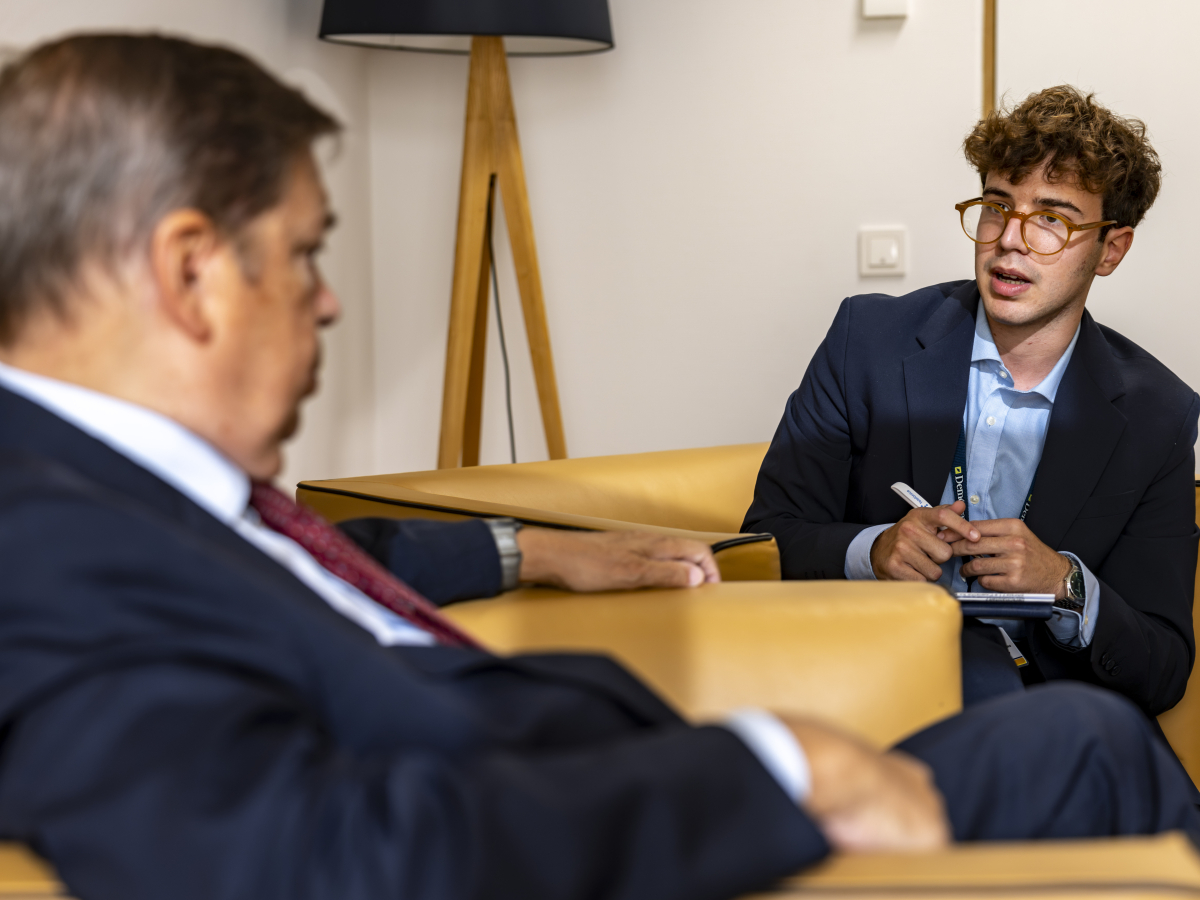
Elio Germani | DEMOCRAT
Elio Germani | DEMOCRAT -

Q: What do you expect from the conversations that will begin to take place more in-depth ahead of the European Council meetings in October, November, and December?

A: It is a difficult discussion, to say the least. Let’s remember July 2020: it took almost six days of discussion to reach the agreement. Now a first in-depth discussion will begin. I hope the outcome is favorable to the interests of Europe, but also, obviously, to those of Spain. And, in my case, as Minister of Agriculture, Fisheries, and Food, that both the Common Agricultural Policy and the fisheries policy are adequately funded.

Q: Let’s talk about the role of the European Parliament. Among the recent votes affecting your portfolio is the approval of new genomic techniques (NGT). The socialist group requested a bit more time to review the proposal, when in 2023 it was one of its priorities during the Spanish Presidency of the Council.

A: They are one of the great responses we have to adapt to climate change in food production. Europe discovered this summer what drought is. In Spain and Portugal, we have great experience on how to deal with it.

For me, there are three major areas in which we have a response. The first is the modernization of irrigation and the good management of water. Taking into account the needs in human terms, but, above all, investment in the use of water for food production.

The second aspect is agricultural insurance, which has also appeared time and again this week. The combined agricultural insurance, which was born in Spain with the law of 1978, is probably one of the most effective risk management instruments that exist for food production. The European Investment Bank mentioned this recently in a very interesting report.

Now we are, from the Government, in the next battle: achieving that in these financial perspectives there is a European reinsurance of the national risk management systems. And the third topic is the one you asked me about, related to new genomic techniques.

Question: What do these techniques mean for the sector?

Answer: They mean being able to obtain, through a simple mutation, plants and seeds that are more resistant to high temperatures and lower rainfall. With these and other instruments, such as precision agriculture, we can have tools to withstand such a difficult moment as this.

All this without forgetting that decarbonization and, above all, the reduction of greenhouse gas emissions continue to be not only a commitment made in Paris but really a necessity.

Elio Germani | DEMÓCRATA
Elio Germani | DEMÓCRATA -

Q: After the previous CAP reform, that of the period 2023-2027, you said it was time to present the Family Farming Law. Now you point out that the times are not favorable because we are on the verge of a new reform. Why did you propose it then?

A: In practice, a lot has been done in favor of family and professional agriculture and livestock. Indeed, I would like to be able to present a draft law, if possible, but for that we need several things.

There is a fundamental aspect that we are going to address, which is the issue of the incorporation of young people and women. The European Commission proposes to increase the funds of the next CAP to 6%. In Spain, the Government has said that we are going to dedicate 10%. If we combine that with all the definitions that the new CAP has to include, I believe we already have the skeleton of the next Family and Professional Agriculture Law.

It is not a writing exercise on paper. It is an exercise for the sector to really notice what we have done. What we have done is recognized by everyone, it is a tremendously important redistributive leap forward. And what we want to do for the future is to consolidate it.

Question: All these negotiations take place in parallel to another of your responsibilities. For more than half a year, you have been immersed in the path towards the general direction of the Food and Agriculture Organization of the United Nations (FAO). How do you reconcile both facets?

Answer: With difficulty. I want to say this because I am not going to deny it. First of all, I have the honor and the responsibility of being a member of the Government of Spain and Minister of Agriculture, Fisheries and Food.

A country like Spain, and we are seeing it this very week here in Brussels, with two full days dedicated to discussing agriculture and fishing, implies a lot of time dedicated to the ministerial task. For me, that is the absolute priority.

I have had the opportunity to meet up to six French ministers, four Italian ministers, and I think five or six Dutch ministers. It is a sample of what it means to try to carry out a task in a sector that is not simple.

I have the advantage of being a minister and the disadvantage of being a minister. I dedicate less time to the candidacy than if I were a candidate without ministerial occupation. Honestly, I have taken the candidacy very seriously. I meet the conditions. I have the will and the commitment. We are going to work so that, by the end of June 2027, we can achieve a majority of votes.
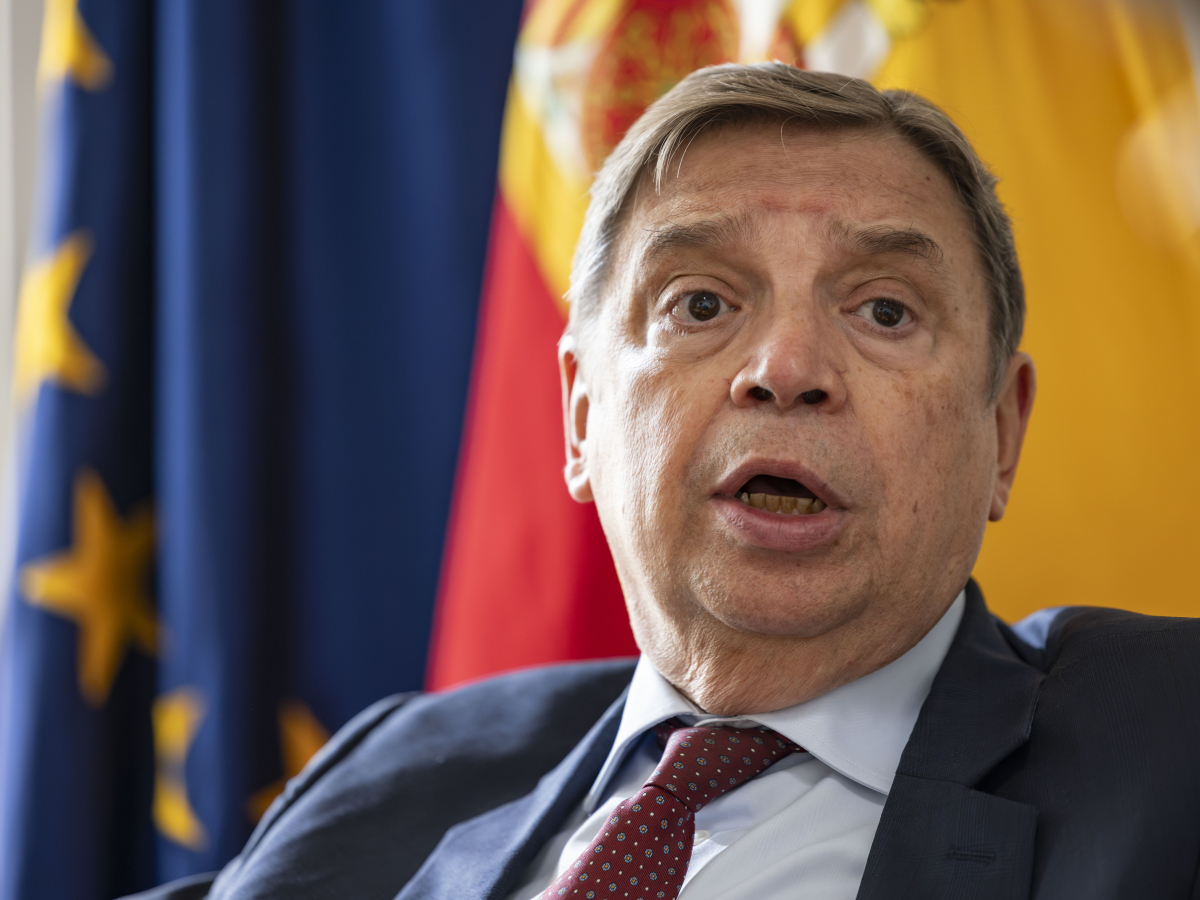
Elio Germani | DEMÓCRATA
Elio Germani | DEMÓCRATA -

Q: The arithmetic of the election is not simple.

A: There are 193 voters, who elect the director general of the FAO by secret ballot.

Q: What can you offer to the partners you meet to ask for their support?

A: It seems to me that food security is one of the major issues we face today on our planet. And it is also one of my commitments. It manifests itself differently depending on the countries and regions.

For many people in the world, unfortunately, food security means hunger or malnutrition. And we still have not managed to achieve the number two goal of the Sustainable Development Goals. Zero hunger.

With the current technical means, we could have a planet without hunger. Instead, in the more advanced countries, such as the European Union and Spain, food security has another manifestation: the price of food.

There are three fundamental issues. Obtaining food in sufficient quantity. That it has sufficient quality for human consumption; and, thirdly, that it is available at a reasonable price. Food prices are increasing significantly and, for me, that is a concern.

Question: You were already part of a negotiating team in a similar process. What profiles have you incorporated into the team that accompanies you in this candidacy?

Answer: It is a team, as always, with a great international perspective. I have, logically, diplomats, but also officials from the Ministry of Agriculture, who, like me, dedicate part of their time to this task.

Although it may seem strange, I am very clear about it. At this moment, I do not know if later it will be necessary to do something else, but I am balancing one task with the other and, of course, being clear that my priority is the ministerial activity.

Elio Germani | DEMÓCRATA
Elio Germani | DEMÓCRATA -

Q: You were ambassador in Morocco for six years and know the country well. During the 2021 crisis, it was said that you played a role alongside the Presidency of the Government and other ministries. What has been your role in the current crisis?

A: In the scope of my portfolio, I do not have competencies. As a member of the Government, I am always at the president's disposal for whatever is necessary. My colleagues with responsibilities in this matter have intervened more directly.

Q: I imagine you have maintained contacts with former colleagues in the country.

A: I have always reflected based on my own experience. Many people are not able to see, from the point of view of public opinion, the dimension of the strategic challenge that managing a border like the one that exists between Africa and Europe represents.

From the bilateral, human, diplomatic, security, migration, and economic point of view, we are talking about a relationship in terms of GDP that is in a proportion of one to ten. Sometimes we do not look south, but the south looks towards us.

There is a great difficulty in management. We maintain a positive and constructive relationship with the Kingdom of Morocco, although there may be incidents or specific situations. What has occurred now is an undesirable situation.

At the same time, I believe that time will prove us right. The fact that the Government of Spain is carrying out a task of managing migratory flows, also with respect to the Constitution, to the law, and to international agreements. It is not easy.

Question: Your life is in Córdoba, where you take care of an olive grove. What agricultural practices recommended by the CAP do you use on your farm?

Answer: I believe that the most interesting practices of the current CAP, as a novelty compared to the previous period, are the so-called eco regimes. All practices linked to carbon capture or regenerative agriculture, which are allowing not only to produce but also to preserve the soil, water, air, biodiversity, and landscape.

For example, green covers, which allow, especially in sloped areas, for less erosion to occur than would take place if they were not there. Or everything that refers to crop rotation to achieve good soil health in every sense.

The equation is very simple to state and very difficult to carry out: how we produce food sustainably, in such a way that this production is profitable for the producer, maintains the natural environment, and, in addition, is available in sufficient quantity and quality and, above all, at an acceptable price, in conditions that allow access to the majority of citizens.

So simple and so complicated.

off the record

Nostalgia for the future

After almost three-quarters of an hour, the recorder turns off but the conversation continues. The minister, smiling, recalls his years in the community capital. He has witnessed Spain's complete trajectory in the Union. First promoting the accession process, later as its ambassador in the Permanent Representation.

Elio Germani | DEMÓCRATA
Elio Germani | DEMÓCRATA -

Not wanting to fall into nostalgia, as he promised at the beginning of the talk, he recalls conversations around the Schuman roundabout with colleagues who accompanied him on the journey during the 80s. "What we had achieved was so difficult that we couldn't believe it," he explains. The celebrations of that achievement also remain in memory. Planas likes to rescue a phrase at the end: "nostalgia for the future."

More key points, information and questions with FREN

AI-GENERATED CONTENT

What is the current status of the Multiannual Financial Framework (MFF) processing in the European Council and what are the next steps for its approval?

The EU Multiannual Financial Framework (MFF) for 2028‑2034 is still under intense negotiation and far from a definitive closure. Within the Council and the European Council, important steps have been taken regarding the legal architecture and some key programs, but there is still no global political agreement on the figures, the total budget volume, or the new own resources, which are the truly decisive elements.

According to the European Council conclusions of 19 June 2026, leaders have already received a “negotiation framework with figures” prepared by the Cypriot presidency and have held a first political exchange on the new MFF. The European Council itself asks the new Irish presidency to continue working on this framework with the aim of reaching an agreement “in due time” and specifies the reference timetable: reaching an agreement before the end of 2026 would allow the necessary legislative acts to be adopted in 2027 and ensure that funding starts flowing without interruptions on 1 January 2028.

In parallel, the Council (in its ministers' formation) has been closing partial negotiating positions on several regulations that are part of the future budget package:

  • On 16 June 2026, it adopted its partial position on the new European Competitiveness Fund, considered a central pillar of the next MFF to boost investment in strategic technologies and industries. This position explicitly excludes financial and horizontal aspects, which are reserved for the global MFF agreement, and serves as a mandate to negotiate with the European Parliament on the fund's design.
    (Council press release)
  • On 29 June 2026, the Council agreed another partial position on the regulations establishing the cohesion funds (ERDF, Cohesion Fund, ESF+), also limited to design elements and implementation rules. Again, the financial volume of these funds remains pending the global MFF agreement, and the approved position serves as a mandate to open negotiations with the European Parliament.
    (Council statement)
  • Additionally, the Ministers for European Affairs have reached a political agreement on the horizontal regulations that will anchor the new architecture based on a single national plan per Member State, which safeguards the governance model defended by the Commission and closes one of the most sensitive legal debates, but leaves the “numbers battle” intact. (Demócrata)

On the political level, heads of state and government note “progress” in several blocks (competitiveness, external action, program architecture), but acknowledge that the “financial equation” — how much total money, what cuts or reinforcements, and how it is financed — remains the core of the disagreement. According to Demócrata, at the June summit, leaders agreed to advance work on new own resources and tasked the Irish presidency with a new version of the “negotiation box” that includes the various options under discussion.

The President of the European Council, António Costa, has identified precisely these new revenue sources as one of the three essential pieces to close the pact (along with the budget size and the burden-sharing among states). In September, he again urged leaders to concretize the new revenue streams at the October summit for the community budget, signaling that the negotiation is entering a more decisive phase but with still significant distances between Member States.

Next steps in the European Council and for the MFF approval

From this situation, the foreseeable roadmap is as follows:

  • European Council summit in October 2026: strategic debate focused on the MFF and, in particular, on own resources and the overall budget volume. The Irish presidency will bring an updated version of the “negotiation box” to try to bring positions closer.
  • Intensive negotiation autumn‑winter 2026: based on that document, the Twenty-Seven will continue adjusting figures, priorities, and financing mechanisms (including possible issuance of common debt or new European taxes), with the political objective of reaching a global agreement before the end of 2026, as stated in the European Council conclusions.
  • Political agreement of the European Council: when there is commitment on figures, distribution, and own resources, the European Council will set the main lines of the MFF. Legally, the MFF will be adopted afterwards through a regulation approved unanimously in the Council (ministers' formation) following approval by the European Parliament.
  • Legislative processing in 2027: once the framework is set, in 2027 the MFF regulation and all sectoral regulations (cohesion funds, agriculture, competitiveness, migration, etc.) must be adopted, many of which already have partial Council positions ready to enter trilogues with the European Parliament.
  • Annual budget 2028: with the MFF already agreed, the Commission will present in 2027 the first annual budget draft under the new framework, which will be negotiated and approved by Parliament and Council so that the entire package is operational on 1 January 2028.

In summary, the 2028‑2034 MFF is currently in an advanced technical negotiation phase (regulations and architecture) but still open and conflictive politically and financially. The European Council has set as a goal to close the agreement by the end of 2026, but the outcome will depend on whether the states manage to reconcile the positions of the “frugal” countries and the so-called “Friends of Cohesion” around the budget size and its new funding sources.

Can you detail what positions the different country blocks (frugal, Friends of Cohesion, etc.) are defending in the MFF negotiation? What role is the European Parliament playing in this negotiation and how does its position differ from that of the Council? How would a low agreement in the next Multiannual Financial Framework affect Spain in terms of cohesion funds and CAP?

What are the legal competences of the Minister of Agriculture, Fisheries and Food in Spain according to current legislation?

The legal competences of the Minister of Agriculture, Fisheries and Food (MAPA) are generally determined by the Constitution and by Law 50/1997, of 27 November, on the Government, and specifically by royal decrees and orders regulating the basic organic structure of the Ministry and the internal distribution of functions (among others, Royal Decree 139/2020, of 28 January, on the basic structure of ministerial departments, and its development rules for MAPA, updated after Royal Decree 829/2023, of 20 November, on department restructuring).

1. General competences as a Government member (Law 50/1997)

Law 50/1997 establishes the common statute of all ministers. The consulted passage states that: “Ministers, as heads of their Departments, have competence and responsibility in the specific sphere of their action”. From there, it specifies that they have, at least, the following functions:

  • Develop the Government's action within the scope of their Department, according to the agreements of the Council of Ministers and the guidelines of the Prime Minister. For MAPA, this means directing government policy in agriculture, livestock, rural development, fisheries, and food.
  • Exercise regulatory power in matters pertaining to their Department. The minister can issue ministerial orders and propose royal decrees within their scope to execute laws and complete their development.
  • Exercise the competences attributed by laws and government organization and functioning rules, as well as other provisions. This is the “general drawer” through which sectoral laws and regulations expressly grant powers to the Minister of Agriculture, Fisheries and Food.
  • Endorse, if applicable, the acts of the King in matters within their competence (for example, certain provisions or appointments in the agricultural or food area).

Besides these specific functions, the Government Law fully integrates the minister into the Executive's dynamics: they participate in the Council of Ministers, assume political and legal responsibility for their management, are subject to incompatibility rules, and bear joint responsibility as a Government member before the General Courts.

2. Material competences in agriculture, fisheries, and food

The concrete delimitation of the minister's field of action derives from the Ministry's creation by royal decrees restructuring departments (such as Royal Decree 829/2023) and the royal decree developing MAPA's basic organic structure. Based on this, the material competences of the Department head are articulated around the following major blocks:

  • Agricultural and livestock policy: promotion and proposal of basic regulations in agriculture and livestock; planning and coordination of the Common Agricultural Policy (CAP) in Spain; regulation of productions, aids, and support schemes; plant and animal health, animal welfare, and sustainability of farms.
  • Rural development and agrarian structures: design of the state rural development policy, coordination with autonomous communities, support for modernization of farms and irrigation, and promotion of generational renewal and innovation in rural areas.
  • Maritime fisheries and aquaculture: proposal and execution of state-competent fisheries policy, including sector regulation, fleet, external fishing grounds, negotiation and application of the EU common fisheries policy, and promotion of aquaculture.
  • Food policy and differentiated quality: competences in food chain safety and quality in coordination with other ministries; regulation and oversight of protected designations of origin and geographical indications above the autonomous community level (supported by various royal decrees and orders, such as those approving or modifying regulatory council statutes); promotion of “Foods of Spain” and internationalization of the agri-food sector.
  • European and international relations of the sector: representation of the State in EU bodies and international agricultural, fisheries, and food organizations, in coordination with the Ministry of Foreign Affairs.
  • Oversight of attached bodies and entities: direction and coordination of autonomous agencies and linked entities (for example, the Spanish Agency for Food Safety and Nutrition, regulated by Royal Decree 697/2022) and other entities in the agricultural and food field.
3. Internal organization and delegation of competences

Through organic structure regulations and various Department orders (such as Order APA/1511/2024, on delegation of competences, or Order APM/126/2018, on delegation in the Autonomous Organism National Parks), the minister:

  • Determines the internal organization of state secretariats, undersecretariats, general directorates, and other management bodies within the framework set by basic structure royal decrees.
  • Delegates competences to state secretaries, undersecretaries, general directors, or autonomous agencies for ordinary management (contracting, subsidies, sanctions, program management, etc.), without losing ultimate responsibility.
  • Approves internal rules and action criteria to ensure Department coordination and homogeneous execution of agricultural, fisheries, and food policy throughout the territory.

In summary, the Minister of Agriculture, Fisheries and Food is, according to current legislation, the highest political and administrative authority of the Government's action in these areas: directing sectoral policy, proposing and executing regulations, exercising regulatory power in their field, coordinating dependent bodies and agencies, and representing the State in European and international decisions affecting the Spanish agri-food sector.

What have been the results of the latest European Parliament elections for the Spanish political groups?

The “latest European Parliament elections” in Spain were held on 9 June 2024. According to the official results published by the Central Electoral Board in the BOE and the summary from the European Parliament itself, Spain allocates 61 seats. Below are the approximate results by state candidacy and their affiliation to European groups in the 2024‑2029 legislature (situation consolidated after the constitutive session in summer 2024).

Results by party or candidacy in Spain (vote and seats)
  • People's Party (PP)
    • Vote: ~34.2% of the valid state vote.
    • Seats: 22 MEPs, first force.
    • European group: all its MEPs are integrated into the European People's Party Group (EPP), where the Spanish delegation is one of the largest. Context source: Demócrata article on the 2024‑2029 legislature.
  • Spanish Socialist Workers' Party (PSOE)
    • Vote: ~30.2%.
    • Seats: 20 MEPs, second force.
    • European group: they integrate into the Progressive Alliance of Socialists and Democrats (S&D) group. The Spanish socialist delegation is one of the most influential: Iratxe García (PSOE) chairs the S&D group.
  • Vox
    • Vote: ~9.6%.
    • Seats: 6 MEPs.
    • European group: its six MEPs have joined the Patriots for Europe (Patriots) group, heir to the former far-right Identity and Democracy group. One of the Spanish representatives holds one of the group's vice presidencies, according to Demócrata.
  • Sumar (state list of the left-wing coalition)
    • Vote: ~4.7%.
    • Seats: 3 MEPs.
    • European group: some of the elected linked to the Sumar space integrate into The Left and others into Greens/European Free Alliance (Greens/EFA), according to the political family of each component (Sumar, Compromís, etc.).
  • Ahora Repúblicas (ERC – EH Bildu – BNG – Ara Més)
    • Vote: around 4.9%.
    • Seats: 3 MEPs.
    • European group: the coalition distributes its representation among two left-wing families:
      • Some of its MEPs (for example, the representative of EH Bildu and part of ERC) integrate into The Left.
      • Another part (such as BNG or eco-sovereigntist sectors) is located in Greens/EFA, along with other European regionalists and greens.
      The overall result for Spain recorded by the European Parliament assigns 4 Spanish seats in The Left and 4 in Greens/EFA, summing elected from Sumar, Podemos, ERC, BNG, and affiliates.
  • Se Acabó la Fiesta (SALF)
    • Vote: around 4.6%.
    • Seats: 3 MEPs, new voters' grouping.
    • European group: its three MEPs are listed as Non-Inscrits (NI), i.e., without membership in any parliamentary group. According to Demócrata's analysis, as of early summer 2024 they were awaiting resolution in September of their request to join the European Conservatives and Reformists (ECR). In the latest available information, they remain counted as non-inscrits.
  • Podemos (separate list from Sumar in 2024)
    • Vote: ~3.3%.
    • Seats: 2 MEPs.
    • European group: its two representatives integrate into the The Left group, along with part of Sumar and EH Bildu.
  • Junts i Lliures per Europa (Junts)
    • Vote: ~2.5%.
    • Seats: 1 MEP.
    • European group: its representative integrates into the liberal Renew Europe group.
  • Coalition for a Solidary Europe (CEUS) – PNV, CC and other forces
    • Vote: between 1.6% and 1.7%.
    • Seats: 1 MEP, corresponding to PNV.
    • European group: this seat integrates into Renew Europe, which groups European liberals.
Summary by major European groups of Spanish seats

Based on data from the official European Parliament results portal and Demócrata's analysis, the approximate distribution of the 61 Spanish MEPs by European group in the 2024‑2029 legislature is as follows:

  • EPP: 22 (all from PP).
  • S&D: 20 (all from PSOE).
  • Patriots for Europe: 6 (all from Vox).
  • Renew Europe: at least 2 Spaniards (Junts and PNV/CEUS).
  • Greens/EFA: 4 Spaniards (Sumar, Compromís, BNG, part of ERC).
  • The Left: 4 Spaniards (Podemos, EH Bildu, and part of Sumar/ERC).
  • Non-Inscrits: 3 (MEPs from Se Acabó la Fiesta).
Reference date and subsequent changes

All these data correspond to the electoral cycle started on 9 June 2024 and the group configuration fixed after the constitutive session of the 2024‑2029 European Parliament. According to our information, no massive changes in affiliation have occurred in the Spanish delegation to date; the most open point remained the possible incorporation of the MEPs from Se Acabó la Fiesta into the ECR group, which in the latest references had not materialized and therefore they are counted as non-inscrits.

For a complete official detail of votes and seat distribution by candidacy, the agreement of the Central Electoral Board published in the BOE can be consulted: Agreement of 27 June 2024 with the definitive results.

Can you break down these results by ideological blocks (right, left, nationalists, etc.) and compare them with the 2019 European elections? How are the votes for each Spanish candidacy distributed by autonomous communities in these 2024 European elections? What relative weight does the Spanish delegation have within each European group (EPP, S&D, Patriots for Europe, Renew, etc.)?

Play

Test your knowledge with FREN!

How much do you know about this topic? Answer the following 3 questions.

What relevant agreement have the ministers of the Twenty-Seven reached regarding the fishing sector?

Question 1 of 3

What is the objective of the Multiannual Financial Framework (MFF) being negotiated in Brussels?

Question 2 of 3

What percentage of the next CAP funds does Spain plan to allocate to the incorporation of young people and women?

Question 3 of 3